

Owning a villa in the tropics often comes with a set of environmental challenges that can quickly frustrate off-island owners. From the relentless humidity to the salt-heavy air of the Bukit peninsula, your property is under constant stress. Maintaining a high-end asset in Indonesia requires more than just a surface-level cleaning; it demands an understanding of how tropical systems interact with modern architecture.
When these minor issues are left unaddressed, they inevitably lead to “ghosting” by guests and a significant drop in property valuation. Negative reviews mentioning damp smells or power outages can take months to recover from in a competitive market where travelers expect perfection. According to the Ministry of Tourism and Creative Economy (Kemenparekraf), guest satisfaction is the primary driver of the island’s sustainable tourism growth, making property reliability a top priority for any owner facing Villa Problems in Bali today.
Fortunately, implementing systematic fixes can preserve your investment and prevent small defects from turning into capital-intensive disasters. By following these four methods, you can effectively resolve common property issues and ensure a smooth, profitable operation for years to come. This guide explores the technical and operational strategies used by the island’s top-performing villa managers to stay ahead of the curve.
Table of Contents
Way 1: Control Humidity and Mold Outbreaks
The most persistent issue in tropical real estate is the management of moisture. With average relative humidity often exceeding 80%, mold and mildew are not just possibilities; they are certainties if the environment is not actively managed. Fungal growth typically begins in stagnant air pockets—behind wardrobes, under beds, and inside air conditioning units. Left unchecked, mold can ruin soft furnishings, degrade paintwork, and even lead to respiratory health complaints from your guests.
To resolve this, you must prioritize airflow engineering. Daily cross-ventilation routines are essential; staff should be trained to open opposing windows and doors for at least thirty minutes each morning to purge moist air. For internal spaces that lack natural airflow, mechanical dehumidifiers sized to the room’s volume are mandatory. Furthermore, running air conditioning units in “dry” or “low-humidity” mode for several hours a day can stabilize the internal climate. Successfully managing Villa Problems in Bali related to air quality requires both architectural cooperation and strict staff SOPs.
Way 2: Prevent Structural and Electrical Decay
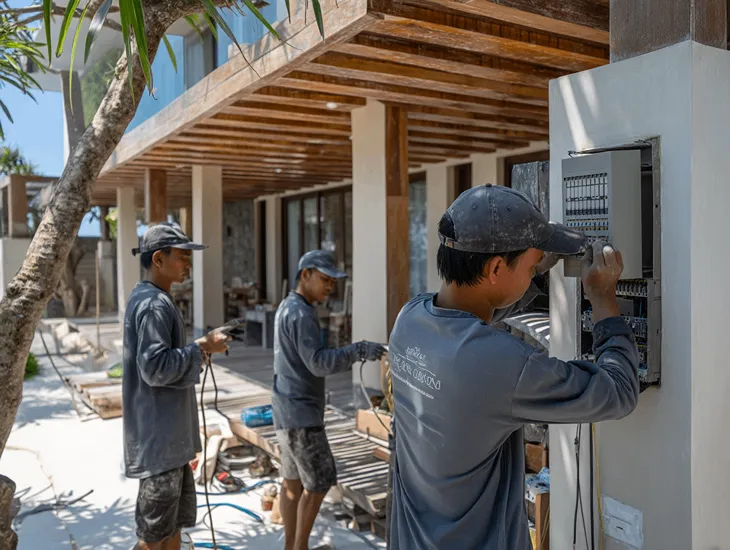
The combination of intense UV radiation, heavy monsoon rains, and corrosive salt air creates a “perfect storm” for structural degradation. Timber elements like decking, pergolas, and roof trusses are particularly vulnerable to wood rot and termite infestations. Similarly, electrical systems in older villas often fail due to moisture ingress into conduits or the use of non-marine grade components in outdoor areas. These structural and technical failures are among the most common Villa Problems in Bali that lead to emergency repair costs during the wet season.
Protecting your villa requires a “hardening” strategy. This involves applying high-quality protective coatings to all exposed timber every six to twelve months and ensuring that all external walls are treated with moisture-resistant paint. On the electrical front, it is vital to have a licensed electrician audit your distribution boards. Upgrading to modern residual-current devices (RCDs) and ensuring proper grounding can prevent short circuits and fire risks that often occur during the sudden voltage spikes typical of the tropical rainy season.
Way 3: Stabilize Critical Utility Systems
Guest satisfaction hinges on the invisible systems: water, power, and waste. A villa can be architecturally stunning, but if the water pressure fails during a shower or the power cuts out during dinner, the guest experience is ruined. In Bali, water supply often relies on a mix of government PDAM lines and deep-well pumps. If these pumps are not maintained or if the filtration system is clogged with sediment, the entire villa can grind to a halt, creating a negative feedback loop for your business.
To stabilize these utilities, you must implement a “redundancy” mindset. This means keeping critical spares on-site—such as a backup water pump, spare circuit breakers, and extra filtration cartridges. For power stability, high-end villas in 2026 increasingly rely on Uninterruptible Power Supplies (UPS) for sensitive electronics and silent backup generators for total outages. Documenting the operation of your septic system, grease traps, and water tanks in a clear technical manual allows your maintenance team to troubleshoot and resolve issues in minutes rather than hours.
Way 4: Implement Professional Routine Inspections
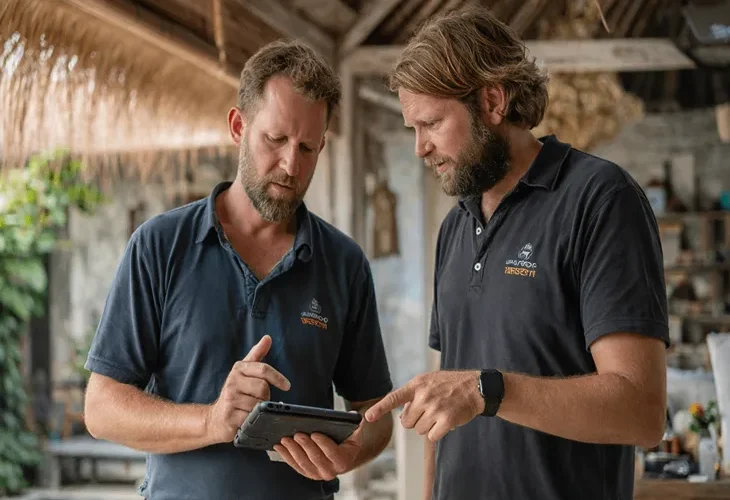
Many property failures occur simply because the owner is off-island and the local staff lacks the technical training to spot early warning signs. A small leak in a roof tile can go unnoticed for weeks until the ceiling collapses during a thunderstorm. By the time a guest complains about a “musty smell,” the mold has already penetrated the drywall. Professional management is not just about cleaning; it is about the rigorous, scheduled audit of every square meter of the property to catch defects early.
Establishing a written inspection schedule is the most effective way to protect your ROI. This should include weekly walkthroughs focused on visible damage, monthly deep-dives into mechanical and electrical systems, and seasonal reviews of the roof and drainage before the monsoon starts. Partnering with a professional villa management company ensures that these inspections are performed by experts who understand the nuances of the Bali climate. This proactive approach ensures that Villa Problems in Bali are caught while they are still cheap to fix, keeping your standards consistently high.
How Environmental Stress Impacts Property Value
The environmental stress on Bali real estate is unique due to the island’s volcanic soil, high seismic activity, and extreme seasonal shifts. During the dry season, the soil can contract, leading to hairline cracks in swimming pool tiles and exterior walls. When the rains arrive, these cracks become conduits for water, leading to “concrete cancer” and rising damp. Understanding these cycles is crucial for any owner planning a long-term business on the island, as these factors contribute significantly to recurring Villa Problems in Bali.
Materials that work in temperate climates often fail here. For example, standard metal screws will rust within months in coastal areas like Sanur or Uluwatu unless they are 316-grade stainless steel. Even high-end appliances have a shorter lifespan due to the “salty” air and frequent humidity-induced board failures. Recognizing these environmental pressures allows you to make smarter procurement decisions, choosing materials and equipment specifically designed for tropical longevity rather than just aesthetic appeal.
When to Call for Professional Remediation
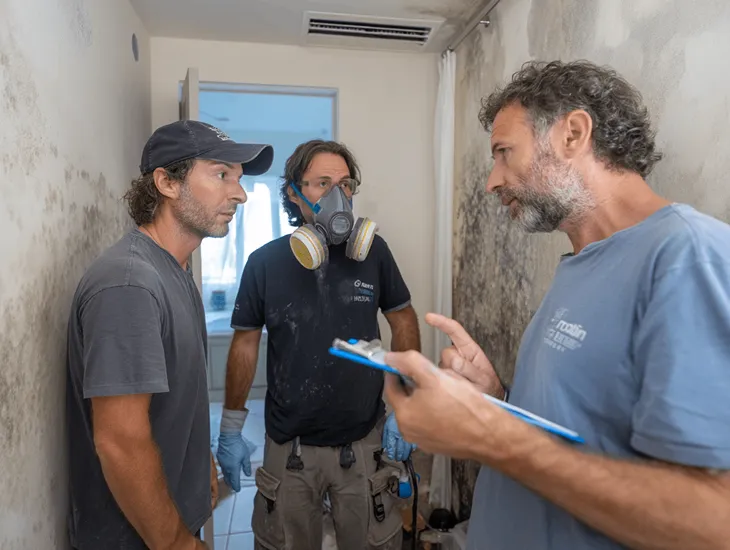
While daily cleaning and basic maintenance can handle minor issues, some problems require specialized intervention. If you encounter mold that covers more than one square meter, or if the mold returns within days of cleaning, you have an environmental failure that surface scrubbing cannot fix. This requires professional mold remediation to kill the spores at the root and stabilize the room’s humidity. Attempting a DIY fix on major mold outbreaks often just spreads the spores further into the villa’s ventilation system.
Similarly, structural issues like foundation cracks or persistent electrical “tripping” should never be handled by untrained staff. In Bali, the complexity of the “grey water” vs “black water” systems and the intricacies of the island’s power grid demand professional knowledge. According to industry data, villas that utilize specialized contractors for pest control, waterproofing, and HVAC maintenance see a 40% reduction in long-term CAPEX. Knowing when to escalate a problem to a specialist is a hallmark of a professional property owner.
Proactive Maintenance as an ROI Strategy
Investors often view maintenance as an annoying expense, but in the tropics, it is actually your most effective revenue protection tool. The cost of a quarterly termite inspection is negligible compared to the cost of replacing a collapsed roof truss. When you maintain a “preventive” rather than “reactive” stance, you eliminate the emergency surcharges that contractors apply for holiday or weekend call-outs. Proactive care ensures that your villa remains a “plug-and-play” asset that is always ready for a high-paying booking.
Furthermore, consistent upkeep directly impacts your Online Travel Agency (OTA) performance. In 2026, algorithms for platforms like Airbnb and Booking.com prioritize listings with high cleanliness and reliability scores. By effectively solving issues before they impact a guest, you secure the 5-star reviews that drive your search ranking. A well-maintained villa attracts higher-quality guests, allows for higher nightly rates, and ultimately ensures that your exit strategy remains viable with a high resale value in the Bali market.
Real Story: The Bingin Infrastructure Recovery
Julian, a British investor in Uluwatu, realized too late that his “ad-hoc” maintenance strategy was actually a slow-motion financial disaster. By 2025, his refusal to fix what “wasn’t broken” resulted in a series of plumbing failures during his highest-paying weeks of the year. He wasn’t just losing sleep over a roof leak; he was watching his ROI disappear into the pockets of emergency contractors. He realized that without a structured plan for Villa Problems in Bali, his luxury asset was quickly deteriorating.
The turning point came when a professional audit revealed that his “monthly” pool service was ignoring the pump’s junction box, which had become heavily corroded. This single oversight was days away from causing a total system failure. By switching to a structured preventive checklist, Julian was able to stabilize his operations. Within six months, his emergency repair costs dropped by 60%, and he regained the “Five-Star” status on booking platforms. He learned that in the tropics, professional maintenance is the only way to protect the value of your capital.
FAQs about Villa Problems in Bali
This is usually due to "hidden" mold in the AC ducts or behind large furniture. In the context of Villa Problems in Bali, a musty smell is a trailing indicator of high humidity. You likely need a professional AC deep-clean and a localized dehumidification strategy to reset the air quality.
A visual inspection should happen monthly, but a professional chemical soil injection or baiting system check should occur every six months. Bali’s subterranean termites are extremely aggressive and can cause structural failure in a matter of months if left undetected.
First, ensure your "Maksimal Power" (VA) from PLN is high enough for your appliances. Second, install a high-quality stabilizer for the whole house to protect against voltage drops. For 5-star reliability, a silent backup generator is the only true solution for 2026.
It depends on the mineral content. Bali well water often contains high levels of iron or calcium, which can stain pool tiles and damage the pump. Always have your water tested and use a professional filtration system before filling your pool or tanks.
While WhatsApp is great for communication, it is not a management system. You need a written logbook or a digital maintenance app to track recurring tasks, warranties, and service dates. Professionalism requires documentation that outlasts a chat history.