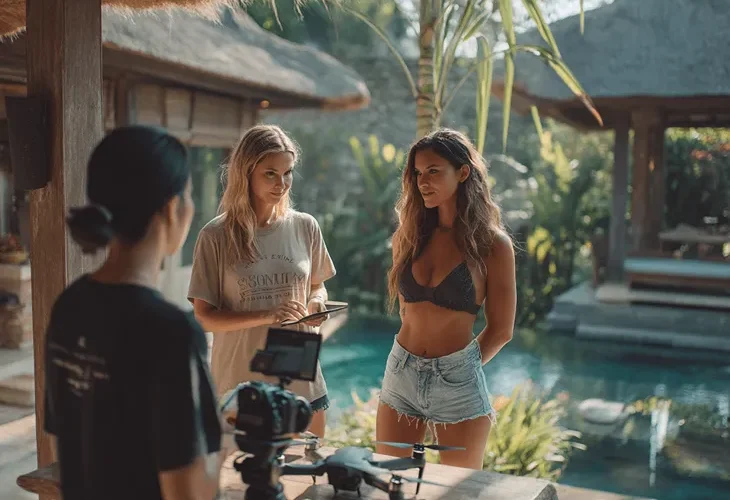
In the saturated Bali rental market of 2026, guests do not read listings; they scan images. If your primary hero shot is a dim, wide-angle photo taken on a smartphone, you have lost the booking before the page even loads. For foreign investors, the visual presentation of a property is the single highest-leverage marketing asset available. A stunning infinity pool looks average without proper lighting, while a modest joglo can look world-class with the right composition.
However, the current trend of “everyone is a creator” has introduced a dangerous complexity: drones. While aerial footage of your rice field view is a powerful selling point, the regulatory landscape in Indonesia has tightened significantly. Ignorance of aviation laws and local privacy customs can lead to confiscated equipment, hefty fines, and strained relationships with the local Banjar.
Navigating this requires a balance between aggressive marketing and strict compliance. You need high-quality assets to stand out on Airbnb and Booking.com, but you must procure them legally. This guide outlines how to leverage Professional Photography Services effectively while managing the specific legal and cultural nuances of arranging drone shots in Bali.
Table of Contents
The Revenue Impact of Visual Assets
Data from major OTAs consistently shows that listings with professional photos receive 40% more clicks and can command a 26% higher nightly rate. In Bali, where the “tropical lifestyle” is the product, the image sells the dream. Professional photographers understand how to balance the harsh tropical sunlight with deep interior shadows—a technical feat that amateur gear simply cannot handle.
Investing in Professional Photography Services is not an expense; it is capital expenditure on your digital storefront. High-dynamic-range (HDR) editing ensures that the view of the ocean is visible through the window, rather than blown out to white. These subtle details signal quality to a prospective guest, implying that if the photos are this well-managed, the villa maintenance will be too.
Ground vs. Aerial: Strategic Usage
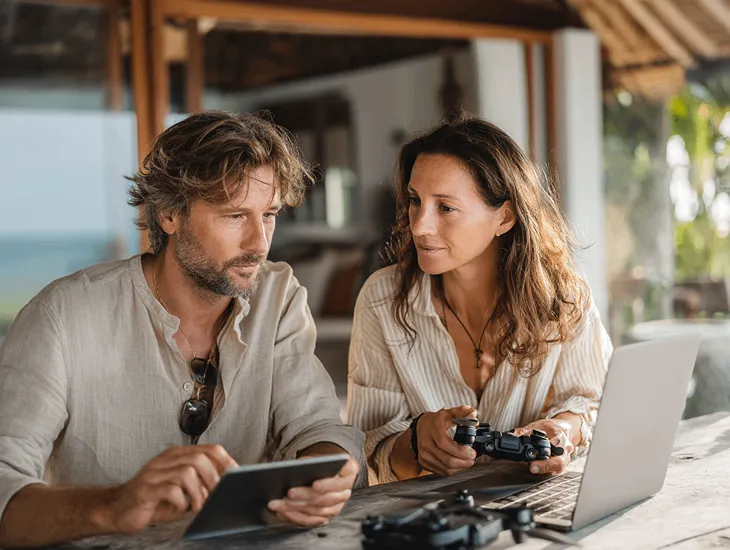
While ground photography captures the comfort and amenities of the villa—the thread count of the sheets, the texture of the stone bathtub—aerial photography sells the context. Drone shots are essential for properties in unique locations, such as cliff fronts in Ungasan or rice terrace edges in Ubud. They prove to the guest that the “ocean view” promised in the text is real and not just a zoomed-in trick.
However, drones should be used sparingly. A gallery full of drone shots can feel impersonal. The strategy should be 80% ground shots (lifestyle, interiors, details) and 20% aerials (location context, property layout). Over-reliance on drones can also highlight less desirable neighbors, such as construction sites, which ground angles can cleverly obscure.
Indonesian Drone Laws: Navigating Permenhub 37/2020
The primary regulation governing drone use in Indonesia is Ministry of Transportation Regulation No. 37 of 2020 (Permenhub 37/2020). For villa owners, the days of launching a drone anywhere are over. The regulation stipulates that drones must not fly higher than 120 meters (400 feet) and must remain within the pilot’s Visual Line of Sight (VLOS).
Crucially, commercial operation—which includes filming a villa for marketing purposes—requires a permit from the Directorate General of Civil Aviation (DGCA). While enforcement on casual tourists is sporadic, enforcement on businesses is stricter.
In 2026, the most practical tool for pilots in Indonesia is the SIDOPI (Sistem Registrasi Drone dan Pilot Indonesia) portal and the NAV-LOKAL or AirMap (specific to Indonesian updates). Operating in “Controlled Airspace” (which covers large swathes of South Bali near the airport) without a permit is illegal. You can check the Directorate General of Civil Aviation website for official airspace maps to see if your villa sits in a restricted zone (KKOP).
Using the SIDOPI portal for drone registration and the official government apps for real-time airspace checks is recommended. When hiring Professional Photography Services, ensure the pilot holds a valid SIDOPI-registered Remote Pilot Certificate.
Privacy, Culture, and Banjar Relations in Bali
In Bali, “Tri Hita Karana” (harmony between people, nature, and the divine) extends to airspace. Flying a drone over a temple (Pura) is considered highly disrespectful and can disrupt ceremonies. There have been numerous instances of drones crashing into temples, leading to expensive purification ceremonies (Guru Piduka) that the foreigner is expected to pay for.
Privacy is equally critical. In dense areas like Seminyak or Berawa, flying a drone often means hovering over a neighbor’s private pool. This is a major invasion of privacy. Professional operators know to crop shots or fly at angles that respect neighboring boundaries. If a neighbor complains to the Banjar (local community council) about your drone peeping into their villa, you could face local fines or operational disruption.
Real Story: The Drone Diplomat
Marc, a French investor in Umalas, was ready to launch his boutique villa. To save on marketing costs, he hired a “travelling creator” with a drone to shoot a sunset video. As the sun began to dip, the creator launched the drone to capture the sweeping views of the neighboring rice paddies.
Marc didn’t realize that 300 meters away, a major temple ceremony was reaching its peak. The high-pitched whine of the drone—sounding like a giant, angry mosquito—cut right through the sacred chanting of the priests. Within minutes, three Pecalang (village security) in traditional sarongs appeared at Marc’s gate. They didn’t just stop the shoot; they confiscated the drone and the SD card containing all of Marc’s work.
Marc was summoned to a “meeting of minds” at the Banjar. He was facing a massive fine and, more importantly, a social boycott of his business. He realized he needed a local bridge. He engaged a professional villa management firm to apologize formally on his behalf and pay for a Guru Piduka (purification) ceremony to restore the temple’s spiritual balance.
It took three weeks and thousands of dollars in “donations” to clear his name. When he finally re-shot the villa, he used a licensed Balinese pilot who knew to ask the Kelian (village head) for permission first. “The first pilot was cheap,” Marc says. “But the second one was the only one who actually saved my business.”
Operational Risks and Liability
When you hire a photographer, you take on liability. If their drone crashes into a guest’s car or injures a passerby, who pays? Professional operators carry aviation liability insurance. Casual freelancers usually do not. Using unlicensed operators for commercial Professional Photography Services exposes your PT PMA to significant risk.
There is also the risk of “footage ownership.” If a freelancer shoots your villa without a contract, they technically own the copyright. They could resell your villa’s footage to a stock video site or even a competitor. A proper commercial engagement ensures that all raw assets and edited rights belong to your company, securing your brand identity.
Preparing Your Villa for a Commercial Shoot
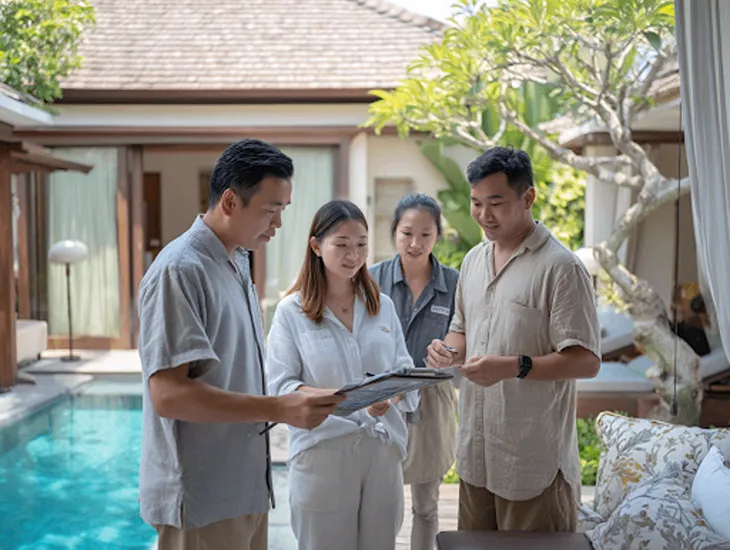
Great photos are made before the camera arrives. Your villa must be staged to perfection. This means removing all operational clutter: hide the fire extinguishers, remove the pool cleaning nets, and iron the bedsheets until they are crisp. Pool water must be sparkling blue—if it rained the night before and the pool is cloudy, reschedule the shoot.
For drone shots, check the roof. A beautiful villa can look terrible from above if the roof is covered in dead leaves or if the AC compressors are rusting. Hide staff motorbikes and ensure the garden is manicured. A professional team will provide a “pre-shoot checklist” to ensure the property is camera-ready, maximizing the efficiency of the shooting day.
Licensing and Intellectual Property Rights
A common misunderstanding in Professional Photography Services is the difference between “ownership” and “license.” Typically, the photographer retains the copyright, but grants you a “license” to use the images for marketing. You need to clarify the scope: does the license cover your website, OTAs, and social media? Does it allow third-party magazines to print them?
Avoid “Barter” arrangements for photography unless the contract is watertight. We have seen cases where an influencer “paid” for a stay with photos, but then demanded the villa take them down six months later because of a dispute. Always have a written agreement that grants you perpetual, irrevocable usage rights for the delivered assets.
FAQ's about Villa Photography and Drones
Technically, if it is for commercial use (marketing), you should inform the DGCA. However, if you fly below 120m in uncontrolled airspace and follow safety rules, strict permit enforcement is rare, but compliance is recommended.
No, flying drones at night is generally prohibited under Permenhub 37/2020 without a specific waiver and safety assessment from the DGCA.
Rates vary, but a professional package including ground and aerial shots typically ranges from $300 to $1,000+ depending on the photographer's experience and the number of edited images.
You (or the operator) are liable for damages. This is why hiring an insured professional is critical. You may also face privacy complaints from the neighbor.
Only if the previous owner transfers the license to you in writing. Copyright usually remains with the creator or the entity that commissioned the work.
Generally, filming public or open spaces is fine, but if the land is owned by a local farmer, it is polite and strategic to ask permission, sometimes offering a small tip for their cooperation.