For many foreign investors entering the Bali market, there is a common misconception that signing a “Full Management” contract means every aspect of marketing, including high-end content creation, is covered by the standard commission.
You expect your villa to launch with magazine-quality visuals, but often, the reality is a set of standard, uninspiring photos that fail to capture the “tropical dream.” In a market as visually driven as 2026 Bali, where guests scroll through hundreds of listings in seconds, average imagery is a silent revenue killer.
The agitation sets in when you see competitors utilizing cinematic drone footage and twilight hero shots that drive high occupancy, while your property languishes with low click-through rates. You might attempt to arrange a drone shoot yourself, only to run afoul of strictly enforced local aviation laws or, worse, offend the local Banjar (community council) by flying over a temple ceremony. The gap between “standard inclusion” and “winning marketing assets” can cost you thousands in lost bookings and legal headaches.
The solution lies in understanding the industry standard: Professional Photography is almost always a separate investment, and for good reason. It requires specialized talent, equipment, and licensing that goes beyond day-to-day operations. Furthermore, drone operations now operate under a tight legal framework in Indonesia that demands compliance. This guide clarifies what to expect from your management fee, how to budget for visual assets, and the safe way to secure those stunning aerial shots. As the Ministry of Tourism ramps up compliance for 2026, ensuring your business assets are professional and legal is paramount.
Table of Contents
The Reality of "Included" Marketing vs. Add-Ons
In the standard Bali villa management model (typically charging 15-20% of revenue), the “marketing” inclusion generally refers to distribution management. This covers setting up your listing on OTAs (Online Travel Agencies) like Airbnb and Booking.com, syncing calendars, and managing pricing strategies. It rarely covers the cost of Professional Photography.
Why? Because a high-end architectural shoot involves pre-production, specialized lighting equipment, and days of post-production editing. If a management company claims photography is “free,” be wary—it often means a staff member with a newer iPhone, not a professional with a DSLR and wide-angle lenses. To compete in 2026, owners should view photography as a capital expenditure (CapEx) or a specific pre-opening cost, separate from the operational management fee.
Why Visual Assets Are Your Strongest Sales Tool
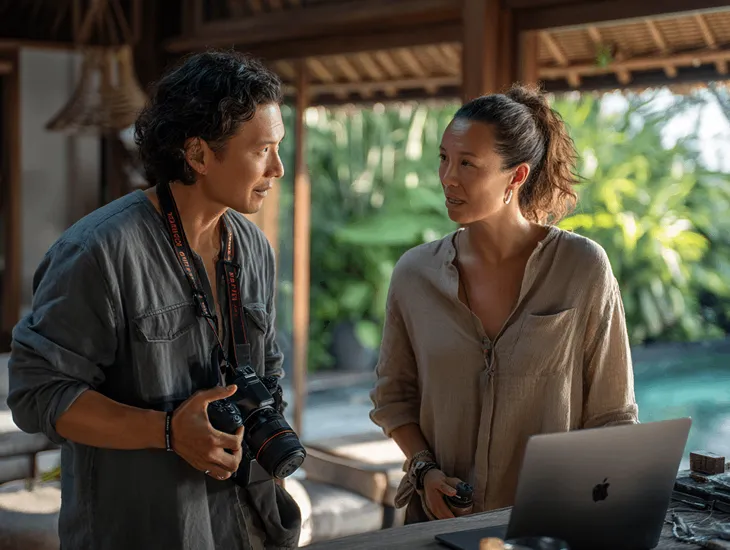
Data from major booking platforms indicates that listings with professional, high-dynamic-range (HDR) photos receive significantly higher conversion rates. In Bali, where the interplay of indoor and outdoor living is key, Professional Photography is essential to balance the harsh tropical sunlight with the shadowed interiors. Amateur cameras often blow out the view (making the pool look white) or crush the shadows (making the living room look dark).
Furthermore, “Hero Images”—the first photo a guest sees—must be meticulously crafted. Whether it is a floating breakfast in the pool or a sunset view from the balcony, these images sell the experience, not just the room. Investing in a professional package ensures you have the right assets for every format, from the horizontal demands of Booking.com to the vertical requirements of TikTok and Instagram Reels.
The Professional Shoot Process: From Staging to Delivery
Arranging Professional Photography is a structured process. It begins with “Staging.” In Bali’s humid climate, mold or rust can appear quickly; a professional team will conduct a site inspection days before the shoot to identify maintenance issues. On the day, they will declutter the space, iron bedsheets to hotel standards, and ensure the pool water is crystal clear.
The shoot usually follows the light: interiors during the day, pool and garden shots when the sun is less harsh, and “Twilight” shots at dusk to capture the villa’s ambient lighting. Delivery typically takes 7 to 10 days, providing you with high-resolution files for print and web-optimized files for OTAs. Crucially, you must secure the usage rights in accordance with Indonesian Law No. 28/2014 on Copyright to ensure you own the rights to use these images across all platforms in perpetuity.
Navigating Indonesia's Drone Regulations (SIDOPI & DKPPU)
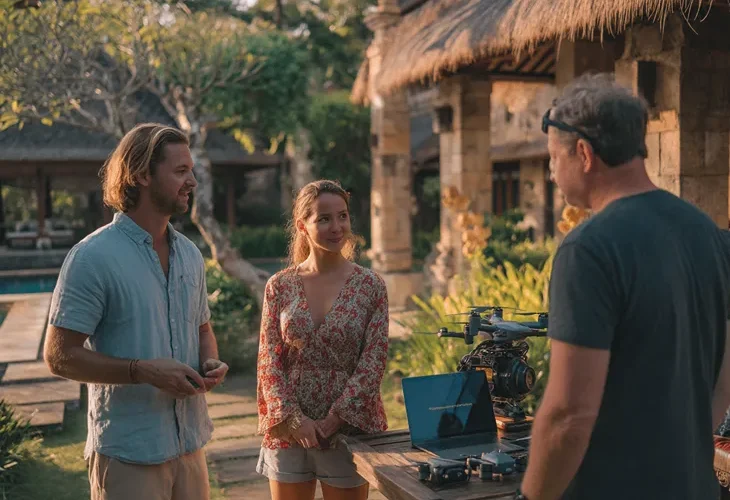
While aerial shots are highly desirable, they are strictly regulated under Ministry of Transportation Regulation No. 37 of 2020. In 2026, compliance is no longer a grey area. All drones used for commercial purposes must be registered through the SIDOPI (Sistem Registrasi Drone dan Pilot Indonesia) portal. Furthermore, the operator must hold a valid Remote Pilot Certificate issued by the DKPPU.
More importantly, Bali has distinct “No-Fly Zones.” Areas surrounding Ngurah Rai International Airport (covering much of Jimbaran and Kuta) are strictly controlled. Flying a drone here without a permit from the Directorate General of Civil Aviation (DGCA) is a federal offense. Protected areas, such as national parks or near government VVIP installations, also require specific clearance that typically takes up to 14 working days to process.
Privacy, Culture, and Community Relations in Bali
In Bali, the concept of Tri Hita Karana (harmony among people, nature, and God) extends to airspace. Flying a drone over a temple (Pura) is considered deeply disrespectful and can disrupt sacred energy. There have been numerous incidents of foreigners flying drones over religious ceremonies (Odalan), leading to equipment confiscation and hefty fines from the local village (Desa Adat).
Privacy is another critical legal boundary. Flying over a neighbor’s private pool or bathroom area is a violation of privacy. In dense areas like Berawa or Seminyak, this is a major risk. Professional Photography teams use specific flight paths and angles to capture your property while cropping out neighbors, ensuring you maintain good relations with the local community and avoid complaints to the Banjar.
Commercial vs. Recreational Drone Use: The Legal Line
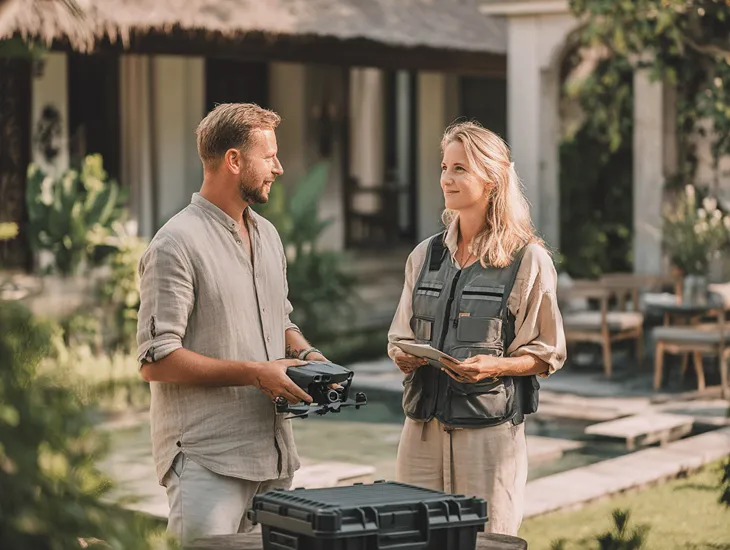
Many owners ask, “Can’t I just ask my friend to fly his drone?” The answer lies in the intent. Using footage to market a rental villa is defined as “Commercial Operation.” Under Indonesian law, commercial drone operators must be registered and hold valid certificates. In 2026, digital evidence of a non-compliant flight (such as an unpermitted drone shot in an ad) can trigger retrospective audits and fines.
While enforcement on casual tourists is sporadic, enforcement on businesses is stricter. Utilizing a licensed, insured operator protects you from liability should the drone crash or cause damage to third-party property. Professional agencies will handle the flight plans and AirNav coordination, ensuring that your marketing video is an asset, not a liability.
Structuring Your Marketing Agreement for ROI
When negotiating with your management company, do not assume. Ask explicitly: “Is Professional Photography included?” If not, request their rate card for add-on media packages. A reputable established villa management firm will have preferred partners—photographers and drone pilots who are already vetted for quality and legal compliance.
Ensure your agreement covers “Refresher Shoots.” A villa changes over time; cushions fade, gardens grow. A best-practice contract should include a provision for an annual or bi-annual refresh of the visual assets to ensure your OTA listing remains accurate and competitive. This small ongoing cost prevents the dreaded guest review: “Property did not look like the photos.”
Real Story: The High Cost of a Cheap Drone
Liam, a British investor in Umalas, was ready to launch his villa. Eager to see his pool on Instagram, he hired a “traveller” with a drone for a quick $50 cash job. As the sun began to set, the drone took to the sky.
Liam didn’t realize that in the temple next door, a high priest was mid-prayer for a village Odalan. The drone’s high-pitched mechanical whine cut through the sacred silence like a mosquito in a meditation hall. Within minutes, the drone was intercepted. Two Pecalang (village security) appeared at Liam’s gate in full ceremonial attire. They didn’t just stop the shoot; they confiscated the SD card and summoned Liam to the Banjar (village hall) for an official explanation.
Faced with a local boycott and a $400 “purification fine,” Liam called a professional villa management firm. They spent three days mediating, eventually arranging a Guru Piduka ceremony to restore the temple’s spiritual balance.
When Liam finally re-shot the villa, he used a licensed operator who visited the Kelian (village head) with a small offering (Pejati) first. The drone was launched with the village’s blessing. “I learned the hard way,” Liam says. “In Bali, you don’t just own the land; you share the sky. Respecting the neighbors is worth more than any ‘epic’ shot.”
FAQs about Villa Photography Services
Mid-range packages typically range from $300 to $800 USD. However, high-end architectural specialists may command fees upwards of $1,200 for a full-day production including advanced HDR lighting.
You usually receive a "Usage License" allowing you to use the photos for marketing. However, the photographer retains the copyright. Ensure you secure the usage rights in accordance with Indonesian Law No. 28/2014 on Copyright.
Generally, no. Night flights require special waivers, safety assessments, and specific lighting (flashing green lights) under 2026 regulations. Most professional drone shoots are conducted during daylight hours.
Yes. Professional Photography captures every detail. Staff should remove personal items, hide bins, smooth linens, and ensure the pool is clean. Most photographers charge extra if they have to wait for cleaning.
Professional photographers usually have a rescheduling clause for bad weather. It is useless to shoot a "tropical holiday" villa under grey, rainy skies.
If the purpose is commercial (marketing your business), yes. In 2026, all commercial drones must be registered on the SIDOPI portal regardless of weight, especially if flying near restricted zones.