



Bali’s property market in 2026 presents a paradox for foreign investors: the potential for returns is higher than ever, yet the regulatory environment has never been stricter. With tourism numbers surpassing pre-pandemic levels and a surge in demand for private luxury rentals, well-positioned properties are maintaining gross yields of 7–15%.
However, the days of operating “under the radar” with a simple leasehold and a local nominee are over. The government’s enforcement of Zoning and Building Approval (PBG/SLF) regulations means that sustainable profitability now depends entirely on legitimate operations.
For foreign owners, the path to financial success requires a shift from passive holding to active, professionalized management. Relying on organic traffic or a single OTA listing is insufficient in a market crowded with over 70,000 rental units. To truly increase villa income, investors must leverage legal structures like PT PMA, implement dynamic revenue management, and adopt hotel-grade operational standards. Ignoring these pillars not only caps your earning potential but also exposes your asset to the risk of closure or deportation under the 2025–2026 enforcement drives.
This guide outlines seven concrete, lawful levers to optimize your investment. From restructuring your licensing to mastering repeat guest logistics, these strategies are designed to move your property from an average 7% yield to the top-tier 15% band. By focusing on compliance and guest experience, you can boost your revenue while safeguarding your asset against the volatile regulatory landscape of modern Indonesia.
Table of Contents
Way #1: Align Legal Structure for Rental Operations
The absolute prerequisite to increase villa income sustainably is a correct legal foundation. A major focus in 2026 is correcting KBLI misclassifications; many foreigners mistakenly operate nightly rentals under a company set up for “Real Estate Owned or Leased” (KBLI 68111).
Authorities now strictly categorize short-term rentals under accommodation KBLIs (such as 55193 for Villas), which require specific tourism licenses (Pondok Wisata or NIB Risk-Based equivalent). Operating outside this scope invites sanctions that can wipe out years of profit.
By transitioning your asset into a properly licensed PT PMA (Foreign Owned Company), you unlock the ability to market legally on all major platforms without fear of takedowns. This legitimacy allows you to partner with premium travel agents and banks, expanding your reach. Ultimately, a clean legal structure removes the “risk discount” from your property, allowing you to charge market rates and maximize your earnings through confident, high-volume trading.
Way #2: Implement Hotel-Grade Management SOPs
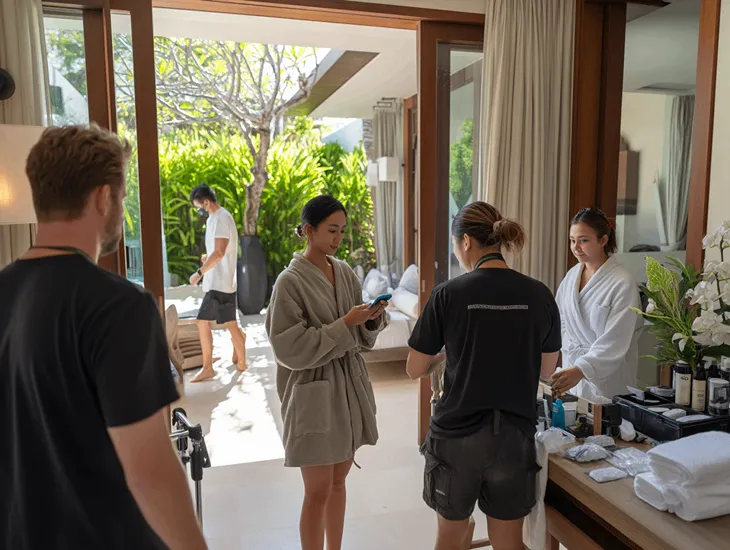
In a saturated market, service quality is the primary driver of the reviews that allow you to raise prices. To maximize rental returns, your operation must move beyond casual hosting to hotel-grade Standard Operating Procedures (SOPs). This means implementing rigorous checklists for housekeeping, preventive maintenance schedules, and 24/7 guest support. A villa that consistently offers immaculate cleanliness and rapid issue resolution commands a higher Average Daily Rate (ADR) than a comparable property with spotty service.
For many foreign owners, the most effective way to achieve this is by outsourcing to established Bali Villa Management companies. These firms bring economies of scale, ensuring that staff are trained, legal, and supervised. While management fees are a cost, the resulting boost in occupancy and ADR often leads to a higher net yield. Professionalizing your operations is a proven mechanism to increase villa income by turning one-time guests into raving fans who leave five-star reviews.
Way #3: Master Dynamic Pricing and Channel Mix
Static pricing is a “silent killer” of potential revenue. To optimize revenue, you must adopt dynamic pricing strategies that adjust daily rates based on seasonality, local events, and competitor occupancy. Data from 2026 yield guides suggests that dynamic pricing can lift net yields into the 10–12% band by capitalizing on peak demand while maintaining occupancy during shoulder seasons. Selling a night at $150 is better than letting it sit empty at $300.
Equally important is your channel strategy. Relying solely on Airbnb or Booking.com exposes you to high commissions (15–20%) and algorithm changes. A robust strategy diversifies across multiple OTAs while driving traffic to a direct booking engine. By analyzing your channel mix and adjusting rates for each platform, you can optimize your Revenue Per Available Room (RevPAR). This active revenue management is essential to grow your bottom line in a competitive environment.
Way #4: Build a Direct Booking Loyalty Engine
One of the most overlooked ways to optimize earnings is to stop paying commissions on repeat visits. Industry research highlights that millions of dollars are lost annually when repeat guests rebook through OTAs. If a guest loves your villa, they should be booking their next stay directly with you. Capturing guest data at check-in (compliant with privacy laws) allows you to market directly to them for future stays.
Implementing a simple loyalty program—offering perks like late check-out, free airport transfers, or exclusive discounts—works by incentivizing direct re-bookings from guests to bypass OTAs. Since acquisition costs for repeat guests are near zero, every direct booking significantly improves your margin. Building a database of past guests creates a “moat” around your business, providing a stable base of revenue that helps secure long-term profits regardless of OTA visibility fluctuations.
Way #5: Execute Strategic Value-Add Renovations
Physical positioning drives pricing power. ROI analyses for Bali properties repeatedly cite specific amenities as major levers to increase villa income. In 2026, the modern traveler expects more than just a bed; they demand private pools, enclosed living areas with AC, and fully equipped modern kitchens. Renovating an older villa to include these features can instantly place you in a higher pricing bracket.
Targeting specific niches is also effective. For example, converting a spare room into a soundproofed, high-speed office attracts the lucrative “digital nomad” demographic, who book longer stays and pay premiums for reliability. Similarly, adding safety fences and family-friendly amenities can open your calendar to high-spending family groups. Strategic capital expenditure is a calculated move to boost rental yields by aligning your product with high-demand market segments.
Way #6: Optimize Net Yields Through Tax Efficiency

Many owners focus entirely on gross revenue, ignoring the operating costs that drag down net returns. To truly enhance profitability, you must focus on protecting margins through fiscal discipline. This involves rigorous cost control on utilities, staffing, and maintenance, but also strict tax compliance. Ensuring you are registered for and paying the correct Hotel & Restaurant Tax (PB1) and Income Tax (PPh) avoids the heavy fines associated with audits.
Understanding your true ROI requires a clear formula: (Annual Net Income ÷ Total Investment) × 100. By working with a competent tax consultant, you can structure your expenses efficiently within the PT PMA framework. Legal tax optimization protects your earnings and ensures that the effort you put in to grow your business translates into actual wealth rather than liabilities or penalties.
Way #7: De-Risk Assets Against Regulatory Enforcements
The most devastating threat to income is the total loss of the asset. Bali’s 2025–2026 enforcement drive under Government Regulation PP 28/2025 has targeted villas built in “Green Zones” or operating without proper permits. To increase villa income sustainably, you must de-risk your investment by verifying your building permits (PBG/SLF) match your actual building structure.
Crucially, you must adhere to Governor’s Circular SE 7/2025, which explicitly mandates that guests stay in licensed accommodation and requires hosts to verify the IDR 150,000 Bali Tourist Levy payment before check-in. Failing to do this can now trigger an immediate Satpol PP audit. Bringing your asset into full compliance may require upfront costs, but it secures the property’s future cash flow. You cannot generate revenue if your villa is sealed by authorities.
Real Story: From Compliance Nightmare to Profit
Meet Lars, a 45-year-old entrepreneur from Hamburg who built a stunning three-bedroom villa in Pererenan. Initially, Lars tried to maximize his returns by cutting corners: he used a local nominee arrangement and listed the property on Airbnb under a general real estate KBLI, hoping to stay under the radar. For the first year, it worked—until the neighborhood grew, and the local Banjar began auditing non-compliant rentals.
Lars received a formal notice that his operation was misclassified, facing a potential shutdown and a massive fine for unpaid hotel taxes. His occupancy plummeted as he paused listings in panic.
Realizing his investment was on the brink of collapse, Lars contacted Bali Villa Management to restructure his business. The team transitioned his asset into a compliant PT PMA, secured the necessary NIB for accommodation, and professionalized his tax reporting.
The turnaround was not just legal; it was financial. With a legitimate structure, the management team could list his villa on premium luxury platforms previously inaccessible to him. They implemented dynamic pricing and a direct booking campaign for his past guests.
Within 12 months, Lars didn’t just save his villa; he saw his net yield rise from a volatile 5% to a stable 11%. By choosing to legitimize his business, he was able to effectively secure his financial future and sleep soundly in Hamburg, knowing his Bali asset was safe.
FAQs about Bali Villa Revenue Growth
Yes, but you must use a PT PMA company with the correct KBLI (Standard Industrial Classification) for accommodation, not a residential lease. Legal compliance is key to increase villa income safely.
ROI depends on management execution and micro-location. While average yields range from 7–12%, professionally managed properties in prime areas can achieve 15–20% gross.
Absolutely. Modern amenities like enclosed living rooms, private pools, and workspaces significantly boost ADR and occupancy, especially for mid-to-high-end travelers.
OTAs charge 15–20% commission. Converting repeat guests to direct bookings allows you to keep that margin, which is a proven way to boost cash flow.
You risk fines, deportation, and property closure. The 2026 regulatory environment is strict; operating illegally is a high-risk strategy that threatens long-term income.
They handle compliance, staffing, and sophisticated revenue management (dynamic pricing), which typically results in higher net yields than self-management.