



Bali’s rental market is becoming increasingly saturated, making it difficult for foreign owners to maintain high occupancy rates without engaging in price wars. Investors often find themselves struggling to differentiate their properties in areas like Canggu and Uluwatu, watching operational costs rise while average daily rates stagnate.
This race to the bottom hurts profitability and overlooks a massive, lucrative market segment that is actively seeking better options.
The solution lies in pivoting towards genuine sustainability, as data confirms a growing willingness among travelers to pay a premium for verified green stays. By adopting tangible operational changes and targeted marketing, owners can attract high-value guests who respect the destination and leave better reviews.
Partnering with an established villa management firm can streamline this transition, ensuring your property meets the necessary standards to capitalize on this demand.
This guide explores how to transform your property into a high-revenue asset by targeting the eco-friendly Bali villa market. From essential operational upgrades to smart pricing strategies, we cover the actionable steps foreign owners need to succeed in Bali’s evolving tourism landscape.
Table of Contents
Understanding the Green Traveler Demand
The profile of the modern traveler in Bali has shifted significantly. According to Booking.com’s 2024 Sustainable Travel Report, over 75% of global travelers express a desire to travel more sustainably in the coming year. These are not just budget backpackers; they are affluent, educated individuals willing to pay 10–25% more for accommodations that align with their values.
For a villa owner, this demographic represents a stable revenue stream. These guests typically treat properties with greater respect, resulting in lower maintenance costs, and are more likely to leave detailed, positive reviews. Understanding that “green” is a quality indicator—not just a moral stance—is the first step in positioning your property to capture this market share.
Operational Essentials: Energy and Water Efficiency

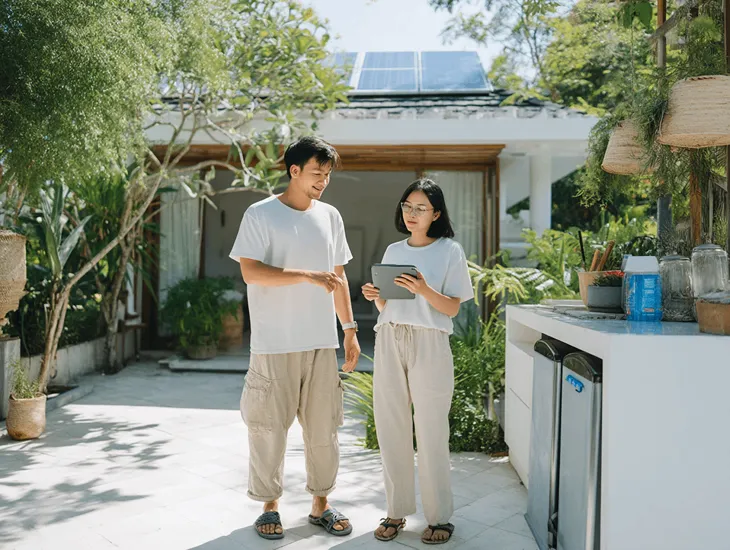
Marketing an eco-friendly Bali villa begins with the property’s infrastructure. Green travelers are savvy; they look for visible signs of sustainability rather than just reading about them. Integrating renewable energy, such as solar water heaters or PV panels for common loads, acts as a primary trust signal.
Water conservation is equally critical in Bali’s tropical climate. Simple upgrades like low-flow showerheads and dual-flush toilets reduce impact without compromising guest comfort. Visible signage explaining these features helps guests feel involved in the conservation effort, transforming a standard utility saving into a meaningful guest experience.
Waste Management and Eliminating Plastics
In 2026, the presence of single-use plastics is a major red flag for eco-conscious guests. To be credible, a villa must go beyond the basics. This means replacing plastic water bottles with refillable glass dispensers and providing high-quality, bulk amenities instead of single-use sachets.
Waste separation is another non-negotiable aspect. Providing clearly labeled bins for recycling and organic waste encourages guests to participate. Collaborating with local waste management services that guarantee recycling—rather than dumping—ensures your marketing claims hold up to scrutiny, preventing potential reputational damage from “greenwashing.”
Leveraging Certifications and Eco-Badges
Trust is the currency of the green economy. Because “eco-friendly” is an unregulated term in general advertising, obtaining third-party verification is essential for differentiation. Badges such as the Eco Climate Badge or GSTC-aligned certifications validate your efforts and provide a competitive edge on booking platforms.
These certifications do more than just add a logo to your website; they provide a framework for improvement. They signal to high-value guests that your eco-friendly Bali villa adheres to rigorous environmental and social standards, justifying a higher price point and increasing conversion rates among discerning travelers.
Real Story: From "Just Another Villa" to Pererenan’s Green Gem
Meet Ana, a former architect from Belgrade, Serbia who poured her savings into a three-bedroom villa in Pererenan in 2024. The dream quickly turned stressful. Despite the villa being beautiful, her reviews were painfully average—guests described it as “nice, but identical to the one next door.” Worse, her operational costs were eating her profits; electricity bills hit $800/month because guests would leave the A/C blasting with the pool doors wide open.
Ana realized she couldn’t win on price, so she decided to win on values. She didn’t just “go green”; she gave the villa a personality.
She installed smart sensors to cut the A/C when doors opened (slashing her bill by 35% in month one) and replaced the generic supermarket soaps with refillable ceramic jars of locally made lemongrass wash. Instead of a standard welcome drink, she partnered with a nearby farm to provide a “zero-kilometer” fruit basket featuring mangosteen and snake fruit, along with a handwritten note explaining their origin.
The result? She rebranded as a “Guilt-Free Tropical Sanctuary” and raised her rates by 20%. The guests didn’t complain; they raved. One review read: “Finally, a luxury stay in Bali where I don’t feel guilty about my carbon footprint. The local fruit basket was a highlight!” Ana didn’t just lower her costs; she found a market that thanked her for it.
Optimizing OTA Listings for Sustainability
Major Online Travel Agencies (OTAs) like Booking.com and Airbnb have introduced specific filters for sustainable properties. If your listing does not use these tags, you are invisible to a large segment of searchers. You must meticulously update your facilities list to include every eco-feature, from LED lighting to locally sourced food.
Photography plays a massive role here. Instead of just showing the pool, include high-quality shots of your recycling station, your organic garden, or your solar panels. These visual cues act as instant validators for guests scanning through hundreds of listings, instantly categorizing your property as a verified eco-friendly Bali villa.
Strategic Pricing for Eco-Stays in Bali
A common misconception is that going green requires lowering rates to attract “hippies.” The opposite is true. Because the supply of genuinely sustainable high-end villas in Bali is lower than the demand, you have pricing power. SiteMinder data suggests that guests are willing to pay a premium for verified sustainable lodging.
Avoid labeling the extra cost as a “sustainability fee,” which can feel punitive. Instead, bundle the value. Create packages that include “Zero-Waste Breakfasts” or “Carbon-Neutral Airport Transfers.” This framing justifies the higher Average Daily Rate (ADR) by connecting it to an enhanced experience rather than just a moral obligation.
Branding and Authentic Storytelling
Effective marketing is about storytelling, not guilt-tripping. Your brand narrative should focus on the positive feelings associated with sustainable travel—wellness, connection to nature, and support for the Balinese community. Use your social media channels to show behind-the-scenes content, such as your staff harvesting herbs from the garden or your participation in a local beach cleanup.
Authenticity is key. If you claim to be an eco-friendly Bali villa, ensure your operations align 100% with that promise. Guests are quick to spot inconsistencies, such as plastic straws in a “green” cafe. Consistent, honest storytelling builds a loyal community of returning guests who become brand ambassadors for your property.
FAQs about Eco-Friendly Villa Marketing
While there is no specific government "eco-license," you must comply with all standard Indonesian tourism regulations. However, using third-party certifications like the Eco Climate Badge is highly recommended to validate your marketing claims.
Industry data suggests that verified sustainable properties can command a premium of 10–25% over comparable non-eco properties, provided the guest experience matches the price tag.
Greenwashing. If you market your property as sustainable but fail to deliver on basic practices (like recycling or plastic reduction), you risk severe backlash in guest reviews, which can permanently damage your ranking.
Absolutely. Retrospective changes such as installing LED lighting, water flow restrictors, and proper waste separation systems are effective ways to improve sustainability without a full reconstruction.
Yes. Platforms like Booking.com use sustainability badges to filter search results. Properties with these badges often enjoy higher visibility and a distinct filter category that removes non-green competitors from the view.
It is not mandatory by law, but it is one of the most sought-after features by green travelers and significantly reduces operational costs, making it a wise investment for marketing and revenue.