



Managing a villa in Bali involves far more than just handing over a key. Many foreign investors underestimate the operational friction caused by confused guests who don’t know how to use the gas stove or what to do during an earthquake. This lack of clear guidance leads to avoidable accidents, frustrated midnight calls, and ultimately, damaging reviews that hurt your occupancy rates in 2026.
Without a centralized source of truth, your property is vulnerable to misuse and significant liability claims. Guests who are unaware of local noise regulations or fire safety protocols can inadvertently cause conflicts with the Banjar or damage your high-value assets. In the competitive 2026 market, a generic PDF is no longer enough; you need a strategic digital tool that educates and protects.
The solution is a professionally crafted Welcome Book for Villa Guests. This document serves as your 24/7 on-site manager, combining safety compliance, house rules, and local concierge tips into one accessible format. By partnering with an established villa management firm, you can deploy a digital and physical guide that ensures every guest has a safe, seamless, and five-star experience from the moment they arrive.
Table of Contents
Defining the Core Purpose and Structure
A professional welcome book is not just a list of Wi-Fi passwords; it is the operational backbone of your guest experience. In Bali, where cultural norms and infrastructure differ significantly from the West, this document acts as a bridge. It should be structured logically, starting with a warm welcome and immediate “need-to-know” details like emergency contacts, before moving into deeper operational guides. This structure reduces guest anxiety and sets a professional tone immediately upon arrival.
From a commercial perspective, a well-structured book acts as a first line of defense against liability. By clearly outlining what is provided (and what isn’t) in your house rules, you manage expectations before they turn into negative reviews. Global platforms like Airbnb now treat these materials as part of their “responsible hosting” criteria for 2026. A comprehensive Welcome Book for Villa Guests demonstrates that you are a serious operator committed to safety and quality, distinguishing your property from the amateur competition.
Essential Safety and Emergency Content
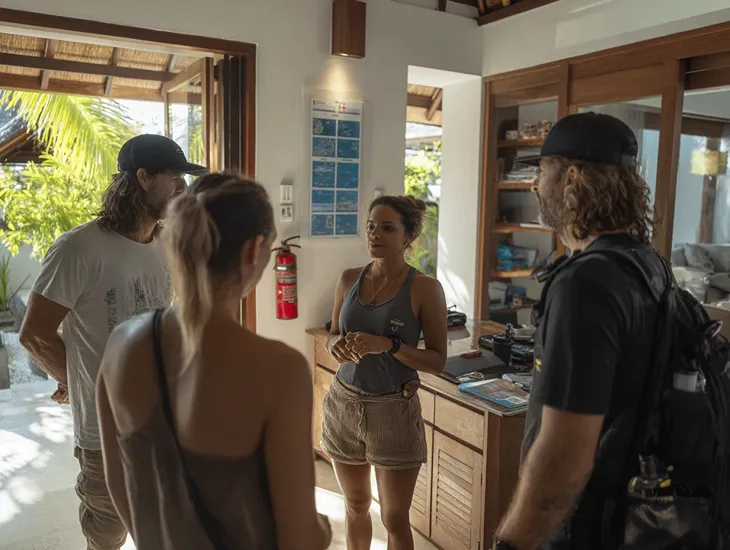
Safety is the non-negotiable core of any hospitality guide. In Bali, this means addressing specific local hazards that foreign guests may never have encountered, such as earthquakes, tsunamis, or volcanic ash. Your book must include simple, step-by-step procedures for these events, including evacuation routes and “emergency assembly points” within the villa grounds. Ignoring these risks is not just negligent; it increases your liability exposure if an incident occurs.
Beyond natural disasters, fire safety is critical. You must clearly mark the location of fire extinguishers, smoke detectors, and first-aid kits. Explicit instructions regarding the prohibition of open flames, such as candles or fire lanterns, are essential for preventing villa fires, which are a recurring issue in Bali’s dry season. Providing this information clearly in your guest safety manual shifts the liability framework, showing that you provided adequate warning and safety tools.
Drafting House Rules to Minimize Liability
House rules are your legal shield. They should clearly define the boundaries of acceptable behavior, particularly regarding noise levels and parties. In residential areas like Pererenan or Umalas, strict “quiet hours” after 10 PM are enforced by the local Banjar. Your book must explicitly state these house rules to prevent community conflicts that could lead to fines, operational shutdowns, or legal liability.
Liability clauses are equally important. While you cannot sign away negligence, you can set clear expectations regarding guest responsibility for damages and personal safety. Clauses stating that the villa is not responsible for theft of valuables left outside the provided safe deposit boxes are standard. These rules do not override Indonesian law but serve as vital evidence of your due diligence if a dispute arises. Clear, firm, but polite language helps guests understand their responsibilities without feeling policed.
Operations Guides for Appliances and Utilities
Nothing frustrates a guest more than being unable to turn on the hot water or figure out the air conditioning remote. Your guest information manual should include visual digital “how-to” guides for all appliances. Simple photos with arrows indicating “on” and “off” buttons can eliminate dozens of support calls per week.
This is especially true for pool equipment, which guests should be explicitly instructed not to touch to avoid costly repairs and potential liability for damage.
Additionally, clarify the housekeeping schedule. Guests often have mismatched expectations regarding linen changes and towel usage. By stating clearly that “pool towels are blue” and “bath towels are white,” and defining the laundry service fees, you prevent damage to your inventory and disputes over cleaning charges. A detailed operations section in your property guide ensures the physical assets of your investment survive the high turnover of short-term rentals in 2026.
Curating Bali Cultural and Survival Tips
Bali is a deeply spiritual island with unique customs that guests must respect. Your guide should include a section on “Cultural Etiquette,” explaining basics like dressing modestly when visiting temples and not stepping on Canang Sari. This cultural coaching prevents embarrassing social faux pas and endears your guests to the local community, fostering a harmonious relationship between your business and its neighbors.
On a practical level, provide a “Local Survival” list. This should include trusted vendors for scooter rentals, laundry services, and medical clinics. Vetting these recommendations protects your guests from scams and substandard services. Including digital QR codes that link directly to Google Maps locations for these partners adds a layer of modern convenience that tech-savvy travelers expect in 2026.
Step-by-Step Creation Workflow
Creating a high-quality property orientation guide requires a systematic approach. Start by auditing your property to identify every switch, remote, and rule that needs explanation. Draft the content with a tone that is welcoming yet authoritative. Once the text is ready, invest in professional design. A binder with laminated pages is durable and easy to clean, while a digital version ensures accessibility before the guest even arrives.
Review and updates are critical. A villa directory with outdated contact information or a closed restaurant recommendation is worse than useless—it damages trust. Set a schedule to review the content every six months, checking all links and contacts. This maintenance ensures your guide remains a relevant and reliable tool for every new arrival, reflecting the evolving landscape of Bali tourism and 2026 liability standards.
Digital Integration and Accessibility

In 2026, a physical book is often secondary to a digital experience. Integrating your guide into a mobile-friendly platform or a simple PDF hosted on the cloud allows guests to access information from their phones while out exploring. Sending a link to the digital Welcome Book for Villa Guests in your pre-arrival email sequence helps set expectations and answers questions before they are even asked.
This digital approach also supports contactless check-in, a preference for many modern travelers. By having the Wi-Fi password and lockbox codes accessible via a secure link, you empower guests to settle in at their own pace. However, always keep a hard copy in the villa as a backup for when phones run out of battery or internet connectivity is spotty, ensuring safety information is always available to mitigate liability.
Real Story: A Canggu Host’s Midnight Crisis
Meet Anna, a 34-year-old freelance graphic designer from Melbourne who managed a stylish minimalist villa in Berawa. Anna prided herself on her “chill” hosting vibe, skipping formal guides in favor of a quick WhatsApp welcome. But that approach collapsed on a stormy Tuesday in November 2026 when a Swedish family checked in late. Accustomed to the flawless infrastructure of Stockholm, they were unprepared for the chaotic reality of a tropical squall.
At 1:00 AM, a lightning strike tripped the villa’s main breaker. The property plunged into pitch-black darkness. The rain was pounding the roof so hard it sounded like industrial machinery. The guests fumbled for the AC remote to use its backlight, but the text was entirely in Japanese symbols. Panic set in. They tried to Google “how to reset Bali villa power,” but the Wi-Fi router was dead without electricity. Isolated in the dark, sweating in the rising humidity, and unable to contact Anna (whose phone was on “Do Not Disturb”), the father ended up trying to force the breaker box open with a butter knife—a dangerous and desperate move that created immense liability risk.
The next morning, Anna woke up to a furious cancellation and a demand for a full refund. The review was brutal: “Dangerous, terrifying, and negligent.” Shaken, Anna realized that “chill” was just a synonym for unprepared. She immediately hired a pro to build a comprehensive Welcome Book for Villa Guests. She included a flashlight by the bed, a laminated diagram of the fuse box, and a printed 24/7 emergency number. Three weeks later, another storm knocked out the power. The new guests simply followed the guide, flipped the switch, and went back to sleep. Anna learned that in Bali, true hospitality is about anticipating the chaos, not just ignoring it.
FAQ's about Villa Welcome Books
While not explicitly mandated by a specific "welcome book law," providing safety information and clear house rules is part of your duty of care to reduce liability under Indonesian consumer protection principles.
Yes, it should be on the very first page. However, for digital security, avoid putting the admin router password in the printed guide.
Bali venues open and close frequently. A review every 6 months is recommended to ensure you aren't sending guests to a permanently closed restaurant.
It is best to have both. In an emergency (like a power cut), a digital guide on a dead phone is useless. A printed copy is a necessary safety backup.
English and Indonesian are the minimum. If you have a high volume of guests from specific regions (e.g., Russia or China), adding those languages is a smart investment.
Yes. If a guest damages an item you explicitly warned them about in the House Rules section, the book serves as evidence to protect you from liability.