



Managing short-term rentals in Bali used to be a guaranteed goldmine, but the 2026 regulatory landscape has drastically shifted the equation. With stricter enforcement on zoning (PBG/SLF) and the mandatory 10% hospitality tax cutting deeply into margins, many foreign investors are feeling the squeeze of high operational intensity.
The relentless pressure to maintain five-star reviews while navigating complex compliance issues is driving a strategic pivot toward stability.
Switching to Bali Villa Long-Term Rentals offers a compelling solution for owners seeking predictable cash flow over volatility. By securing annual leases, investors can bypass many of the heavy operational taxes, OTA commissions, and staffing costs associated with daily stays.
As the Indonesian Directorate General of Taxes intensifies scrutiny on hospitality businesses, the residential leasing model provides a compliant path that reduces friction and protects net yields.
This approach is not just about avoiding stress; it is about financial efficiency. While short-term stays may show higher gross revenue on paper, the net profit is often eroded by vacancy gaps and management fees. This guide explores when and why a long-term strategy makes superior financial sense for your Bali property investment in the current climate.
Table of Contents
Comparing Yields: Short-Term Hype vs. Long-Term Reality
When analyzing profitability, it is crucial to look beyond top-line revenue. Market data for 2026 indicates that while professionally managed short-term rentals can achieve gross yields of 15%+, the actual net return often settles closer to 6–10% after deducting the 10% hospitality tax, 15–20% OTA commissions, and intensive staffing costs. The “churn” of daily guests also accelerates wear and tear, necessitating a larger capital expenditure budget for renovations.
In contrast, long-term rentals typically generate a stable net yield of 6–10%, but with significantly lower overheads. A tenant on a one-year lease covers their own electricity and consumables, and the property requires far less staff intervention. For investors, this means the “take-home” profit is often comparable to short-term rentals, but with a fraction of the effort and volatility.
Navigating the 2026 Regulatory Landscape
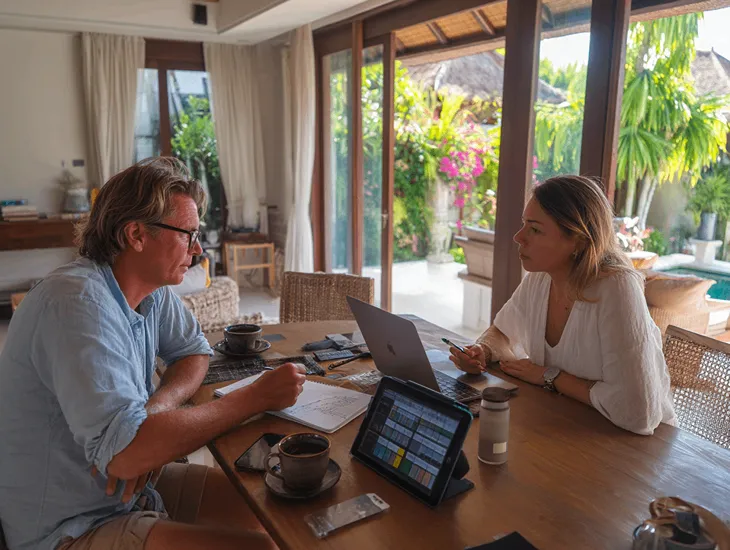
The days of operating an Airbnb in a residential zone without consequences are over. From 2026, the local government strictly enforces licensing requirements. Short-term rentals are classified as a commercial accommodation business and require a Pondok Wisata license, proper commercial zoning, and full compliance with hotel safety standards. Properties found operating without these licenses risk being delisted from platforms and facing heavy fines.
Long-term rentals, typically defined as leases of one month or longer, generally fall under the residential leasing category. This structure is far easier to navigate for villas situated in residential zones (Yellow Zone) where commercial licenses are unobtainable. For many foreign owners, the long-term model is the only 100% compliant way to monetize a property that does not meet the strict criteria for a hotel license.
Tax Advantages of Residential Leasing
One of the strongest arguments for the long-term model is tax efficiency. Short-term rentals are subject to the 10% PB1 (Restaurant and Hotel Tax) on top of the rental price, and often 11% VAT if the revenue threshold is met. These taxes must be collected from the guest and remitted monthly, adding a layer of administrative burden and price pressure.
Residential leases are generally exempt from the PB1 hospitality tax. While income tax (PPh Final) is still applicable on the rental revenue—typically 10% for residents or 20% for non-residents depending on the structure—the absence of the hospitality tax and VAT makes the pricing more competitive for tenants and simpler for owners. This structural difference can save owners roughly 20% in gross taxes and fees compared to the short-stay model.
Identifying the Ideal Long-Term Villa Product
Not every property is suited for a year-long tenant. While tourists prioritize “wow” factors like floating breakfasts and infinity views, long-term residents prioritize functionality. Designing a property specifically for Bali Villa Long-Term Rentals requires a shift in focus toward livability.
Tenants signing 12-month contracts look for enclosed, fully air-conditioned living areas (to keep mosquitoes out and humidity low), ample storage space, a fully equipped kitchen with an oven, and, most importantly, high-speed, reliable fiber-optic internet. A dedicated workspace is now a non-negotiable requirement for the digital nomad demographic. Converting a third bedroom into a home office can often add more rental value than an extra bed.
Real Story: From Cash-Flow Chaos to Upfront Security
In late 2025, Astrid, a graphic designer from Gothenburg, Sweden, treated her Pererenan villa like a savings account—but it kept leaking money. On paper, her nightly rates were high. In reality, between the 20% OTA commissions, the breakage of wine glasses, and the “gap days” where the villa sat empty, her actual take-home pay was unpredictable.
“I was constantly stressed about the next month,” she admitted. “One bad review could tank my revenue for weeks.“
She decided to exit the daily rental rat race. We advised a strategic pivot: she invested $2,000 to enclose the living area with sliding glass doors—a crucial requirement for long-term residents. The result? She didn’t just find a tenant; she found stability. A Canadian tech consultant signed a 12-month lease and paid the entire year upfront.
Astrid went from chasing payments every week to having $35,000 in her bank account on day one. Her net yield settled at a solid 8%, but the real return was the reclaiming of her time.
Structuring Ironclad Lease Agreements
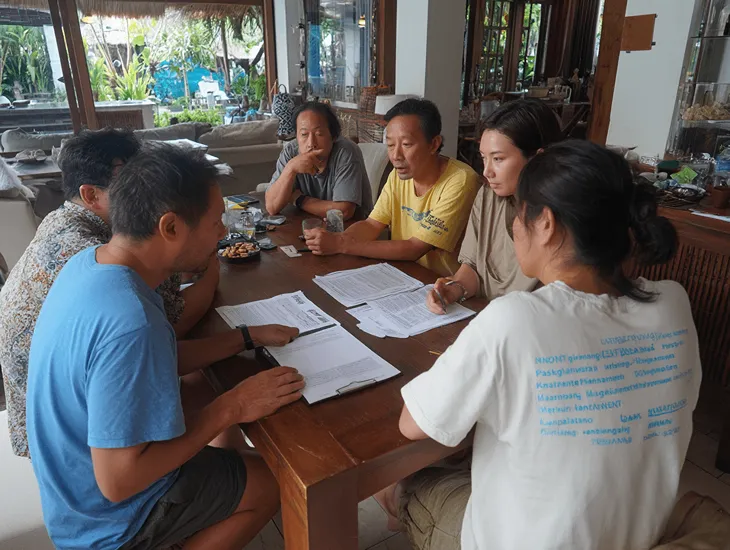
A successful long-term rental depends entirely on the quality of the lease agreement. Handshake deals or simple one-page contracts are a recipe for disaster in Indonesia. A robust lease must be bilingual (Indonesian and English) to be legally enforceable and must clearly define “minor” versus “major” maintenance.
Standard practice dictates that the tenant pays for monthly consumables (electricity, internet, gas) and minor repairs (e.g., a broken lightbulb or leaking tap under a certain cost threshold). The owner remains responsible for structural integrity and major equipment failure (e.g., pool pump or roof leaks). Clearly outlining these responsibilities prevents disputes and ensures the asset is maintained without the owner constantly opening their wallet.
Marketing to the Right Tenant Demographics
To fill a villa for a year, you cannot rely solely on OTA platforms like Airbnb, which are optimized for tourists. The demand for Bali Villa Long-Term Rentals comes from distinct demographics: relocating families, digital nomads, and semi-retired expats.
Marketing efforts should focus on specialized long-stay platforms, local Facebook community groups, and relocation agents who handle housing for families attending international schools. High-quality photos that showcase practical features—like the internet speed test results, kitchen appliances, and wardrobe space—are more effective than artistic shots of a flower bath.
Managing Operational Risks and Compliance
While long-term rentals are lower risk, they are not risk-free. A common mistake is attempting to run a “de-facto” short-term business by offering serial one-month contracts to tourists to avoid tax. The authorities are wise to this; if your tenant turnover is high, you may still be classified as a commercial accommodation business and penalized for lacking the correct licenses.
Furthermore, compliance with income tax reporting is essential. Even without the hotel tax obligation, foreign owners must report their rental income. The penalties for tax evasion can include significant fines and issues with visa renewals. Working with a tax consultant to file your annual returns ensures your investment remains secure.
FAQs about Long-Term Villa Management
Yes, a foreign-owned company (PT PMA) can legally own the Right to Build (Hak Guna Bangunan) and lease the property long-term. This is often the safest and most compliant structure for foreign investors.
It varies, but typically the owner includes the cost of pool and garden staff in the rental price to ensure the asset is maintained to a high standard, while the tenant pays for chemicals and supplies.
Generally, no. Genuine residential leases (usually defined as staying for residential purposes rather than tourism) are exempt from the local hospitality tax, though income tax still applies.
In Bali, fully furnished or semi-furnished villas command the highest demand. Most expats prefer a "turn-key" solution, though they may want to bring their own mattresses or small furniture items.
The industry standard is typically one month's rent, held as a security deposit against damages and unpaid utility bills, refundable at the end of the lease term.