



Finding the right spot for your investment in 2026 is no longer about following the “hype” but following the data. With over 7 million foreign arrivals projected this year, the demand for high-quality accommodation is surging, yet the supply is becoming increasingly segmented. Choosing between the vibrant beach clubs of the west coast and the serene cliffs of the south determines your entire ROI trajectory.
For many investors, the challenge is navigating a market where land prices have climbed significantly and zoning enforcement is at an all-time high. A property that looks perfect on paper might sit empty if it’s located in a saturated micro-pocket or a region with declining domestic interest. To truly succeed, you must align your property type with the specific demographic of the Bali locations that currently dominate the revenue rankings.
This guide provides a tactical overview of where the money is moving in 2026. By utilizing official data from the Badan Pusat Statistik (BPS) Bali, we can identify that Badung Regency remains the undisputed powerhouse, accounting for the vast majority of tourism demand. We will break down the established profit belts and the next-wave growth areas to help you master the most lucrative Locations in Bali.
Table of Contents
Macro Demand: Why Badung and Denpasar Lead
The macro picture for 2026 shows a clear concentration of wealth and tourism traffic. Most hotel and villa stays are heavily concentrated in Badung Regency and Denpasar, particularly along the south and southwest coasts. Star-rated hotel occupancy in these regions reached a robust 64.57% late last year, acting as a direct proxy for where international spending is strongest. Australia remains the dominant source market, contributing nearly a quarter of all foreign arrivals, while domestic travelers continue to favor accessible coastal hubs.
North Badung, specifically the corridor from Seminyak to Pererenan, continues to lead in availability, rental yields, and overall investor interest. For a serious business owner, these Locations in Bali provide the highest density of tourism infrastructure, ensuring that guests have easy access to world-class dining, coworking spaces, and nightlife. This ecosystem creates a self-sustaining loop of demand that standalone rural properties often struggle to replicate, making the urban-fringe corridor a primary target for capital allocation.
The High-Yield Hotspots: Canggu and Berawa
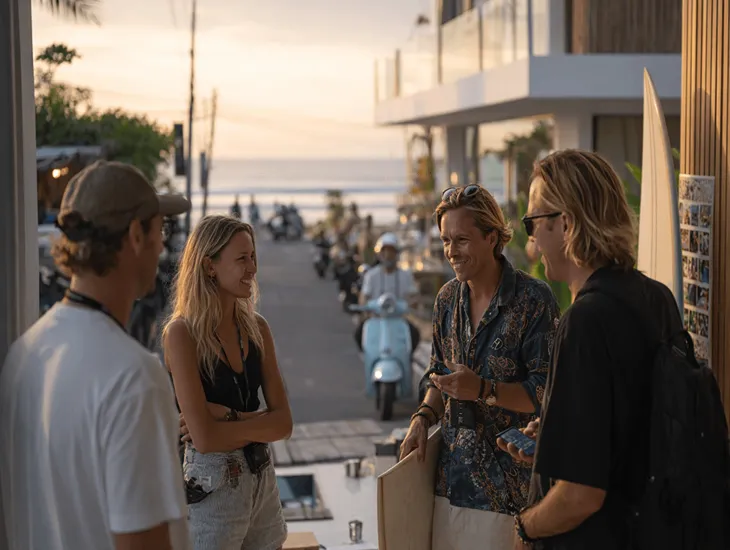
Canggu and Berawa remain the heartbeat of Bali’s modern lifestyle. This area attracts a high-spending mix of digital nomads, surfers, and young travelers who value a vibrant social scene. In 2026, the Average Daily Rate (ADR) for a well-positioned villa in this belt hovers around USD 219, with top-performing portfolios achieving annual occupancy rates as high as 92% through aggressive marketing and pricing strategies. The demand is driven by the density of high-end beach clubs and a culinary scene that rivals major global cities.
However, the sheer volume of new inventory means that generic villas are starting to see price pressure. To maintain high yields—typically ranging from 7% to 10%—investors must focus on unique architectural designs and walkable micro-locations. Properties within a five-minute drive of major beach clubs like Atlas or Finns are currently outperforming the rest of the market, proving that proximity remains king for short-term rentals across the island. The focus for 2026 is on “lifestyle-plus” properties that offer more than just a bedroom.
Timeless Returns in Seminyak’s Mature Market
Seminyak is often described as the “timeless” choice for investors who prioritize stability over speculative growth. Unlike emerging areas that still lack paved roads or reliable internet, Seminyak offers a fully established infrastructure with world-class brand recognition. Its proximity to “Eat Street” and upscale beach resorts ensures a steady influx of high-net-worth visitors year-round. The market here is less about the next big thing and more about consistent, high-occupancy performance driven by a loyal repeat guest base.
Net ROI in Seminyak typically averages between 7% and 8%, with monthly villa income ranging significantly based on luxury tiers. Because the land is largely built out, there is less risk of sudden oversupply compared to the northern fringes. For those looking for immediate cash flow and lower volatility, Seminyak stands out as one of the most reliable Locations in Bali for premium holiday rentals. Investors often find that the higher entry price is offset by the reduced risk of neighborhood character changes or construction blight.
The Luxury Stronghold of Uluwatu and the Bukit
The Bukit Peninsula, specifically Uluwatu, Bingin, and Pecatu, has transformed into Bali’s premier luxury destination. Dramatic cliffside views and world-famous surf breaks allow villas here to command premium nightly rates, often between USD 280 and USD 420 for high-end stock. Occupancy for well-positioned boutique properties remains strong, frequently hitting the 70-80% mark, as the area caters to a demographic seeking exclusivity and aesthetic perfection over central convenience.
The investment profile in the Bukit is characterized by high ADR but also higher volatility compared to the flatlands. Returns are highly sensitive to architectural quality and view protection. As professional operators move into the area, the demand for investment-grade “managed resorts” is rising. If you are targeting the high-net-worth demographic, the Bukit offers some of the most prestigious Locations in Bali for capital appreciation and luxury yields, provided the property is designed to be “Instagram-ready” from every angle.
Real Story: The Smart Pivot to Pererenan
Mateo, a Madrid-based hospitality consultant, knew Canggu was a goldmine—but he hated the noise. He initially looked at quiet plots in the deep north, but the data told him a different story: a long commute would kill his occupancy. Instead of guessing, he looked for the sweet spot: Pererenan. He wanted to build something that offered peace but still tapped into the lucrative Canggu revenue stream without being in the middle of a traffic jam.
He chose a plot just as the neighborhood began its rapid ascent. Mateo focused on a “passive cooling” design that used the natural sea breeze, a detail he knew would appeal to eco-conscious long-stay remote workers. He initially struggled with a narrow access road that often got blocked by local delivery trucks. By working with the local village council to improve the shared path and installing a high-speed dedicated fiber line for his guests, he overcame the infrastructure hurdles that often plague decentralized investments.
Today, his villa maintains an 85% occupancy rate, even during the low season. He moved from being a worried speculator to a confident owner by choosing one of Bali’s “next-ring” neighborhoods before prices peaked. His success was rooted in balancing the “quiet” aesthetic with the “walkable” reality, a strategy that allowed him to command a 15% premium over similar villas in the noisier core of Berawa.
Experiential ROI: The Soulful Market of Ubud
Ubud remains the global epicenter for wellness and cultural tourism. Unlike the beach-centric south, Ubud’s demand is driven by yoga retreats, art enthusiasts, and travelers seeking tranquility. This creates a highly predictable year-round demand for “small, soulful homes” and boutique villas that offer jungle or river views. The profitability here is less about beach access and more about the “vibe”—properties that offer an authentic Balinese experience often outperform generic modern builds.
Profits in Ubud are often more stable than in high-energy beach zones. Wellness travelers tend to stay longer and are less sensitive to the “party” seasons of the coast. For investors, this means lower turnover costs and a consistent occupancy profile. If your investment goal is steady income from a niche, experiential market, Ubud is one of the most culturally significant Locations in Bali to park your capital, especially if you focus on the outskirts where the jungle views remain unobstructed.
Stability and Defensive Yields in Sanur and Nusa Dua
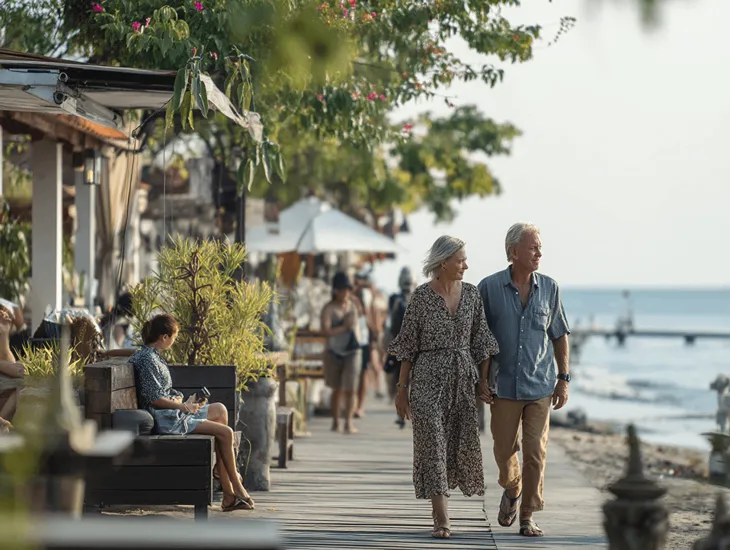
For conservative investors, Sanur and Nusa Dua offer defensive yield zones. Sanur has seen a resurgence as a quieter hub for families and retirees, particularly with the opening of the new international hospital. Its reef-protected beaches and scenic boardwalk attract a loyal, long-stay demographic that values security and accessibility. The growth here is steady rather than explosive, making it an ideal choice for those looking to preserve capital while generating a respectable monthly income.
Nusa Dua functions as a controlled resort district with high-end infrastructure and a focus on MICE (Meetings, Incentives, Conferences, and Exhibitions) tourism. While the returns may not be as explosive as the 15% yields sometimes seen in Canggu, they are significantly less volatile. These areas are perfect for those who want a diversified guest mix and a lower operational headache, emphasizing long-term stability over short-term trends. Sanur, in particular, is benefiting from a “gentrification” that is bringing upscale dining without the Canggu traffic.
Next-Wave Growth: The Rise of the West Coast Fringe
As the core of Canggu reaches saturation, the next-wave growth is moving further west to Nyanyi, Seseh, Munggu, and the Tabanan coast. These areas are repeatedly flagged as the “next growth frontier” due to their lower entry prices and scenic, undeveloped beaches. Spillover demand from Canggu is already driving up land values in these corridors. Investors here are betting on the expansion of infrastructure and the desire for “old Bali” charm.
Investing here is a medium-term play. The upside depends on how quickly infrastructure—like the upcoming Gilimanuk–Mengwi Toll Road—is completed. For forward-thinking investors, these emerging Locations in Bali offer the best chance at significant capital appreciation. Early adopters in Nyanyi and Kedungu are already seeing rising interest from surfers and “under-the-radar” tourists seeking a quieter alternative to the bustling south, often achieving yields through land appreciation that far exceeds rental income in the short term.
Evaluating Risks and Market Saturation for 2026
Profitability in 2026 is not guaranteed just by picking a popular name. Government authorities have begun discussing moratoriums on new hotel and villa licenses in saturated zones to combat overtourism and preserve water resources. High-end villas are increasingly competing with managed resort communities that offer shared amenities like padel courts and coworking spaces, which can achieve significantly higher yields than standalone units. The “managed” model is becoming the standard for international investors seeking hands-off returns.
Before committing capital, you must verify the zoning (RDTR) and ensure the land is in a Tourism Zone, often referred to as the “Pink Zone.” High profitability is meaningless if your villa cannot be legally registered for a Pondok Wisata or TDUP license. In a maturing market, the “correction” means that mediocre properties in saturated areas will see softening prices, while professionally managed, well-located assets will continue to thrive. Diligence in checking overlapping certificates and agricultural status is more critical now than ever before.
FAQs about Profitable Locations
North Badung (Canggu and Berawa) and the Bukit (Uluwatu and Bingin) currently lead the market. Well-managed properties in these Locations in Bali often see 70-85% occupancy, though generic villas in saturated pockets may see lower averages due to increased competition.
While land prices in central Canggu have peaked, the rental yields remain strong. For better capital appreciation, many investors are now looking at the next-ring areas like Pererenan, Seseh, and Nyanyi where the price-to-yield ratio is currently more favorable for new builds.
Ubud is versatile; it has strong demand for both wellness-based short-term stays and long-term expat rentals. It remains one of the more stable regions for year-round income because it is less dependent on seasonal beach tourism.
For a standalone villa, a net yield of 6-9% is a realistic benchmark. High-end, professionally managed assets in prime spots can still reach 12-15% yields if they offer unique amenities or exceptional design.
Sanur is excellent for a "defensive" strategy. It caters to a more stable demographic of families and retirees, offering lower volatility than the trend-driven markets of the west, and is less prone to oversupply shocks.
Infrastructure projects like the Gilimanuk–Mengwi Toll Road significantly boost the value of fringe neighborhoods by improving accessibility to the tourism heartland, effectively pulling new profitable zones further north and west.