


Owning a luxury villa in the tropics is a dream for many foreigners, yet the reality of the local climate can quickly turn that dream into a damp, expensive nightmare. With average humidity levels frequently soaring above 80%, the environment is in a constant state of war against your property’s structure, finishes, and furniture. For investors and long-stay residents, neglecting routine maintenance means allowing moisture to drive wood rot, metal corrosion, and aggressive mold outbreaks.
The agitation often begins with a faint musty smell in the master bedroom or a small, bubbling patch of paint behind a wardrobe. By the time these signs are visible, the humidity has likely already provided a fertile highway for subterranean termites or compromised your electrical systems. In a high-competition rental market, a single negative review mentioning “damp smells” or “visible mold” can cause a catastrophic drop in your OTA ranking and occupancy rates, devaluing your asset overnight.
The solution is to move away from reactive “quick fixes” and implement an engineered, humidity-centric maintenance system. By controlling airflow, monitoring relative humidity with precision, and hardening your villa against water intrusion, you can protect your investment for the long term. This guide provides the tactical SOPs and professional schedules required to master Villa Maintenance in Bali, ensuring your property remains a pristine, high-performing asset in any season. We utilize environmental data from the Badan Meteorologi, Klimatologi, dan Geofisika (BMKG) to ensure our moisture-control strategies are grounded in local climate realities.
Table of Contents
Why Humidity is the Primary Enemy
In the tropical archipelago, humidity is not just a weather metric; it is a destructive force that accelerates every form of physical decay. High moisture content in the air facilitates the rapid growth of fungal colonies and provides the necessary environment for destructive subterranean termites. Without consistent Villa Maintenance in Bali, the warm, moist air penetrates porous materials like drywall, teak, and fabrics, leading to irreversible damage and high capital expenditure (CAPEX) costs for owners.
Coastal areas are particularly vulnerable, where salt-laden humidity adds a layer of corrosive pressure to metal fixtures and electronic components. The consistent warmth and moisture profile of the region creates a non-stop biological active zone. This reality necessitates a shift in property management philosophy: you must maintain your villa not just for aesthetics, but for atmospheric control. By treating humidity as the primary driver of deterioration, you can extend the lifespan of your materials significantly.
Daily Routines for Effective Airflow
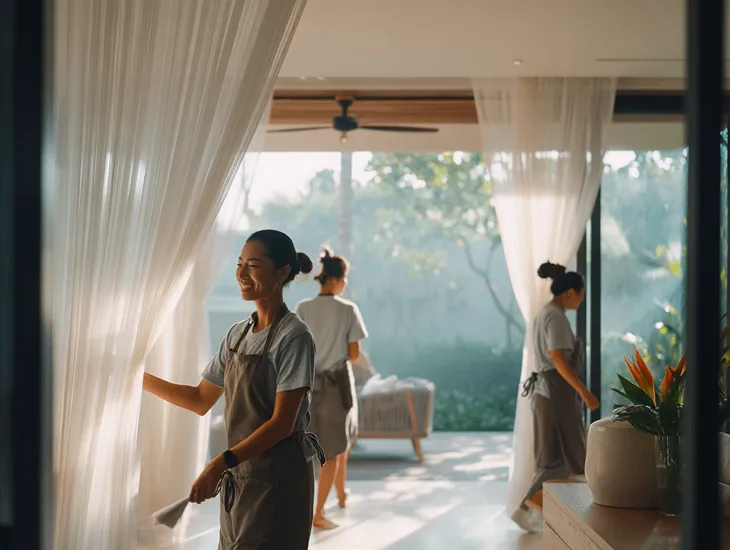
Airflow is your first and cheapest line of defense against stagnant, moisture-heavy air. Professional protocols mandate that staff open all large windows and doors for at least 20 to 40 minutes every morning when the outdoor air is typically less saturated. This “purging” process uses natural cross-ventilation to push out high-humidity air that has accumulated overnight. Strategic use of ceiling fans and roof vents during these periods can significantly enhance the volume of air exchanged, preventing the “dead zones” where mold typically takes root.
Staff must also be trained to manage internal moisture sources strictly. Bathrooms are high-risk zones; exhaust fans should run during and for 15 minutes after every shower to prevent steam from migrating into bedrooms. Furthermore, drying laundry inside is a major contributor to humidity spikes. Dedicated outdoor drying zones or ventilated laundry rooms are essential components of a professional SOP, keeping the internal environment as dry as possible to prevent water vapor from settling into the soft furnishings.
Humidity Control Targets and Tools
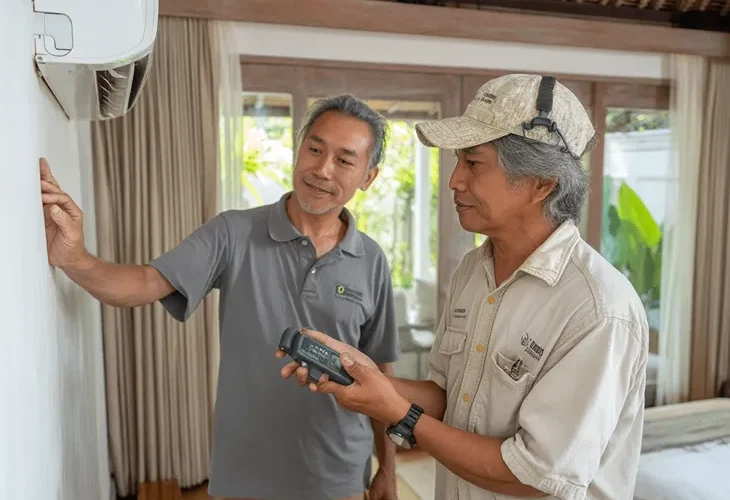
To manage humidity, you must first measure it accurately. Expert property owners deploy inexpensive digital hygrometers in every zone, including bedrooms, living areas, and even inside walk-in wardrobes. The goal of professional Villa Maintenance in Bali is to maintain indoor relative humidity (RH) between 30% and 50%, and strictly below 60%. When the hygrometer shows a reading in the high 70s, it is an immediate trigger for mechanical intervention before mold spores can activate and colonize.
Mechanical dehumidifiers are critical infrastructure for any serious investment. For standard ensuite bedrooms, units rated to remove 8–10 liters of water per day are typically sufficient, while large open-plan living areas may require industrial-grade units removing 20 liters per day. These devices should be used in tandem with air conditioning units set to “dry” or “cool” mode. Consistent monitoring allows your management team to adjust these systems proactively, rather than waiting for the physical signs of damp to appear.
Mold Prevention and Remediation SOPs
Prevention is built on a rigorous inspection SOP that targets high-risk “shadow zones”—behind curtains, under mattresses, and inside kitchen cupboards. Staff should be equipped with flashlights to scan corners and ceilings for the first signs of discoloration or bubbling paint. In a professional Villa Maintenance in Bali framework, any damp patch or recurrent mold is photographed, time-stamped, and reported within 24 hours. Early detection allows for surface-level cleaning with mold-killing solutions before the fungus can penetrate deeply into the substrate.
When remediation is necessary, it must be handled with surgical precision. For small patches, soft brushes and specialized solutions are used to kill the fungus without spreading spores. However, if mold covers more than 1 square meter or recurs rapidly, it signals a deeper moisture source, such as a roof leak or a failed waterproofing membrane. In these cases, the contaminated porous materials—like drywall or ceiling tiles—must be removed and replaced, as they can act as a reservoir for future outbreaks even after surface cleaning.
Termite and Structural Defense Programs
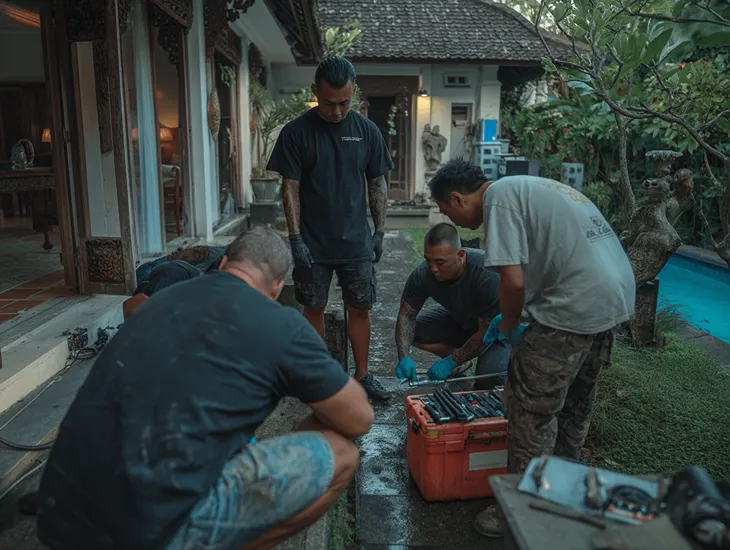
Humidity and termites go hand-in-hand; moist wood is the preferred diet of the region’s subterranean colonies. A robust maintenance plan must include a multi-layered termite defense program, starting with chemical soil injections around the foundation at least annually. Perimeter bait stations should be checked bimonthly to monitor for active colonies, while vulnerable structural elements like roof trusses and door frames should receive wood-injection treatments on a 6 to 12-month cycle to prevent silent structural failures.
Structural defense also extends to the building’s exterior envelope. Roof inspections every six months are vital for spotting displaced tiles or failed flashing that allow water to enter the roof cavity. Once water enters, the trapped humidity in the attic space can cause massive mold growth and structural rot that remains hidden until the damage is severe. Regular drainage checks ensure that water flows away from the building, preventing the “rising damp” that ruins ground-floor walls and creates a permanent humidity problem inside the villa.
Real Story: The Uluwatu Moisture Turnaround
Elena, a digital nomad from Sweden, thought her Uluwatu cliffside villa was a dream investment until her first rainy season revealed a structural nightmare. Despite hiring local “fixers” to wipe away recurring mold, the green fuzz kept returning to her leather bags and custom sofas. It wasn’t until a professional moisture audit was conducted that she realized the culprit wasn’t just the weather, but a series of AC drainage leaks hidden deep within her walls.
The persistent moisture was ruining her high-end interiors, and the recurring repair costs were eating into her rental yield. She realized she needed a more systematic approach to manage her asset. That’s when she utilized the specialized services of BaliVisa.co to implement an engineered maintenance program. They identified that her “aesthetic” ventilation was actually pulling in salt-heavy mist from the ocean and that her internal drainage was poorly graded.
The team installed industrial-grade dehumidifiers, re-engineered her AC drainage pipes, and implemented a strict morning ventilation SOP for her staff. Within two months, her hygrometers stabilized below 50% relative humidity. Elena no longer worries about her furniture rotting; instead, she enjoys 90% occupancy with guests who consistently praise the “fresh, clean air” of her home. She learned that in Bali, true luxury is only possible when you can effectively control the atmosphere of the property.
AC Systems as Humidity Infrastructure
In the local climate, your air conditioning system is your primary humidity-management tool. However, an unmaintained AC unit is often a source of mold itself. Professional Villa Maintenance in Bali requires a strict 3-month service cycle for all units. This includes deep cleaning of the interior filters, blowers, and condenser coils. If a unit is dirty, it cannot efficiently pull moisture from the air, and the damp dust inside the machine can become a primary breeding ground for black mold that then circulates through the room.
Technicians must also ensure that condensate drains are perfectly clear. A blocked drain causes water to pool inside the unit or leak into the wall, providing the exact moisture source that mold needs to thrive. Verifying refrigerant (Freon) pressure is also vital; a unit low on gas will struggle to reach the “dew point” necessary to remove water from the air, leaving your rooms cold but uncomfortably clammy. Many owners package AC service with mold inspections because the two are inextricably linked.
Management Schedules and Checklists
Expert maintenance is driven by a calendar, not by complaints. A professional schedule includes weekly visual checks for damp, monthly AC and termite audits, and intensive pre-and-post rainy season “hardening” sessions. This involves full roof walks and waterproofing touch-ups. By documenting every leak and repair in a maintenance register, owners can track recurring issues and hold contractors accountable, turning property care into a data-driven process that protects the asset’s value.
When guests are treated as partners in property care, they are more likely to help maintain the environment they are paying for. For long-stay tenants, providing a “Living with Humidity” guide can prevent thousands of dollars in damage. This guide should explain how to use the “dry mode” on the AC, the importance of keeping wardrobes slightly ajar for airflow, and the necessity of reporting any damp spots within 24 hours. This proactive communication ensures that minor moisture issues are caught before they escalate into major remediation projects.
FAQs about Villa Maintenance in Bali
Bleach often only kills the surface mold and can actually provide moisture that feeds the roots deeper in the wall. Proper Villa Maintenance in Bali involves using specialized anti-fungal solutions and, crucially, fixing the underlying moisture or airflow issue that allowed the mold to grow in the first place.
Ideally, you should have one unit per bedroom (8–10L capacity) and at least one larger unit (15–20L) for the main living area. Consistent use of these is the most effective way to protect high-value furniture and electronics from atmospheric moisture.
Dry mode is helpful for maintaining levels, but it cannot remove the same volume of water as a dedicated unit. For heavy humidity or large spaces, a standalone dehumidifier is a necessary addition to your maintenance kit to ensure the air remains crisp and dry.
Look for "mud tubes" (thin brown lines) on walls or foundations, and listen for a hollow sound when tapping wooden beams. Professional inspectors use thermal cameras and acoustic sensors to find termites hidden deep inside the structure where they are not visible to the naked eye.
Thinking that maintenance is a seasonal task. In this high-growth environment, maintenance is a weekly operational necessity. Ignoring a small leak or a humidity spike for just a month can result in damages that cost ten times more to repair later.