


Navigating the real estate landscape in a foreign country can be a daunting task, especially when legal frameworks and licensing requirements are constantly evolving. For many investors, the dream of owning a piece of paradise in Bali or a commercial asset in Jakarta is often complicated by a lack of clarity regarding which professionals to trust. Without a firm grasp of the professional property services available, foreigners risk falling into the “nominee” trap or engaging with unlicensed intermediaries who offer no legal protection.
The stakes are higher than ever in 2026, as the government has intensified its oversight of land transactions and business operations. Relying on informal advice or “handshake deals” often leads to severe financial losses, unenforceable contracts, and potential deportation for those inadvertently violating local laws. The frustration of dealing with bureaucratic delays or discovering hidden encumbrances on a land title is a common reality for those who bypass official channels in an attempt to save on property services in Indonesia.
The solution lies in a systematic approach to due diligence and the engagement of certified experts. By understanding the distinct roles of regulated brokers, land deed officials (PPAT), and professional villa managers, you can build a secure foundation for your investment. This guide, utilizing data from the Ministry of Investment (BKPM), outlines the essential ecosystem of property services in Indonesia, providing a roadmap for compliant ownership, operational excellence, and asset protection in one of the world’s most dynamic emerging markets.
Table of Contents
Regulated Real Estate Brokerage Standards
Property brokerage in the archipelago has evolved from an informal trade into a strictly regulated, medium-high-risk business activity. Under Government Regulation No. 28/2025, any entity providing property services in Indonesia related to real estate brokerage (KBLI 68200) must possess a valid Business Identification Number (NIB) and a Standard Certificate obtained through the Online Single Submission (OSS) system. This shift ensures that only legitimate Indonesian legal entities with certified expert staff can represent buyers and sellers in the market.
For the client, this regulatory framework provides a layer of institutional security. Licensed brokers are required to display their registration numbers on all marketing materials and must sign formal written agreements before commencing work. Working with a member of a recognized industry association ensures that your agent follows a standardized code of conduct and uses national payment systems, which significantly reduces the risk of fraud or price inflation that often occurs in unregulated “off-book” transactions.
Role of Legal and Notarial Services
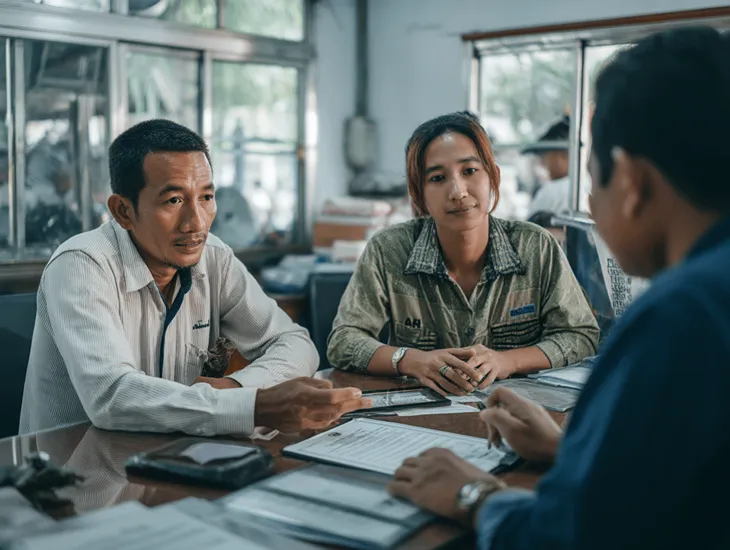
In any Indonesian property transaction, the Notary and the Land Deed Official (PPAT) are the most critical legal gatekeepers. While often the same individual, their roles are distinct: the Notary handles general legal contracts, while the PPAT has specific authority from the National Land Agency (BPN) to authenticate land transfer deeds, such as the Akta Jual Beli (AJB). Engaging these certified experts is a legal requirement for transferring titles like Hak Guna Bangunan (HGB) or Hak Pakai.
A professional PPAT is responsible for conducting a “clean and clear” check on the land title, ensuring there are no outstanding mortgages, disputes, or tax arrears before the sale proceeds. Their service fees are strictly regulated and capped at a maximum of 1% of the transaction value stated in the deed. For foreign investors, the PPAT’s role in verifying that the land’s zoning matches its intended use is the single most important step in preventing a total loss of investment due to building permit (PBG) rejections.
Villa Operations and Property Management
The scope of modern property management has expanded far beyond simple maintenance and housekeeping. Professional firms now provide end-to-end operational support, covering everything from global marketing on OTAs to complex financial reporting and tax compliance. These specialized property services in Indonesia allow owners to remain hands-off while ensuring their asset maintains high occupancy and revenue growth. Most reputable managers operate on a performance-based fee structure, aligning their success directly with the owner’s rental income.
Compliance is a major pillar of professional management in 2026. A serious manager ensures that the villa operates under the correct tourism licenses and files monthly tax reports on the owner’s behalf. This includes the collection and payment of the regional hotel/villa tax (PBJT). By providing detailed monthly income and expense statements backed by official receipts, professional management companies offer a level of transparency that protects the owner from local audits and ensures the property remains in good standing.
Foreign Investment and Legal Advisory
Foreigners navigating the Indonesian market must understand that direct “freehold” (Hak Milik) ownership is legally prohibited for non-citizens. Instead, investors utilize structured pathways such as Hak Pakai (Right to Use) for residential purposes or a Foreign-Owned Company (PT PMA) for commercial villa operations. Expert legal advisory within the scope of property services in Indonesia is essential here to design a compliant holding structure that meets minimum capital requirements and selects the appropriate KBLI codes.
Real estate law firms help design these structures, providing the necessary due diligence that marketing agents may overlook. This includes drafting ironclad lease agreements, shareholder structures, and ensuring that any development project adheres to regional zoning maps. Investors are strongly advised to separate their “sales” representation from their “legal” representation. A dedicated legal advisor works solely for your interests, verifying that every document—from the initial deposit agreement to the final land certificate—is legally defensible in an Indonesian court.
Valuation and Feasibility Studies
Before committing millions of dollars to a land bank or a resort development, institutional and savvy private investors utilize formal valuation and advisory services. These specialized property services in Indonesia provide data-backed reports on “Highest and Best Use” (HBU), market demand trends, and long-term investment feasibility. In Jakarta, these firms typically handle large-scale commercial, retail, and office assets, while Bali-based specialists focus on the nuances of luxury villa and hospitality revenue models.
Formal valuation reports are not just for the buyer’s peace of mind; they are often a mandatory requirement for securing bank financing or conducting corporate mergers and acquisitions. An independent valuer assesses the asset based on certified national and international standards, filtering out the speculative “asking prices” found on social media. Utilizing these specialized services ensures that your capital is deployed efficiently and that your projected returns are grounded in verified market data rather than marketing hype.
Real Story: The Pererenan Property Pivot
Julian, a software architect from London, was minutes away from wiring his life savings for a 30-year lease in Pererenan. The Instagram ad was perfect, and the agent was charming. However, before signing, Julian decided to audit the deal. He discovered that the “ready to build” plot was actually protected Green Belt land—a detail his unlicensed agent had conveniently ignored, which would have rendered his investment worthless.
Agitated by the close call, Julian decided to pivot and utilized a licensed PPAT and a regulated brokerage firm to find a compliant plot. The challenge was finding a location with verified zoning that allowed for commercial tourism. With his new team, he conducted a thorough title search and verified the Hak Pakai structure before a single dollar was transferred. He realized then that a professional approach to property services in Indonesia was his only real protection.
Julian successfully registered a PT PMA to operate his villa legally. He integrated a professional management system to handle his monthly reporting, ensuring his business was fully compliant with the 2026 tax laws. Today, Julian’s villa is a top-performer in the Pererenan market, boasting a 90% occupancy rate. He realized that the cheapest advice often ends up being the most expensive mistake you will ever make when dealing with international real estate.
Compliance and Mandatory Business Reporting

Operating a property business in Indonesia in 2026 requires more than just a license; it requires ongoing active reporting. Companies, particularly those with foreign investment (PT PMA), must file Investment Activity Reports (LKPM) quarterly via the OSS system. Failure to do so can lead to administrative sanctions, including the revocation of business licenses. This is where professional help in the administrative and accounting sectors proves its value by keeping your business in good standing.
Additionally, owners must be aware of the Sertifikat Laik Fungsi (SLF), which certifies that a building is technically safe and compliant with its approved plans. Obtaining and renewing the SLF involves rigorous inspections of the building’s structural, electrical, and plumbing systems. A professional property manager or legal consultant will track these renewal dates and coordinate with local authorities to ensure your villa remains legally habitable and insurable. Reliable property services in Indonesia must include this ongoing administrative oversight.
Selecting the Right Professional Partners
The key to success in the Indonesian market is not just finding a service provider, but finding a licensed one. Since there is no single, real-time public database for all property professionals, clients must take an active role in verification. Always ask to see the provider’s NIB, verify their membership in associations, and check their physical office presence. A legitimate firm providing property services in Indonesia will always be transparent with their credentials.
Furthermore, consider the “domain expertise” of your partner. A firm that specializes in high-rise Jakarta office space may not understand the specific drainage, community relations, and holiday-rental seasonality of Uluwatu or Ubud. Selecting partners who live and work in your specific target neighborhood provides a level of “boots on the ground” intelligence that no glossy brochure can replace. Build a team that communicates clearly but has deep roots in the local Indonesian bureaucracy.
FAQs about Property Professionalism
According to current regulations, real estate brokerage (KBLI 68200) is reserved for Indonesian legal entities. While foreigners can work as consultants or marketing directors within a licensed Indonesian firm, they cannot act as independent brokers without the proper work permits (KITAS) and entity backing.
Under ATR/BPN Regulation No. 33/2021, the maximum fee for PPAT services is 1% of the transaction value. This fee covers the drafting of the deed and the processing of the title transfer at the land office, though additional administrative costs for tax payments may apply.
If you live in the villa and do not rent it out, you may not need a full management service. However, many owners still utilize property services in Indonesia for specific technical needs like pool maintenance, pest control, and legal compliance to ensure their asset remains protected.
Check for their NIB (Business Identification Number) and ensure they have a physical office. A legitimate company will provide you with a formal management agreement and transparent, monthly financial reports. They should also be able to demonstrate their knowledge of local tourism tax (PBJT).
You are taking a high legal and financial risk. Unlicensed agents cannot provide official receipts, their contracts may not be enforceable in court, and they offer no protection if the transaction involves fraud. Always insist on a licensed professional to protect your capital.
While not mandatory, it is highly recommended for any investor looking to maximize ROI. It helps you decide, for example, whether to build one large luxury villa or two smaller units, based on actual market demand and construction costs in your specific area.