

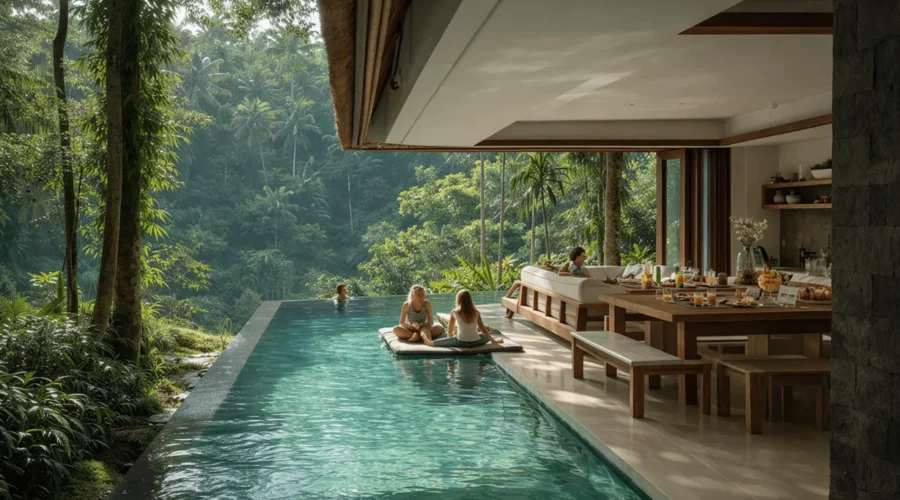
In the rapidly evolving landscape of 2026, the era of constructing generic concrete boxes on the Island of the Gods is effectively over. Modern travelers and investors are rejecting sterile, enclosed spaces in favor of properties that breathe, integrating the island’s lush topography directly into the living experience.
As we move into 2026, biophilic architecture and PBG compliance have become the benchmarks for luxury design in Bali. Today, inspiring villa designs are defined not just by aesthetics, but by a complex strategy involving strict zoning laws (KKPR) and building approvals (PBG) that punish those who ignore the natural contours of the land.
The primary challenge for many landowners stems from the conflict between vision and regulation. You might dream of a jungle retreat that “flows” down a riverbank, only to find that such concepts trigger complex environmental impact assessments (UKL-UPL) or structural safety fears.
Missteps here—such as cutting too many trees or ignoring setback rules—can lead to construction halts and assets that are legally compromised.The risk is real: a “nature-integrated” villa without the correct SLF certificate is a liability, not a sanctuary.
The solution lies in adopting a true biophilic strategy that aligns architectural creativity with legal rigor. By prioritizing site-responsive massing, passive cooling, and local materials, you can create a property that commands higher occupancy and asset value while remaining fully compliant.
This guide unveils the most inspiring villa designs in Bali and the practical, legal frameworks required to bring them to life, ensuring your investment is as safe as it is serene.
Table of Contents
Biophilic Architecture Rooted in Balinese Tradition
The concept of blending nature with architecture is not a modern invention; it is the DNA of Balinese design. Academic studies highlight that traditional Balinese architecture inherently follows biophilic patterns—connecting occupants to nature through open pavilions (bale), framed views, and the sound of running water.
Contemporary inspiring villa designs are simply modern evolutions of these principles, using tactile materials like wood, stone, and bamboo to restore the human-nature connection that urban life often severs.
Modern “serenity” villas move beyond the visual to include non-visual connections such as airflow and scent. By utilizing open floor plans and deep overhangs, these designs encourage cross-ventilation, reducing the need for artificial cooling.
This approach supports eco-tourism trends where guests seek a “refuge” that offers both the prospect of nature and a sense of safety, a core tenet of biophilic theory that drives guest satisfaction and repeat bookings.
Legal Requirements for Nature-Centric Design
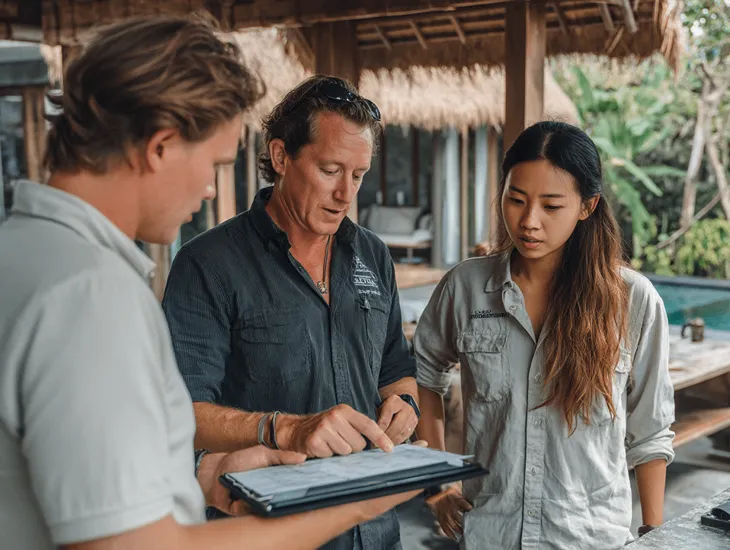
Even the most organic inspiring villa designs must satisfy rigid technical standards. As of 2025, the PBG (Persetujuan Bangunan Gedung) has replaced the old IMB system. This technical approval confirms that your nature-integrated design meets strict zoning, structural, and safety standards.
To obtain a PBG, owners must submit full architectural drawings, soil tests, and often an environmental management plan (UKL-UPL) to prove that the construction will not degrade the surrounding ecosystem.
Compliance is non-negotiable. Building in a “green zone” or protected area is explicitly prohibited, regardless of how eco-friendly the design claims to be. Legal guides warn that ignoring these zoning maps (KKPR) faces high risks of demolition or sealing. Furthermore, the SLF (Certificate of Functional Reliability) is required before operations can begin, ensuring that the “serene” open spaces meet safety codes regarding railings, drainage, and structural integrity.
Case Study: Cala Blanca House in Pererenan
Cala Blanca in Pererenan serves as a prime example of how modern architecture can cultivate an intimate relationship between the dwelling and the landscape. Designed by Biombo Architects, the property features an organic, sloped pool that mimics a natural shoreline, set beneath a mini-jungle of coconut palms. The design dissolves the boundary between indoor and outdoor spaces, creating a seamless flow that feels expansive yet private.
The villa utilizes a mix of sculptural concrete forms and warm local wood, demonstrating that modern luxury does not have to be cold. By preserving the existing vegetation and shaping the architecture around it, Cala Blanca achieves a resort-like atmosphere on a residential scale. This approach proves that respecting the site’s natural features can result in a unique asset that stands out in the competitive Pererenan market.
Case Study: Rumah Semilir in Cemagi
Rumah Semilir offers a masterclass in topography-responsive architecture. Instead of flattening the land—a common mistake in generic projects—Lumbung Architect embraced the site’s existing two-meter slope.
The pool is positioned on the lower level, reducing the need for excavation and opening up wide views of the surrounding rice fields. Vertical ironwood cladding mimics the verticality of the rice plants, visually anchoring the structure to its agricultural context.
The layout centers life around the landscape, featuring a sunken outdoor seating area that provides a sense of enclosure within the open field. This design choice reduces the visual bulk of the villa, allowing it to sit lightly on the land.
By using local stone and wood, the project minimizes its carbon footprint while delivering the authentic, grounded aesthetic that characterizes the most innovative properties in the current market.
Real Story: The Sayan Ridge Challenge
Meet Elara, a 36-year-old wellness entrepreneur from Spain. She purchased a plot of land on the Sayan Ridge in Ubud, visualizing a retreat center floating above the jungle canopy. However, reality hit hard when she saw the geotechnical report: the site had a precarious 35-degree slope and loose volcanic soil.
Three different contractors advised her to “cut and fill”—essentially flattening the hill with heavy machinery—to make construction cheaper and faster. Elara refused, knowing this would destroy the ancient banyan trees and destabilize the land she fell in love with.
Frustrated by the lack of sensitive options, she turned to Bali Villa Management for a second opinion. They connected her with a structural engineer specializing in PBG-compliant piling for steep terrain. Instead of a concrete block foundation, they designed a split-level structure on reinforced stilts that barely touched the ground.
The construction process was slower and 15% more expensive than a standard build due to the manual labor required to transport materials down the slope without cranes. However, the result was a multi-tiered villa that preserved 90% of the original vegetation.
The natural airflow was so effective she eliminated AC in the living areas, drastically cutting her long-term utility bills. By working with the land rather than conquering it, Elara created a property that achieved 90% occupancy even during the low season.
Eco-Hospitality Benchmarks and Trends
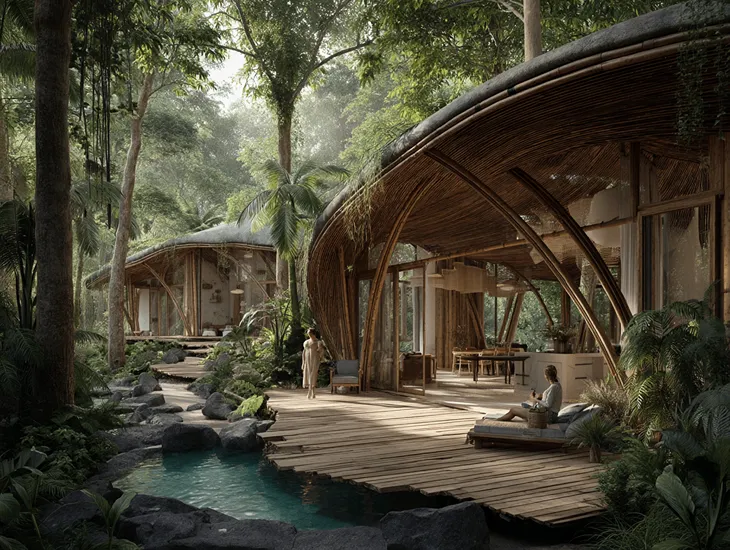
High-end resorts like Capella Ubud set the benchmark for biophilic hospitality. In this project, not a single tree was cut during construction; instead, tented villas were elevated within the canopy using manual labor to minimize land disturbance.
This commitment to “touching the earth lightly” creates a profound sense of place that generic resorts cannot replicate. Similarly, Ulaman Eco Luxury Resort features floating villas above a bio-filtered lake, using bamboo and rammed earth to immerse guests in tranquility.
These benchmarks influence residential inspiring villa designs by raising guest expectations. Travelers now look for properties that offer passive cooling and natural materials as standard luxuries.
The trend is shifting toward “design as experience,” where the architecture itself serves as the primary amenity. Integrating these eco-hospitality principles into private villas allows owners to tap into the premium market of eco-conscious digital nomads and luxury travelers.
Practical Design Inclusions for Owners
To achieve a nature-integrated aesthetic that performs financially, owners should focus on site-responsive massing. Avoid leveling the site; instead, use terracing to follow natural slopes. This frames unique views of rivers or jungles and creates distinct zones within the property.
Large openings and sliding doors are essential for inspiring villa designs, maintaining a visual connection with the garden while controlling glare and rain ingress.
Materiality is equally important. Use local ironwood or teak (where legal) and natural stone to anchor the villa in its cultural context. Passive climate strategies, such as high ceilings and double-layer thatch roofs, can significantly reduce energy costs by keeping interiors cool naturally.
Finally, incorporate sensory elements like koi ponds or water features to provide a calming auditory backdrop, masking external noise and enhancing the feeling of serenity.
Risks of Eco-Washing and Non-Compliance
A major pitfall for investors is “eco-washing”—marketing a project as green without the substance to back it up. Projects that claim to be eco-friendly but lack proper waste management or environmental permits (UKL-UPL) can backfire, leading to regulatory fines and reputational damage.
The Ministry of Environment and Forestry is increasingly vigilant about projects that damage watersheds or protected landscapes.
Structurally, designs that prioritize drama over safety can lead to disaster. Over-exposed glass facades without shading can turn a villa into a greenhouse, making it uninhabitable during the day. Furthermore, ignoring PBG standards for drainage or slope stability can result in long-term maintenance nightmares.
True serenity comes from knowing your property is safe, compliant, and built to last, not just from a pretty Instagram photo.
FAQs about Inspiring Villa Designs in Bali
Yes, you need a PBG (building approval) based on a design that complies with KKPR zoning. For sensitive areas, an environmental assessment (UKL-UPL) is also required.
Biophilic designs improve guest well-being, increase occupancy rates through higher appeal, and can reduce energy costs via passive cooling strategies.
Yes, but it requires specialized structural engineering and PBG approval to ensure slope stability. Avoid "cut and fill" methods that damage the land.
Treated bamboo is highly durable and sustainable. However, it requires regular maintenance and protection from the elements to ensure longevity.
Verify the zoning (KKPR) before buying, hire a licensed architect to submit PBG drawings, and ensure you obtain the SLF certificate before operating.