


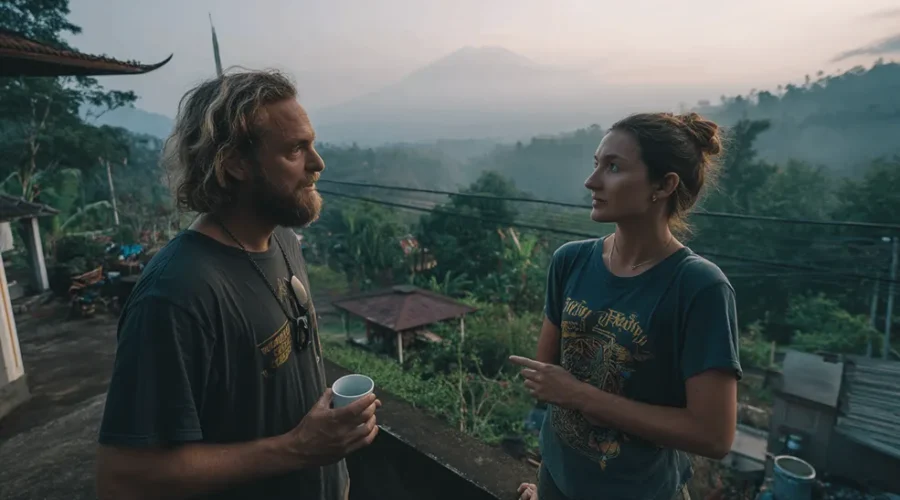
Foreigners in the Indonesian archipelago are increasingly feeling the squeeze of overcrowded southern hubs where construction noise and traffic have become part of a tiring daily routine. The once-quiet alleys of the south are now dense commercial corridors, leaving those seeking peace and authentic Balinese charm in a state of growing frustration.
As the island evolves in 2026, many are looking for a sanctuary that offers a slower pace of life without sacrificing the infrastructure needed for modern living according to the National Development Planning Agency.
The tension stems from the mismatch between the “tropical dream” and the urban reality of the south’s saturated markets. High property prices and dwindling green spaces have forced long-term expats and investors to look further afield for value and tranquility.
There is a palpable sense that the “real Bali” has migrated north, hidden behind the mountain passes of Bedugul and along the volcanic shores of the Buleleng regency.
The solution for those wanting a lifestyle pivot is the decision to Explore North Bali, a region currently undergoing a massive transformation labeled as “old Bali with new infrastructure.”
With major government projects like the North Bali International Airport now formally integrated into the national development plan, this quadrant offers a unique window for early-mover advantage.
This guide provides a detailed look at the villas, activities, and legal landscapes that define northern living in 2026.
Table of Contents
2026 Infrastructure: The Airport and Toll Road
Living in North Bali in 2026 offers a blend of Lovina’s beaches, Munduk’s nature, and Buleleng’s expanding infrastructure. For years, the north was considered a “day trip” destination, but it has now become a primary residential contender.
The catalyst is the inclusion of the North Bali International Airport near Singaraja into Indonesia’s medium-term development plan.
This government-backed project, supported by Presidential Regulation No. 12/2025, aims to balance the island’s tourism load and revitalize the northern economy.
As you plan to explore North Bali for investment, you will notice the early signs of this expansion, from improved road connectivity to the rising interest in coastal land plots that offer significant capital appreciation potential.
The lifestyle profile of the north remains its strongest draw. Unlike the white-sand, surf-heavy south, the north is defined by black-sand beaches and calmer seas perfect for swimming.
Property-market reports indicate that ROI expectations for villas in Bali are normalizing into a 6–9% range, making the lower entry prices in the north particularly attractive for long-term investors.
While the high-yield “flip” culture of the south is less prevalent here, the potential for growth tied to the upcoming airport project provides a compelling long-term thesis for those looking to build a sustainable portfolio.
Top Areas to Base Yourself: Coastal to Highlands

When you decide to explore North Bali as a permanent base, the first stop for most expats is Lovina. This coastal strip, encompassing villages like Kalibukbuk, is the heart of northern tourism. It offers a relaxed seaside lifestyle with a growing collection of boutique cafes, restaurants, and villas.
Lovina is famous for its sunrise dolphin tours and proximity to hot springs, making it ideal for retirees and digital nomads who prefer a quiet beach town vibe over a club-centric environment. The community here is smaller but more integrated, with social life revolving around beach bars and local community events.
Singaraja, the former colonial capital, serves as the administrative and commercial center of the north. Located just twenty minutes from Lovina, it provides better access to large traditional markets, hospitals, and government offices.
For those who want a more urban feel with direct access to services, Singaraja’s coastal suburbs offer a unique residential experience. Further east, Tejakula attracts wellness seekers and divers, offering larger land plots at lower prices. Meanwhile, the mountain village of Munduk provides a cool-climate alternative, where properties are nestled among coffee plantations and clove trees.
Villa Living Standards and Rental Pricing
The villa stock in North Bali is distinct from the cookie-cutter Mediterranean designs currently flooding the south. Here, you will find a more eclectic mix of beachfront estates, traditional Balinese-inspired hillside villas, and modern eco-retreats.
Prices for a three-bedroom villa with an ocean view in Lovina are often significantly lower than a comparable property in the south. This price gap allows long-term residents to enjoy a higher standard of living, often including full-service staff and expansive garden spaces that would be prohibitively expensive elsewhere when you Explore North Bali as a potential resident.
However, the rental market operates at a different pace. While South Bali thrives on high-turnover nightly bookings, the north is more oriented toward monthly and yearly stays. Expat guides highlight a consistent demand for yearly rentals from retirees and slow-traveling families. If you choose to invest here, you must understand that booking volumes are currently lower than the south.
Success depends on high-quality management and a product that caters to the “slow living” demographic—think robust kitchens, reliable solar power, and spaces designed for quiet contemplation.
Nature and Adventure: Beyond the Tourist Path
The lifestyle in the north is deeply rooted in the natural environment. Beyond the iconic dolphin watching in Lovina, the region is home to some of the island’s most spectacular waterfalls, including Sekumpul and Gitgit. These sites offer world-class trekking and photography opportunities that are far less crowded than the “Instagram spots” of central Bali.
For those focusing on wellness, the Banjar Hot Springs and the nearby Brahmavihara-Arama Buddhist monastery provide a peaceful setting for cultural rejuvenation. This connection to the land is a recurring theme for those who explore North Bali deeply to find authentic experiences.
Marine activities are another pillar of northern life. The calm, clear waters are ideal for snorkeling and diving, particularly in the reefs near Tejakula and the Menjangan Island area further west. Many residents spend their weekends exploring the lakes of Bedugul or the high-altitude trails of Munduk.
The community life reflects this outdoor focus; you are more likely to meet fellow expats at a local trekking group or a sunset beach volleyball game than at a high-end beach club. This balance of nature and community is what defines the northern experience for those seeking a more grounded lifestyle.
Real Story: Clara’s North Bali Transition
Meet Clara, a 38-year-old freelance designer from Berlin. When she first moved to Bali, she settled in the heart of Berawa, drawn by the coworking spaces and the social buzz. However, by late 2025, the traffic and the constant drone of nearby villa construction began to impact her productivity.
She found herself working from a dark room to avoid the dust, and her “tropical life” had become an endless cycle of dodging scooters and expat clichés. The lack of open green space made her feel disconnected from the reasons she moved to Indonesia in the first place.
Frustrated, Clara decided to Explore North Bali during a long weekend. She was struck by the silence of the black-sand beaches and the genuine warmth of the local community. She used Bali Villa Management to find a long-term rental, eventually securing a stunning hillside villa overlooking the Bali Sea for nearly half the price of her Canggu studio.
The damp mountain air and the smell of drying cloves in the nearby village replaced the scent of exhaust fumes.
Clara’s transition was not without its challenges; she had to plan her grocery trips to Singaraja more carefully and adjust to a slower social life. But the payoff was immense. She now spends her mornings swimming in a calm ocean and her afternoons working from a terrace with an unobstructed view of the sunset.
Her story is a testament to the fact that while the north requires more self-sufficiency, the rewards in terms of peace and space are unmatched for those willing to leave the southern bubble to find their own sanctuary.
Marine Life and Wellness Culture

The wellness culture here is centered on the island’s volcanic heritage. The Banjar Hot Springs offer a therapeutic escape that many residents incorporate into their weekly routine. Unlike the commercialized yoga scene of the south, wellness in the north is often quieter and more focused on natural healing.
This culture extends to the marine environment, where the absence of heavy boat traffic and surfing waves creates a sanctuary for diverse coral reefs and sea life. This environment will surely help you Explore North Bali with a renewed sense of energy and purpose.
This tranquil environment is a key selling point for retreat-style villas. Developers are increasingly focusing on eco-conscious designs that integrate with the surrounding jungle or coastline. As the health-conscious travel market grows, North Bali is positioning itself as the premier destination for long-term “slow-travel” stays.
This shift is not just about tourism; it is about creating a sustainable community where the natural environment is the primary amenity. Investors are taking note, as these properties offer a unique market niche that is less sensitive to the price wars of the saturated southern districts.
Legal Framework for Northern Property Owners
Investing in the north follows the same legal frameworks as the rest of Indonesia, but with different market dynamics. Foreigners typically utilize leasehold structures or form a PT PMA to hold Right to Build (HGB) titles.
Legal compliance is non-negotiable; any villa operated for commercial purposes must have a valid building approval (PBG) and a Certificate of Feasibility (SLF). As the Indonesian National Land Agency (BPN) tightens oversight, ensuring your property meets these standards is essential as you explore North Bali property options for your portfolio.
The entry prices in Buleleng remain the primary investment hook. For the cost of a small apartment in Seminyak, investors can often secure a large plot of beachfront land in Tejakula. However, the exit strategy must be considered. Resale liquidity in the north is currently slower than in the south.
A villa here should be viewed as a lifestyle asset that generates steady long-term income rather than a quick speculative play. Protecting your investment means working with consultants who understand the specific nuances of Buleleng’s regional regulations and the importance of thorough title verification.
Risks and Trade-offs of Northern Living
The greatest risk in the north is the “airport factor.” While the North Bali International Airport is a cornerstone of the 2026 investment narrative, large-scale projects can face timeline shifts. Betting your entire ROI on a specific completion date is risky.
Investors should model their returns based on current demand while treating future infrastructure as a potential bonus. This measured approach is exactly what makes you Explore North Bali with purpose and a clear-eyed understanding of the market.
The other trade-off is lifestyle friction. North Bali lacks the high concentration of international hospitals and specialized schools found in the south. Living here requires a level of independence and a willingness to drive further for specialized services. If you expect the high density of amenities found in Canggu, you will be disappointed.
However, if you are looking for a quieter, more sustainable way of living, the current trade-offs—a slower pace and fewer amenities—are exactly what make the region so valuable for those seeking long-term tranquility.
FAQs about Exploring North Bali
Currently, the drive from Canggu to Lovina takes about 2.5 to 3.5 hours. The planned toll road aims to reduce this, but the project is still in its early phases.
Singaraja has several learning centers, but the variety is not as wide as in the south. Many families choose homeschooling or smaller community-led pods.
Yes, fiber-optic internet is widely available in Lovina and Singaraja. In more remote areas, satellite-based options or 4G/5G signals are commonly used.
Yes, provided you have the correct business identification and building approvals. It is essential to Explore North Bali zoning to ensure your property is in a tourism-designated area.
Generally, yes. The northern coast has much calmer water than the south, with little to no surf, making it excellent for swimming and snorkeling.
Rent a scooter or a car and spend a few days in each neighborhood. The mountain vibe of Munduk is very different from the coastal feel of Lovina, and you need to feel the pace yourself.

