


Many foreigners arrive in Bali seeking a tropical sanctuary, only to find that much of the new-build market consists of generic designs that ignore the island’s unique spirit.
These structures often lack character, feel disconnected from the landscape, and struggle to attract high-value guests who are searching for a true Balinese experience.
Building or renovating without a deep understanding of local aesthetics and regulations is a common pitfall. A beautiful property that ignores Balinese cultural principles or lacks the necessary legal permits becomes a significant financial liability.
In 2026, authorities are increasingly strict, sealing properties that do not adhere to safety, zoning, and structural standards.
The solution is to embrace authentic villa design as a dual-purpose strategy for emotional resonance and legal security.By blending traditional architectural elements with modern biophilic principles and following the mandatory OSS Indonesia permit sequence, you can transform your space into a high-performing asset.
This guide provides the roadmap to creating a villa that is culturally rooted, environmentally conscious, and fully compliant.
Table of Contents
Defining the DNA of Authentic Balinese Architecture
At its heart, authentic villa design is guided by the philosophy of Tri Hita Karana—the harmony between people, nature, and the divine. This is not just a spiritual concept but a functional architectural blueprint.
Traditional Balinese homes are organized around open-air pavilions, known as Bale, which allow for natural cross-ventilation. Key elements include the use of alang-alang thatched roofs, volcanic stone (paras), and intricate teak carvings that reflect local craftsmanship.
Integrating these elements requires a respect for orientation and landscape. Shrines (pelinggih) and garden-integrated bathrooms are essential components that create the “real Bali” atmosphere guests crave.
In 2026, authenticity means moving away from closed-off, air-conditioned living rooms and returning to spaces that breathe with the garden. By using local materials and traditional layouts, owners can create a property that feels timeless and culturally significant.
Contemporary Hybrids: Japandi and Eco-Luxury
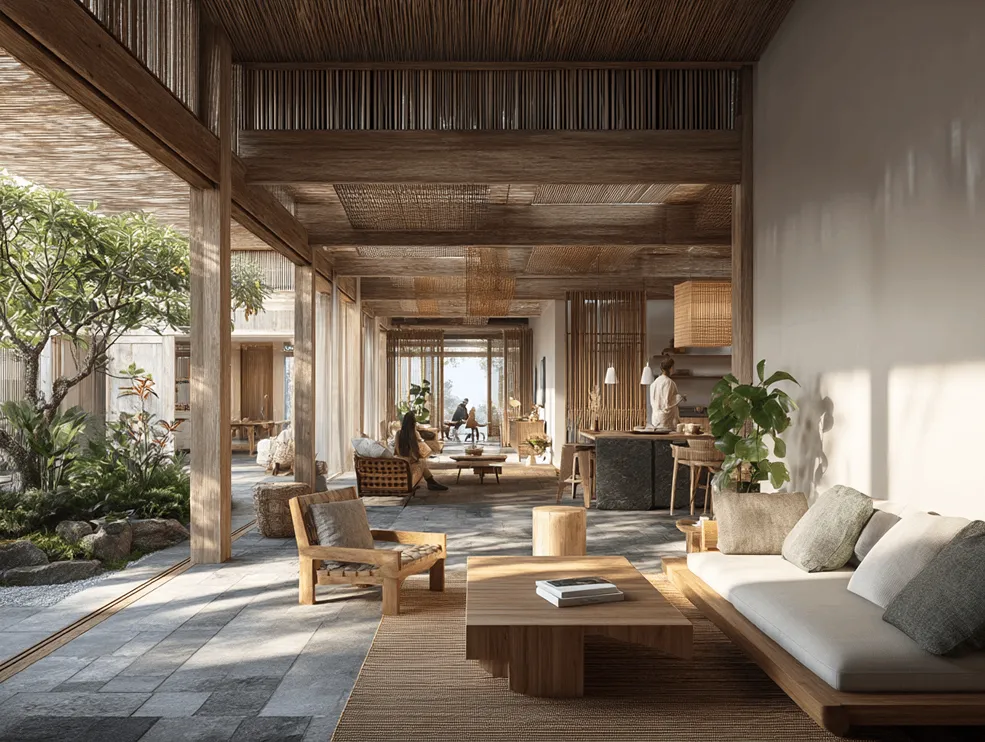
While traditional architecture is the anchor, 2026 design guides highlight the success of “Authentic Hybrids.” Many investors now favor Modern Balinese styles that combine clean lines with organic textures.
For example, Balinese-Japandi is a rising favorite, merging Japanese-Scandi minimalism with warm Indonesian woods and low-slung furniture.
Mediterranean-inspired designs also remain popular in coastal hubs, provided they incorporate Balinese landscaping to ground them in the local context and achieve an authentic villa design feel.
Eco-Friendly concepts are also part of this movement, involving low-impact materials like bamboo and recycled timber alongside solar power and rainwater harvesting. Renters are increasingly prioritizing wellness-oriented spaces that feel calm and uncluttered.
A winning design strategy often uses a neutral color palette paired with textured natural surfaces like linen and rattan, ensuring the villa feels like a true sanctuary rather than a standard hotel room.
The Legal Foundation: KKPR and Zoning Verified
Before you begin to transform your space, you must verify that your design is legally permissible on your specific plot. The first pillar of a compliant villa is the KKPR (Kesesuaian Kegiatan Pemanfaatan Ruang) zoning approval.
Obtained via the OSS RBA system, the KKPR verifies if your land is designated for residential use (Yellow zone) or tourism accommodation (Pink zone). Building in a protected Green zone is prohibited and will lead to demolition regardless of the architectural quality.
Understanding the RDTR (Detailed Spatial Plan) maps is essential, as the government has digitized these maps for instantaneous enforcement. You must ensure your land title aligns with the intended use of the property.
If you plan to rent your villa out commercially, your KKPR must reflect tourism use. Starting with a verified legal foundation is the only way to protect your investment and ensure that your authentic villa design can actually be realized.
PBG and SLF: The Non-Negotiable Permits
The second and third pillars of legal compliance are the PBG (Building Approval) and the SLF (Certificate of Feasibility). To comply with legal design standards, the structure must adhere to setbacks from rivers or cliffs and height limits (typically 15 meters).
The PBG confirms that your architectural, structural, and MEP (Mechanical, Electrical, and Plumbing) plans comply with safety and environmental rules. Without a PBG, construction cannot legally begin.
Once construction is finished, the SLF is the final mandatory requirement. This certificate proves the building is safe for occupancy and functions as intended. Authorities in Bali have recently sealed operating villas that failed to obtain an SLF.
Scoping your authentic villa design project with an architect and legal team to ensure this sequence is planned from day one is a critical step for any serious owner.
Real Story: Clea’s Ubud Sanctuary Transformation
Clea, a 44-year-old former marketing executive from Melbourne, purchased an aging, 20-year-old villa in Ubud that had lost its charm to moss and poor maintenance. She struggled with a “closed-in” feeling—the original design used heavy concrete walls that blocked the jungle view and trapped the midday heat.
That’s when she used Bali Villa Management to find an architect who specialized in authentic villa design to breathe new life into the property.
While Clea adjusted to the slower pace of life in Ubud, she spent her afternoons coordinating with her legal team to secure a retrospective KKPR. She replaced the concrete walls with sliding teak-framed glass and added a traditional Bale pavilion in the center of the garden.
The sensory details of the village—the scent of burning rice husks and the sound of the nearby river—inspired her to use more local materials like paras stone for the pool deck.
The result was a total transformation. By integrating natural stone pathways and biophilic greenery, Clea created a space that felt like it had grown out of the Ubud soil. She successfully navigated the PBG and SLF process before the 2026 deadline, ensuring her sanctuary was fully compliant.
Today, her villa is a top-performing rental on high-end platforms. Clea realized that by prioritizing authenticity and legality over “quick fixes,” she had created a legacy property that truly honored the spirit of Bali.
Biophilic Hospitality in Bali: A Proven Business Case
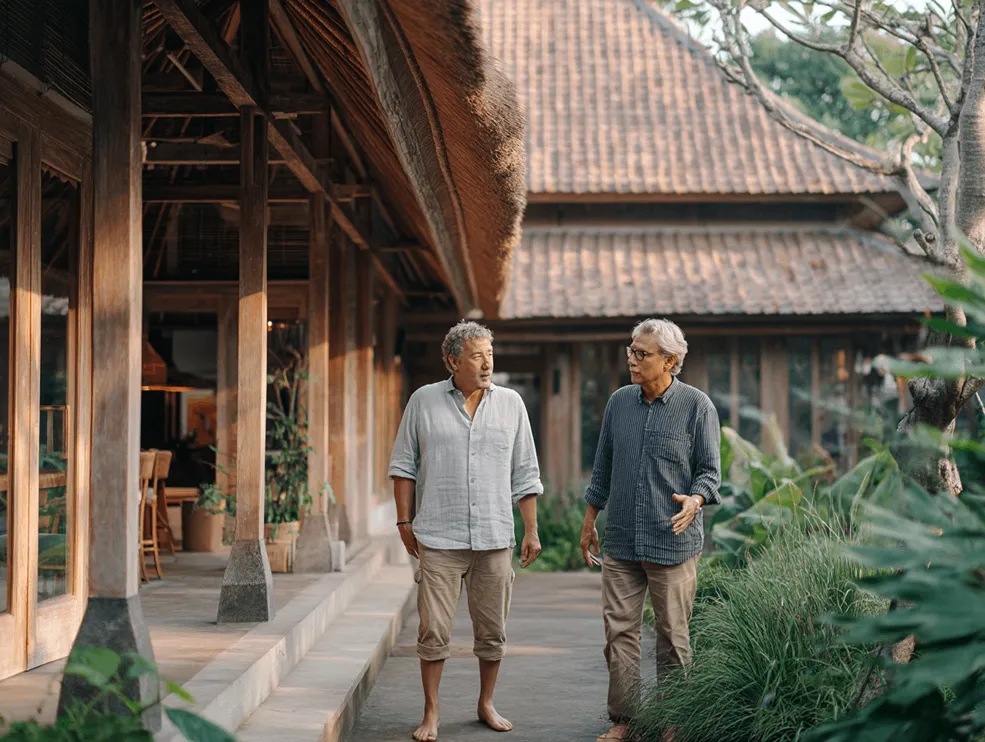
Traditional architectural styles for villas in Bali is not just an aesthetic choice; it is a business strategy known as biophilic hospitality. This philosophy integrates greenery, water, and natural light to reduce the barrier between guests and nature.
Case studies from iconic resorts show that villas built to preserve the existing landscape, using natural ventilation instead of total AC reliance, enjoy higher guest satisfaction and lower operating costs.
By using local materials like bamboo and hand-carved stone, you reduce the carbon footprint of the build while creating a “sensory” experience. Textured surfaces like linen and rattan evoke a feeling of luxury that modern synthetic materials cannot replicate.
In 2026, guests are willing to pay a premium for immersive nature experiences. Integrating these biophilic principles ensures your Traditional architectural styles for villas in Bali remains competitive in a market shifting toward wellness-driven travel.
Step-by-Step Pathway to a Compliant Transformation
If you are ready to transform your space, you must follow a disciplined sequence to avoid legal delays. First, confirm your land rights and KKPR zoning.
Decide on a design direction—Traditional, Japandi, or Modern Balinese—that aligns with your target market. Engaging a Bali-experienced architect is vital; they understand local setback rules and drainage requirements often missed by international designers.
The next step is to develop compliant designs that embed your chosen authentic elements while meeting safety standards. Submit your KKPR via the OSS RBA system, then apply for the PBG with complete technical documents.
Only begin construction after the PBG is approved. Once the build is finished, apply for the SLF with as-built documentation. Finally, style and furnish the villa using local craftsmanship to ensure the Traditional architectural styles for villas in Bali story is consistent from the front gate to the bedroom.
Avoiding Common Design and Compliance Pitfalls
A common mistake owners make is assuming that design alone solves business or legal problems. A stunning villa that lacks an SLF cannot legally be rented on OTAs or insured. Another pitfall is “copy-pasting” styles from colder climates.
Over-glassed modern designs without proper shading or natural ventilation become heat traps, leading to high cooling costs and a poor guest experience.
Furthermore, using “authentic” or “eco-friendly” purely as a marketing label without environmental approvals is high-risk. In 2026, transparency is mandatory. Avoid redesign delays by hiring professionals who know the permit sequence.
Vague assurances that permits can be sorted out later are unverified and can lead to property sealing. Prioritizing the legal foundation ensures that your Traditional architectural styles for villas in Bali remains a protected and profitable asset for years to come.
FAQs about Authentic Villa Design in Bali
Major structural changes or a change in building use (residential to tourism) typically require an updated PBG and SLF. Always check your current KKPR first to maintain an authentic villa design legally.
Alang-alang (thatch) is the most traditional, but many projects now use ironwood shingles (sirap) or high-quality tiles for better longevity in the tropical climate.
No. Zoning laws are strict. Green zones are protected for agriculture or conservation. You must have a "Pink" (Tourism) or "Yellow" (Residential) designation to build any villa.
Biophilic spaces are highly photogenic and offer a wellness-driven experience that allows for higher nightly rates and attracts repeat guests looking for a sanctuary.
It is possible to apply for a retrospective SLF, but the building must pass safety inspections. Specific costs and timelines for retrospective permits are subject to case-by-case evaluation.
It is the principle of balancing humans, nature, and the spiritual world. In authentic villa design, this manifests as open-air spaces, abundant greenery, and respected spiritual orientations.