


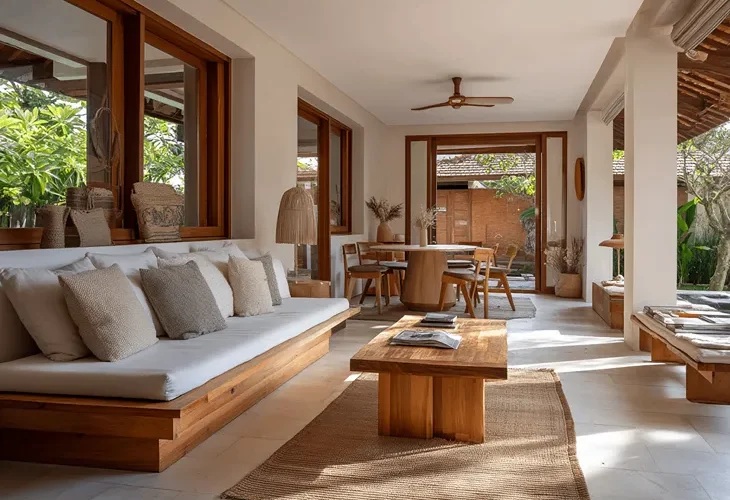
In 2026, successful Bali furnishing relies on Japandi design principles, SLF safety compliance, and durable materials. In the fiercely competitive Bali rental market, a villa filled with generic furniture and random decor is invisible. Guests scroll through hundreds of listings in seconds, rejecting properties that look cluttered, uncomfortable, or dated.
For foreign owners, the challenge is double-sided: creating an Instagram-worthy aesthetic that drives bookings while ensuring the furniture survives the harsh tropical humidity and high guest turnover. A beautiful sofa is useless if it molds within months or blocks a fire exit, violating strict new building codes tied to SLF certification.
The frustration is real when owners realize that their expensive renovation is actually hurting their ROI. Fragile pieces break, poorly planned layouts cause negative reviews, and ignoring safety standards can block your essential SLF certification.
Many investors pour money into cliché decor, only to find their calendar empty while the minimalist Japandi villa next door is fully booked. Implementing the right furnishing tips is crucial to avoid this pitfall in the Bali market.
The solution lies in a strategic approach that blends emotional design with brutal practicality. Successful furnishing tips for Bali rentals in 2026 focus on cohesive themes like Japandi, durable materials, and uncompromising safety.
This guide provides a step-by-step framework to furnish your property for maximum guest appeal and operational longevity, ensuring your investment is both legally compliant with SLF standards and highly profitable.
Table of Contents
Legal and Safety Baseline for Furnishing
Before you buy a single cushion, you must understand that furnishing in Bali is now a compliance issue. In 2026, no villa in Bali can legally operate without a valid PBG and SLF (Certificate of Feasibility). These certifications ensure the building is safe to occupy, and your furnishing layout must respect the approved design to maintain SLF validity.
Blocking designated escape paths with heavy wardrobes or narrowing corridors with oversized decorative urns can lead to failed SLF inspections.
Compliance goes beyond just structure; it extends to daily safety. Furnishing tips in this regulatory climate emphasize maintaining clear circulation zones to meet SLF requirements. Your interior choices must support the safety standards mandated by the Ministry of Public Works and Housing, such as ensuring railings are secure and exits are visible.
Operating a Bali villa that looks good but traps guests during an emergency is not just a moral failing; it is a legal liability that can jeopardize your SLF status and result in your property being sealed.
Design Themes That Book in Bali
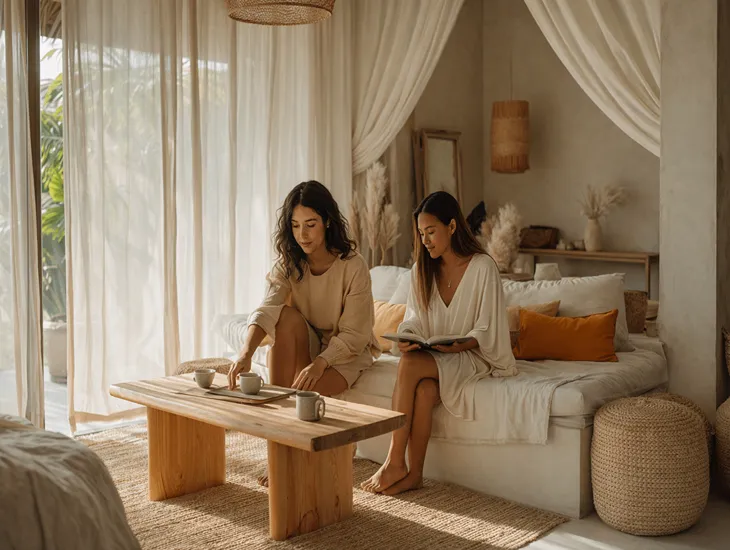
To stand out in a saturated Bali market, your property needs a cohesive narrative. Data from top-performing listings shows that a clear design language—especially the warm minimalism of Japandi—performs significantly better than a “mix and match” approach.
Japandi blends Scandinavian functionality with Japanese rustic minimalism, creating a serene environment that fits perfectly with the Bali ethos. Guests want to feel transported, and Japandi offers that “sanctuary” feel without the clutter of older styles.
Implementing cohesive furnishing tips starts with a disciplined color palette. Bali-inspired tones like off-whites, sand, and earthy ochres resonate well because they reflect the island’s natural beauty and complement Japandi aesthetics.
Avoid jarring contrasts; instead, layer textures. A Japandi villa might pair a low, modular sofa in neutral linen with a teak coffee table. This consistency builds a brand identity that guests trust, making your listing photos pop on platforms like Airbnb and Booking.com.
Must-Have Elements for 5-Star Comfort
Guest reviews are the lifeblood of your Bali rental business, and they are often decided by the quality of sleep and ease of living. One of the most critical furnishing tips is to invest heavily in what guests touch and use the most.
A top-grade mattress and high-thread-count linens are non-negotiable for any Japandi or luxury villa. If a guest wakes up with a backache, no amount of Japandi art will save your rating. Similarly, uncomfortable stylish sofas will quickly lead to complaints.
Functionality is equally important. A common mistake in Bali villas is a lack of storage. Guests need wardrobes with hangers and bedside tables. In smaller Japandi villas, built-in solutions can maximize space without cluttering the room.
Furthermore, a professional kitchen setup is essential. Even if guests don’t cook full meals, they expect quality cookware. Providing these basics signals that you respect their comfort, paving the way for 5-star reviews and repeat bookings.
Materials and Lighting That Sell and Last
The tropical climate of Bali is unforgiving to improper materials. High humidity, salt air, and intense sun will destroy cheap particle boards in months. Smart furnishing tips prioritize durability: solid teak, treated rattan, and polished concrete are staples of durable Japandi design.
While untreated natural materials look authentic, they often succumb to mold. Owners should opt for kiln-dried woods to ensure longevity and maintain the pristine look required for Japandi interiors.
Lighting is another powerful tool for increasing perceived value in your Bali property. “Light is your best friend” when it comes to photography. Relying on a single bright ceiling light is a mistake that ruins the Japandi mood. Instead, layer your lighting with pendant lamps and floor lamps. This creates intimate spaces that photograph beautifully at twilight.
Good lighting highlights the textures of your Japandi furniture, making your Bali property feel more expensive than it is.
Real Story: The Seminyak Storage Disaster
Meet Linda, a 34-year-old graphic designer from Melbourne who rented a long-term leasehold in Seminyak, Bali. She spent her entire budget on “Instagrammable” decor—giant macramé wall hangings and a swing in the living room.
Ideally, she wanted to attract digital nomads who appreciate Japandi vibes. However, she completely ignored the function. There were no wardrobes, just open racks that rusted in the salt air, and no desks.
The reality check came fast. Her first month’s guests left after three days. They complained about back pain from working on the sofa and the lack of space. The humidity turned her vintage chairs moldy, and the swing broke. Her review score plummeted, and she worried about potential SLF safety violations due to the clutter.
Desperate to fix her sinking Bali investment, Linda consulted Bali Villa Management. They removed the clutter and installed custom teak built-in wardrobes that fit a clean Japandi aesthetic.
They replaced fragile decor with durable local art and treated the wood against mold. Within two months, her occupancy stabilized at 85%, and she started receiving praise for the “thoughtful, functional Japandi design” that actually supported a working holiday.
Outdoor Areas as Major Booking Drivers

In Bali, the outdoors is an extension of the living room. For many guests, the pool area is the primary reason they book. Effective furnishing tips for these spaces focus on creating a resort-like experience that matches the interior Japandi theme.
This means comfortable sun loungers with water-resistant cushions and well-maintained greenery. A messy garden signals neglect and lowers the perceived value of your Bali property.
Don’t underestimate the power of “vignettes”—small, styled scenes that help guests imagine themselves relaxing. A hammock strung between two palms or a clean BBQ setup can be the deciding factor. However, durability is key.
Outdoor furniture must be heavy enough to withstand Bali winds and constructed from materials that won’t fade. This attention to exterior detail is crucial for maintaining the overall SLF safety standards of the property.
Safety, Durability, and What to Avoid
Safety is the invisible foundation of luxury and SLF compliance. Vacation rental mistake lists often highlight dangerous design choices like glass tables with sharp corners. One of the most vital furnishing tips is to child-proof your space.
Secure tall Japandi style cabinets to the walls to prevent tipping. A safe environment allows guests to relax fully, which is the ultimate goal of their stay in Bali.
Avoid “creepy” or overly personal items. A survey of travelers found that personal family photos make guests feel like intruders. Similarly, excessive artificial plants can look cheap.
Stick to live, low-maintenance tropical plants that enhance the Japandi feel. Remember, operating a villa without SLF compliance means you are technically illegal; ensure your layout doesn’t create new safety hazards that could jeopardize this SLF certification.
Step-by-Step Furnishing Project Outline
Start your Bali furnishing project by confirming the legal readiness of your building. Ensure your PBG is approved and your SLF is issued. If your SLF is missing, pause buying furniture and address the compliance issues first. Next, define your target guest.
Are you attracting digital nomads who appreciate Japandi minimalism, or families? Your furnishing tips and layout choices must follow this strategic decision.
Once the strategy is set, create a shopping list that prioritizes the basics: beds, seating, storage, and lighting. Choose materials that are tropical-appropriate—treated woods and washable upholstery that fit the Japandi look. Finally, style and stage the property for photography.
Remove visual clutter, add a few statement pieces, and review the flow for SLF safety. Walk through the villa as if you were a guest—is the luggage path clear? These small details define the guest experience.
FAQs about Furnishing Tips
SLF certifies that your building is safe. Furniture placement that blocks exits or creates hazards can violate SLF standards, risking legal trouble for your Bali villa.
Japandi combines aesthetics with function. Its minimalist nature is easier to clean, reduces clutter, and appeals to high-value guests, making it a top choice for Bali properties.
Use kiln-dried wood, synthetic rattan, and rust-proof hardware. These materials withstand Bali's climate better than untreated options, protecting your investment.
Yes. SLF inspectors check for safety and circulation. Overcrowding rooms with furniture can impede escape routes, leading to SLF compliance issues.
To maintain high ratings and Japandi appeal, refresh soft furnishings every 1-2 years and major pieces every 5-7 years, or as wear dictates.