



The frenetic energy of Canggu and Seminyak, while profitable, is increasingly driving investors to seek tranquility elsewhere. For many, the allure of the “real Bali”—misty mornings in Munduk or the quiet rice fields of Tabanan—presents a compelling alternative to the saturated south.
However, the dream of owning a secluded paradise often clashes with the harsh reality of agrarian regulations. Without careful navigation, what looks like a bargain can quickly become a stranded asset.
The frustration for potential buyers is palpable when they discover that the stunning riverfront plot they viewed is strictly zoned for farming. Misunderstanding the nuances of the “Green Zone” (Zona Hijau) is the single most common pitfall in this sector.
A cheap price tag often signals a lack of development rights, leading to frustration and lost capital. To truly capitalize on the market, one must separate romantic ideals from rigid zoning laws.
The solution lies in rigorous due diligence and correct structuring from day one. By identifying pockets of “Yellow” or tourism-designated land within these outer districts, investors can secure legitimate assets that offer both lifestyle rewards and long-term appreciation.
A strategic Rural property investment in Bali allows you to tap into the booming wellness and eco-tourism markets while avoiding the legal minefields that trap the unprepared.
For official spatial planning data, refer to the Ministry of Agrarian Affairs and Spatial Planning (ATR/BPN) guidelines.
Table of Contents
Defining Rural Property in Bali’s Market
In the context of the current market, “rural” typically refers to land located in villages and outer districts like Tabanan, Karangasem, or the hills of Buleleng.
These areas are distinct from the main tourism corridors, offering a landscape dominated by agriculture and conservation. However, for an investor, the definition is strictly legal.
It involves identifying plots within these areas that possess the specific spatial planning (RDTR) designations to allow for construction.
While the visual appeal of these areas is undeniable, the legal framework is restrictive. A successful investment in rural Bali hinges on finding the “needle in the haystack”—land that feels remote but sits within a designated settlement or tourism sub-zone.
Unlike the flexible mixed-use zones of the south, rural zoning is binary; a plot is often either strictly for farming or legally buildable, with very little grey area for interpretation in 2026.
Legal Ownership Structures for Foreigners

Foreigners cannot hold Hak Milik (freehold) land in Indonesia, a rule that is strictly enforced in rural communities where traditional law (Adat) is strong. The most robust option for a foreign investor is establishing a PT PMA (Foreign Investment Company).
This entity can hold Hak Guna Bangunan (HGB) titles or long-term lease rights, providing a clear legal wrapper for commercial operations like wellness retreats or eco-lodges.
Alternatively, for those seeking a personal residence, Hak Pakai (Right to Use) offers a secure long-term solution over qualifying residential land. It is crucial to avoid “nominee” arrangements, where a local citizen holds the title on your behalf.
In rural areas, village scrutiny is high, and such sham agreements are easily challenged. A transparent, compliant structure is the only way to ensure the long-term safety of your Rural property investment in Bali.
The Green Zone Trap: Beauty vs. Legality
The “Green Zone” or Zona Hijau is primarily designated for agriculture and environmental conservation. Permanent structures, including villas and commercial accommodations, are generally prohibited in these zones.
In 2026, the online permitting system (OSS) automatically rejects license applications for plots with this designation, regardless of whether a physical building already exists on the site.
Many unwary investors are lured by the low price per “are” (100 sqm) of green belt land, only to find they cannot obtain a Building Approval (PBG) or a Certificate of Functional Worthiness (SLF).
This renders the property unlicensable for tourism. Understanding that “cheap” often means “unbuildable” is critical. A viable investment requires paying the premium for land that has already been converted or designated for Yellow (residential) or Tourism use in the official spatial plan.
Financial Advantages of Going Remote in Bali
Despite the risks, the financial upside of rural investment is significant. Entry prices in outer districts can be a fraction of those in Pererenan or Uluwatu. A Rural property investment in Bali offers lower entry prices for large land plots. These expansive estates provide space for organic gardens and wellness retreat facilities.
This lower cost basis allows investors to acquire larger plots, making it feasible to develop expansive estates, organic gardens, or retreat centers that would be cost-prohibitive in the south.
Furthermore, rural assets offer portfolio diversification. As the coastal markets become hyper-competitive, the “slow travel” market in rural Bali is growing.
Guests are willing to pay premiums for exclusivity, silence, and connection to nature. By securing a legal plot in a developing rural node, you position yourself for capital appreciation as infrastructure projects improve access to these regions over the coming decade.
Real Story: Avoiding a Green Zone Disaster in Sidemen
The sound of the Unda River almost cost Elias his life savings. Standing on a misty 20-are plot in Sidemen, the 45-year-old wellness entrepreneur from Zurich was captivated by the idea of building a luxury yoga sanctuary.
The local broker promised it was a “done deal” and urged him to sign quickly, but the suspiciously low price tag nagged at Elias’s gut.
He decided to trust data over scenery. Elias engaged Bali Villa Management to perform a forensic zoning check before transferring the deposit.
The result confirmed his fears: the land was designated as “Protected Sustainable Agricultural Land” (LPPB)—strictly unbuildable. Had he signed, he would have purchased a view he could never touch.
Instead of walking away from the region, we helped Elias identify a “Yellow Zone” plot just two kilometers away. It offered similar jungle views but came with clear legal building rights.
Today, Elias operates a fully licensed boutique retreat that supports the local village economy, having traded a potential demolition order for a lasting legacy.
Infrastructure Realities Outside the Hubs
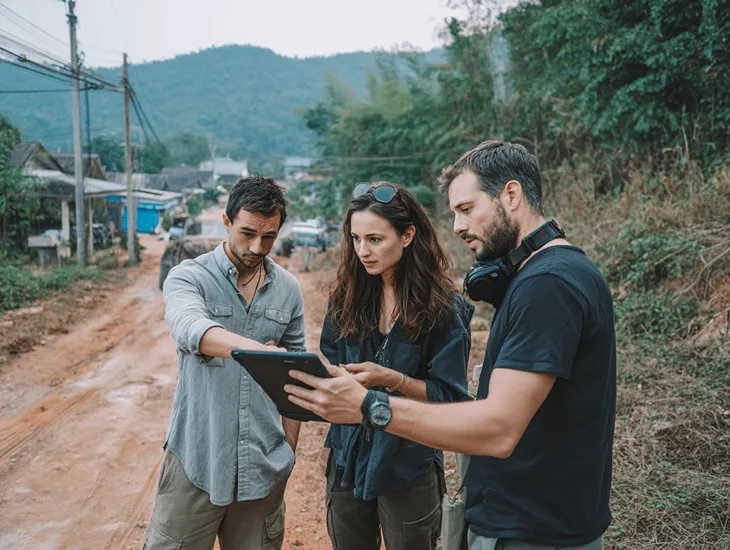
Investing “off the beaten path” means grappling with infrastructure gaps. Outside the main tourism centers, road access can be narrow, steep, or unpaved, complicating construction logistics and guest arrivals.
Electricity voltage can be unstable, and high-speed fiber internet is not guaranteed in every village. These factors must be factored into the development budget.
Smart investors budget for independence. Deep wells for water, solar setups for power backup, and Starlink for internet connectivity are often standard requirements for a modern rural villa.
While these add to the initial CAPEX, they ensure operational continuity. A Rural property investment in Bali that fails to account for these utility realities will struggle to maintain the service standards expected by high-paying international guests.
Tapping into the Slow Travel Niche
The rural market thrives on “slow travel”—guests staying for weeks rather than days, seeking immersion and wellness. This demographic values privacy, cultural authenticity, and sustainability.
Properties that offer farm-to-table dining, permaculture workshops, or silence retreats align perfectly with this demand.
Marketing these properties requires a different approach than a seminyak party villa. It relies on storytelling and branding that highlights the preservation of nature.
By aligning your business model with Bali’s push for quality tourism, you gain regulatory favor and attract a more respectful, higher-spending clientele. This positioning protects your investment from the volatility of mass tourism trends.
Step-by-Step Due Diligence Process for Rural Property in Bali
- Spatial Plan Check: Visit the local PUPR office to view the Rencana Detail Tata Ruang (RDTR). Confirm the specific sub-zone of the plot.
- Title Verification: Conduct a check at the National Land Agency (BPN) to ensure the certificate is clean and the owner is genuine.
- Access Verification: Ensure legal road access exists. “Servitude” rights over a neighbor’s land can be revoked; a public road border is safer.
- Structure the Deal: Set up your PT PMA or finalize the Leasehold agreement with a reputable notary.
- Permitting: Apply for the PBG immediately. Do not build until this is approved.
- Operational Licensing: Once built, secure the SLF and then apply for your tourism license (NIB/Standard Certificate) via the OSS.
FAQs about Rural Investment
No. Regulations focus on the use of the land, not just the material. Commercial accommodation in strict Green Zones is illegal regardless of the building type, risking the viability of your Rural property investment in Bali.
No. Foreigners are strictly prohibited from owning Hak Milik (freehold). You must use Leasehold (Hak Sewa) or Hak Pakai (Right to Use).
Zoning changes are rare and bureaucratic. Relying on a future change is speculative. Buy land that is already zoned correctly for your needs.
Labor might be slightly cheaper, but logistics (transporting materials) and infrastructure setup (wells, power) often make the total cost per square meter similar to or higher than urban areas.
Only if the land is zoned for tourism or allows commercial accommodation, and you have a PT PMA with a tourism license. Residential zoning in villages may restrict daily rentals.
For a commercial investment, a 25 to 30-year lease is standard to allow enough time to recoup capital and generate ROI.