


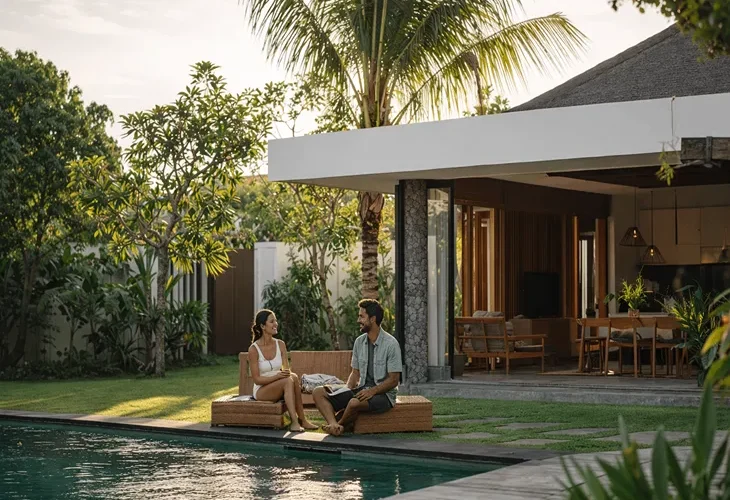
For many international investors and expatriates, the dream of owning a slice of paradise is often overshadowed by the complexities of Indonesian property laws. As the property market in Canggu saturates, savvy newcomers are shifting their focus slightly south-east, looking for more stable and legally secure options in high-growth neighborhoods.
The regulatory landscape can feel like a minefield, where one wrong step regarding zoning or land titles leads to significant financial loss, making the search for a safe investment incredibly stressful.
The solution for minimizing risk while maximizing lifestyle returns lies in the long-term leasehold model, specifically in the thriving district of Berawa. Securing a villa leasing in Bali agreement in Berawa offers a strategic “sweet spot,” combining the security of a long-term home with the flexibility that foreigners need. Unlike the restrictive freehold ownership rules that bar foreigners from owning land directly, leasing provides a clear, legal pathway to enjoy the property for decades.
By opting for villa leasing in Bali, you bypass many of the aggressive hurdles associated with Hak Milik (Right of Ownership) while still gaining control over a premium asset. Whether you are looking to establish a digital nomad hub, a family holiday home, or a high-yield rental business, understanding the specific advantages of this model is crucial. For official tourism and zoning updates, resources like Indonesia Travel provide essential context on the region’s development.
Table of Contents
Berawa’s Strategic Location for Investors
Berawa has rapidly evolved from a sleepy coastal village into one of the most sophisticated hubs in Indonesia, making it a prime location for villa leasing in Bali. Geographically, it sits perfectly between the high-energy nightlife of Seminyak and the laid-back, surf-centric culture of Batu Bolong. For a leaseholder, this positioning is invaluable. You are close enough to the action to attract high-paying short-term tenants if you choose to sublet, yet tucked away enough to enjoy a level of tranquility that is disappearing from central Canggu.
The area is predominantly zoned as a “Pink Zone” (tourism and hospitality), which is a critical factor when considering villa leasing in Bali. Villas in these zones are eligible for Pondok Wisata licenses, allowing for legal daily rentals. This zoning security reduces the risk of government crackdowns that plague residential-only zones in other parts of the island. By securing a lease here, you are effectively buying into a mature infrastructure network that supports both high quality of life and business viability.
Financial Efficiency of Leasehold Models

One of the most compelling arguments for villa leasing in Bali is the capital efficiency compared to attempting to purchase freehold through a nominee (which is legally grey and risky). A leasehold agreement typically requires an upfront payment for the term—often 25 to 30 years—but the cost is significantly lower than the freehold market value. This lower entry point allows for a superior Return on Investment (ROI), as you are not tying up massive capital in land ownership costs that foreigners cannot legally hold in their own names.
In Berawa, monthly lease prices can range widely, but locking in a long-term contract protects you from the volatile rental inflation currently sweeping Bali. While yearly rentals are skyrocketing, a long-term villa leasing in Bali arrangement fixes your housing costs for decades. If you utilize the property for commercial rental, the yields in Berawa are among the highest in Bali due to the area’s popularity with affluent digital nomads and families, ensuring you recoup your initial lease investment rapidly.
Legal Simplicity and Safety for Foreigners in Bali
Navigating Indonesian property law is notoriously difficult, but the leasehold structure is transparent and legally recognized for foreigners. When you engage in villa leasing in Bali, you are essentially signing a long-term rental contract that is notarized and registered. Unlike freehold, which requires an Indonesian citizen’s name on the title, a lease is a direct agreement between the landowner and the foreign lessee. This grants you the “Hak Sewa” (Right of Lease), which is fully protected under Indonesian law.
The standard terms for villa leasing in Bali in Berawa usually span 25 to 27 years, often with a priority option to extend at market price. This structure eliminates the need for complex nominee agreements or the formation of a PT PMA (foreign-owned company) just to hold a residence, although a PT PMA is recommended if you plan to generate income. Proof of identity and funds are standard requirements, but no specific residency visa is strictly needed just to sign the lease, making it accessible for offshore investors.
Lifestyle Infrastructure and Community
Berawa offers a distinct lifestyle that drives the demand for villa leasing in Bali. It is home to some of the island’s best international schools, such as the Canggu Community School, and world-class recreational facilities like the Finns Recreation Club. For expatriate families, this infrastructure is non-negotiable. Leasing a villa here means you are embedding yourself in a community that is designed for long-term livability, not just transient tourism.
The culinary and wellness scene in Berawa also adds value to your lease. From high-end co-working spaces to boutique pilates studios, the amenities cater to a demographic that stays longer and spends more. Consequently, villa leasing in Bali in this neighborhood ensures that your asset—whether used personally or rented out—remains desirable. The convenience of having supermarkets, medical clinics, and beach clubs within a five-minute scooter ride creates a “sticky” environment where residents are reluctant to leave.
Real Story: How Luka Secured Stability in Berawa
Luka, a 29-year-old UX designer from Zagreb, Croatia, arrived in Berawa in mid-2025 with a clear plan: work remotely and surf daily. He found what seemed like the perfect annual rental—a modern loft-style villa near the shortcut. He invested time setting up his dedicated fiber-optic line and soundproofing a corner for Zoom calls, believing he was set for the year. However, three months into his stay, the nightmare scenario unfolded.
The landlord sold the property to a developer without warning. Luka was given 30 days to vacate. The chaos of packing up his servers, the stress of finding a new place in a market with 95% occupancy, and the humidity-soaked afternoons spent viewing subpar listings nearly broke him. “I realized I wasn’t living in Bali; I was just camping here until someone kicked me out,” Luka recalled. He couldn’t afford to let his living situation threaten his career stability again.
Determined to stop the cycle, Luka partnered with a local agency to find a 25-year leasehold on a modest 2-bedroom property that needed work. It wasn’t perfect, but the contract included a specific “Right to Renovate” clause. He gutted the second bedroom, built a permanent studio, and installed a backup generator. By shifting from a vulnerable renter to a long-term leaseholder, Luka didn’t just buy a house; he bought the certainty that his office wouldn’t disappear overnight.
Flexibility for Subletting and Business

villa leasing in Bali provides a level of flexibility that is difficult to achieve with shorter rental agreements. Most long-term lease contracts in Berawa allow for subletting, provided the appropriate licenses (Pondok Wisata) are in place. This transforms your villa from a liability into an income-generating asset. Many leaseholders occupy their villas for part of the year and rent them out during peak seasons (July-August and December-January) to cover annual maintenance costs.
This hybrid model is particularly popular among digital nomads and entrepreneurial expats. Because you hold the lease for decades, you have the right to modify and upgrade the property to suit market trends—adding a pool fence for families or upgrading the internet infrastructure for remote workers. This control allows you to actively manage the value of your villa leasing in Bali investment, adapting to the changing demands of the Berawa tourism market without needing the landowner’s permission for every minor change.
Understanding Market Appreciation
While you do not own the land forever, the value of a leasehold right can appreciate significantly, especially in a high-demand area like Berawa. If you secure a villa leasing in Bali contract today, and property prices in the area double over the next five years, the remaining years on your lease become a tradeable asset. It is common for leaseholders to sell the remaining years of their lease to new investors, often at a profit, effectively treating the lease as a tradable commodity.
However, it is vital to understand the “leasehold cliff.” As the lease term shortens, the value eventually decreases. To mitigate this, savvy investors negotiate guaranteed extension options in their initial villa leasing in Bali contract. This clause ensures that when the lease expires, you have the first right of refusal to extend, typically based on the market price of the bare land at that time, excluding the value of the building you have maintained or improved.
Maintenance and Operational Ease
One of the often-overlooked aspects of villa leasing in Bali is the clarity regarding maintenance. In a typical yearly rental, disputes over who pays for a broken pump or a leaking roof are common. In a long-term leasehold, the responsibility is clearly yours, which sounds like a burden but is actually a benefit. It gives you total control over the quality of repairs. You aren’t waiting for a reluctant landlord to fix the AC; you manage it to your standards, preserving the property’s value.
Furthermore, many villa leasing in Bali agreements in Berawa, especially those within villa complexes, come with options for integrated management packages. These can include pool maintenance, gardening, security, and banjar (community) fees. By bundling these services, you ensure the tropical climate—which can be harsh on buildings—doesn’t degrade your investment. Professional management is key to ensuring that the villa remains in pristine condition for the duration of the 25+ year term.
FAQs about Leasing a Villa in Berawa
Yes, foreigners can legally sign a long-term lease agreement. The title is "Hak Sewa" (Right of Lease), which is a civil agreement protected by law and does not require Indonesian citizenship.
Most villa leasing in Bali contracts are structured for 25 to 30 years. It is also standard to include an option to extend the lease for an additional 20 or 25 years upon expiry.
No, you do not need a KITAS (residency visa) or KITAP to sign a leasehold contract. However, if you plan to live there, you will need a valid stay permit, and if you plan to rent it out daily, you may need a business setup (PT PMA).
Beyond the lease price, you should budget for the Notary fee (usually 1%), agent fees (often included but verify), and the 10-11% VAT depending on the seller's tax status. Maintenance and banjar fees are ongoing costs.
Generally, yes. One of the main benefits of villa leasing in Bali is the ability to renovate or modify the building, but major structural changes usually require the landowner's approval and relevant building permits (PBG).