


Investing in property in Indonesia can feel like navigating a gold rush without a map. Every region promises high returns, but for foreign investors, the reality is often a confusing mix of zoning restrictions, fluctuating tourist trends, and legal grey areas.
The fear of buying in a “saturated” zone or, worse, a legally prohibited “Green Zone” often paralyzes potential buyers, causing them to miss out on one of Asia’s most lucrative real estate markets.
Without clear, location-specific data, you risk sinking capital into an asset that underperforms or faces regulatory shut-down. The difference between a 15% ROI and a stagnant listing often comes down to micro-location—knowing which side of the street permits short-term rentals and which doesn’t. Relying on general advice from previous years is a recipe for failure in the fast-evolving landscape of 2026.
The solution is a targeted approach that focuses on verified high-yield corridors and emerging growth zones. By identifying the Best Villa Investment Places in Bali, you can align your portfolio with current market demands, ensuring legal compliance and maximum occupancy.
Whether you seek immediate cash flow or long-term capital appreciation, understanding these specific districts is the key to a profitable exit strategy. For official updates on regional development plans, the Badung Regency Government website offers crucial insights into infrastructure projects.
Table of Contents
Canggu and Pererenan: The High-Yield Powerhouses
Canggu and its sophisticated neighbor, Pererenan, remain the undisputed heavyweights when discussing the Best Villa Investment Places in Bali. These areas have evolved from surfer hideouts into globally recognized digital nomad hubs.
The demand here is driven by a unique mix of short-term holidaymakers and long-term remote workers, creating a dual-revenue stream that buffers investors against seasonality. Occupancy rates for well-managed properties frequently hover above 85%, driving gross yields into the 12-15% range.
However, the “gold rush” status means entry prices are higher, and competition is fierce. Success in Canggu requires a product that stands out—think enclosed living rooms, high-speed fiber optics, and dedicated workspaces.
Furthermore, zoning is critical; while Batu Bolong is largely commercial, pockets of Pererenan are strictly residential or green zones. Ensuring your asset sits in a “Pink Zone” (tourism zoning) is the only way to legally secure the necessary Pondok Wisata license for daily rentals.
Uluwatu and Bingin: The Premium Cliffside Frontier

If Canggu is the bustling city center, Uluwatu is the exclusive penthouse. Known for its dramatic cliffs and world-class surf breaks, this region has rapidly climbed the ranks of the Best Villa Investment Places in Bali. The demographic here skews towards higher-spending tourists and surfers willing to pay premium nightly rates for ocean views and privacy. This higher Average Daily Rate (ADR) compensates for slightly lower occupancy compared to Canggu, resulting in robust net returns.
Infrastructure in the Bukit Peninsula is improving, with new roads and beach clubs transforming Bingin into a luxury destination. Investors are finding success with boutique resort-style properties that offer “Instagrammable” aesthetics. Unlike the flat rice fields of the north, the topography here offers natural scarcity—there are only so many cliff-front plots available—which drives strong capital appreciation over the medium to long term.
Seminyak: Stability in a Mature Market
For investors who prioritize stability over explosive growth, Seminyak remains a cornerstone among the top locations. As a mature market, it doesn’t offer the steep appreciation curves of the emerging west, but it delivers consistent, reliable cash flow. The area is a magnet for families and traditional tourists who want walkability to high-end dining, shopping, and established beach clubs like Ku De Ta.
In Seminyak, the investment play is often about renovation and repositioning. Many older units, built ten or fifteen years ago, are prime targets for modernization. By acquiring a tired asset in a prime location like Oberoi or Petitenget and upgrading it to 2026 standards, investors can unlock significant value. The extensive infrastructure and established brand recognition of Seminyak ensure a steady stream of bookings, making it a “safe harbor” in a volatile global economy.
Ubud: Cultural Depth and Consistent Occupancy
Ubud offers a distinct investment profile, distancing itself from the beach-party crowd to attract wellness seekers, yogis, and cultural tourists. This differentiation secures its spot on the list of strategic areas. The rental market here is less seasonal than the coast, with a steady flow of visitors year-round seeking retreats and nature immersion. While ROI might sit conservatively around 6-8%, the tenant profile is often more respectful of property, leading to lower maintenance costs.
Investment in Ubud requires sensitivity to the local “adat” (customary law) and environment. Successful projects here often integrate with the jungle or rice terrace landscapes rather than dominating them. The northern ridges of Ubud, towards Tegallalang, are seeing increased interest, but strict zoning enforcement protects the green belts. Investors must be diligent in verifying that their “jungle view” doesn’t inadvertently sit on protected agricultural land.
Real Story: How Chloe Captured Growth in Seseh, Bali
Chloe, a 27-year-old marketing freelancer from Toronto, Canada, landed in Indonesia in early 2023 with a modest inheritance and a dream of financial freedom. She had a budget of $300,000 USD and went straight to Berawa, the hotspot everyone on social media was talking about. She viewed property after property, but her budget only stretched to small, 2-bedroom units on tiny plots sandwiched between construction sites. “I felt like I was buying at the top of the market,” Chloe admitted. “I was paying a premium for the hype, not the value.”
She realized that to get the appreciation she needed, she had to look where the market was going, not where it had already been. She asked local agents, “Where is the next Berawa?” They pointed her 15 minutes west to Seseh. The village was quiet, surrounded by green rice belts and untouched beaches, but the road infrastructure was just starting to improve.
Chloe took a calculated risk. She purchased a leasehold plot in Seseh for 40% less per are than the rates in Berawa. This allowed her to build a spacious 3-bedroom villa with a large garden and pool, rather than a cramped shoebox. By the time her build was completed in late 2024, land prices in Seseh had surged by over 30%. “My rental income is solid,” she says, “but the real win was the equity I gained by buying before the boom. I didn’t just buy a rental; I bought growth.”
Sanur and Nusa Dua: The Defensive Investment Play
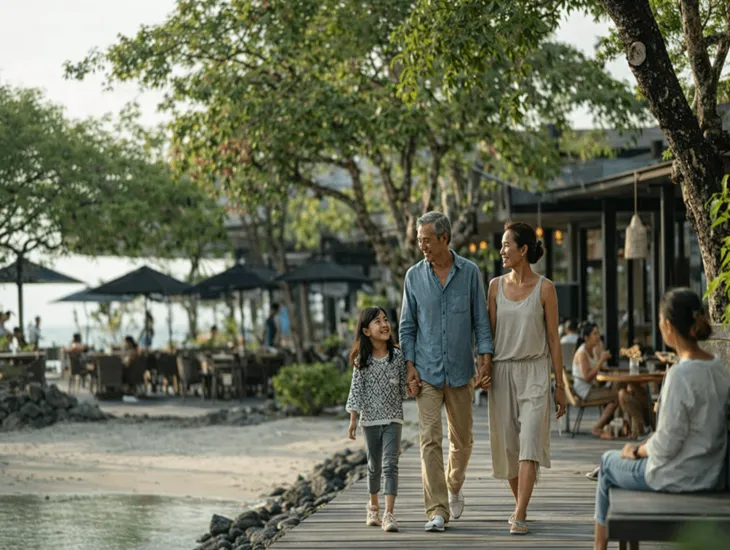
Sanur and Nusa Dua represent the “blue chip” stocks of the local real estate market. These areas are favored by retirees, families with young children, and older expatriates, creating a market for long-term rentals that is incredibly resilient. As one of the safest choices for risk-averse investors, Sanur offers a slower pace of life with excellent infrastructure, including international hospitals and schools.
The yields here are often characterized as “defensive”—steady, reliable, and less prone to the wild swings of the tourism market. Nusa Dua, with its gated resort complexes, attracts a high-net-worth demographic looking for security and exclusivity. While you may not see double-digit capital growth overnight, the asset value is protected by the established reputation and high barrier to entry in these premium zones.
Emerging Zones: Seseh, Nyanyi, and the West
For the visionary investor, the western coast—stretching from Seseh to Nyanyi and Kedungu—is currently the most exciting frontier. These areas are widely considered the future contenders for the Best Villa Investment Places in Bali. With the government improving road infrastructure connecting these villages to the main hubs, the barrier of “distance” is rapidly eroding. Land prices here are still accessible compared to Canggu, offering a higher ceiling for capital appreciation.
Investing here is a growth play. You are betting on the inevitable expansion of tourism. The risk profile is higher due to developing infrastructure and fewer immediate amenities, but the potential reward is substantial. Early movers who secure strategic land plots or build destination properties in these areas are positioning themselves to ride the next 10-year wave of regional development.
Due Diligence and Zoning Verification
Identifying the location is only step one; verifying the legality is where the investment is secured. Even in the Best Villa Investment Places in Bali, a lack of due diligence can be fatal. Every district has a specific spatial plan (RDTR). You must confirm that your land is not in a “Lahan Sawah Dilindungi” (Protected Rice Field) zone, which strictly prohibits permanent structures.
Furthermore, road access is a critical “micro-detail.” A property with only motorbike access will have a significantly lower valuation and occupancy potential than one with car access. Before signing any leasehold or freehold agreement via a PT PMA, ensure a reputable notary conducts a comprehensive background check on the certificate to rule out overlapping claims or unpaid taxes.
FAQs about Villa Investment in Bali
Foreigners cannot own freehold land directly. However, they can securely invest in the Best Villa Investment Places in Bali through a "Hak Pakai" (Right to Use) title under a PT PMA company or via a long-term leasehold agreement.
To secure a high-quality asset in prime areas like Pererenan or Bingin, a starting budget of $250,000 to $350,000 USD is recommended for a turnkey 2-3 bedroom villa.
Off-plan offers modern designs and lower entry prices, often yielding better capital appreciation. Existing villas provide immediate cash flow but may require renovation.
You must check the government's RDTR (Detailed Spatial Plan) map. A "Pink Zone" indicates tourism zoning, which allows for the Pondok Wisata license required for daily rentals.
Pererenan and Canggu are currently the top choices for digital nomads, offering the highest concentration of co-working spaces, cafes, and community events.