



In the crowded Bali rental market of 2026, owning a beautiful property is no longer enough to guarantee high returns. With over 70,000 listings competing for attention, “anonymous” villas often fall into a race to the bottom, slashing prices to fill their calendars. For foreign investors, the key to escaping this trap is not cheaper rates, but stronger identity. Without a clear narrative, your villa is just another commodity; with one, it becomes a destination.
Successful Bali villa branding is the strategic lever that transforms a generic rental into a high-value asset. It is about crafting a coherent story that resonates with a specific type of traveler, justifying a premium price point because the guest perceives a unique experience, not just a bed to sleep in. This approach shifts the focus from “what you have” (a pool, three bedrooms) to “how it feels” (exclusive, culturally immersive, restorative).
To succeed, foreigners must navigate the delicate balance of creating an international-standard brand while respecting local culture. As the Indonesian Ministry of Tourism and Creative Economy pushes for quality tourism, properties with distinct, professional identities are best positioned to thrive. This guide outlines exactly how to build a brand that captivates guests and secures your profit margins.
Table of Contents
Why Identity Drives Revenue in Hospitality
The link between a strong brand and your ability to charge more is measurable. In the hospitality sector, guests are willing to pay a premium—often exceeding 11%—for properties that offer a clear, trusted experience. When a traveler looks at your listing, they are not just buying a night’s stay; they are buying certainty and emotion. Bali villa branding provides that certainty by signaling quality and consistency.
Properties that lack a distinct identity are forced to compete on price alone. In contrast, a branded villa creates a “moat” around its business. Guests search for the brand name specifically, leading to more direct bookings and higher repeat rates. This reduces reliance on Online Travel Agencies (OTAs) and their hefty commissions, directly improving your net yield.
Core Elements of a High-Value Property Brand in Bali
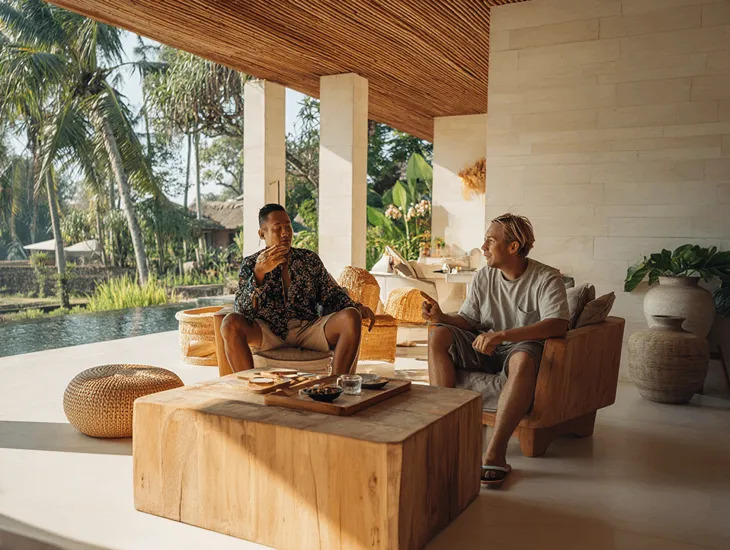
Building a brand requires more than just a logo. For a Bali villa, it involves five essential pillars: a clear target guest, a Unique Selling Proposition (USP), a visual identity, a distinct voice, and a consistent online presence. You must decide if you are a “surf-luxury retreat for digital nomads” or a “secluded romantic sanctuary for honeymooners.” You cannot be both without confusing your audience.
Your USP should be grounded in the specifics of your property. Is it the sunrise view over the rice fields, the proximity to a secret beach, or the custom-designed interiors? For foreign owners, integrating authentic Balinese elements—such as local materials or traditional hospitality rituals—into these pillars ensures the brand feels rooted in its location, rather than like a generic apartment transplanted from Europe.
Step 1: Defining Your Positioning and Guest Persona
Before you write a single line of copy, you must define exactly who you are talking to. Bali villa branding fails when it tries to appeal to everyone. Start by analyzing your property’s physical attributes and mapping them to an ideal Guest Persona. For example, a cliffside villa with many stairs is not for toddlers; it is for fit, adventure-seeking couples or groups of friends.
Create a positioning statement for internal use. “My villa is the premier destination for creative professionals seeking solitude in the Ubud jungle.” This statement becomes the filter for every decision you make, from the furniture you buy to the tone of your Instagram captions. It ensures that you attract guests who will love the property and leave glowing 5-star reviews, rather than mismatched guests who complain.
Step 2: Crafting a Narrative That Sells
Storytelling is the emotional hook that converts a “looker” into a “booker.” Your brand story should explain why the villa exists. Did you fall in love with the village ceremony nearby? Was the architecture inspired by a traditional Wantilan? This narrative gives the property a soul.
Effective branding links this story to the guest’s desire for transformation. Instead of just listing “yoga mats available,” describe “a sunrise deck designed for your morning grounding ritual.” This helps the guest imagine themselves in the story. Ensure this narrative is woven into your OTA descriptions and website copy, using professional English that evokes feeling without sounding like a sales brochure.
Step 3: Designing a Memorable Visual Identity
Your visual identity is the first thing a guest sees. It must be professional, consistent, and reflective of your mood. A “boho-chic” villa should use warm, earthy tones and relaxed typography, while a modern luxury villa requires sharp lines, cool greys, and minimalist fonts.
Photography is non-negotiable. In 2026, guests are visually sophisticated. They can spot amateur photos instantly. Invest in a professional shoot that captures not just the wide angles, but the details—the texture of the linen, the steam on the coffee, the light through the palms. These images must be consistent across your website, Instagram, and booking platforms to build recognition.
Real Story: Selling the "Bad" Weather in Sidemen
Meet Nikos, a 42-year-old architect from Athens, Greece, who built a stunning three-bedroom bamboo villa in Sidemen. In early 2025, he faced a problem: the weather. Unlike the sunny beaches of Canggu or his hometown of Athens, Sidemen was often misty, cloudy, and rainy in the mornings.
He tried to hide this in his Airbnb listing, using only photos taken on sunny days. But guests would arrive, see the clouds, and complain. His reviews were mediocre: “Nice house, but gloomy location.”
He was ready to lower his prices until he engaged an established villa management firm. They told him to stop apologizing for the weather and start selling it. They rebranded the villa as “The Mist & Bamboo Sanctuary.” They replaced the sunny photos with moody, atmospheric shots of steam rising from the valley.
Suddenly, he wasn’t attracting disappointed sun-seekers; he was attracting writers, artists, and honeymooners who wanted to be cozy. He raised his rates by 30% because he was no longer selling “a villa”; he was selling a feeling.
Implementing Consistency Across All Touchpoints

A brand is broken the moment consistency is lost. If your Instagram is “tropical luxury” but your welcome email is a plain text document with typos, the illusion fades. Bali villa branding requires discipline. Your logo, colors, and tone of voice must appear everywhere: on your digital guidebook, your WiFi login page, your driver’s uniform, and even the welcome note left on the bed.
This attention to detail signals to the guest that the property is managed with care. It builds trust before they even arrive. In-villa signage should follow the same aesthetic—elegant, branded cards for the AC instructions or the room service menu reinforce the feeling of staying in a boutique hotel, which justifies the boutique price tag.
Cultural Risks and Common Branding Mistakes
For foreign owners, the biggest risk is cultural appropriation. Using sacred Hindu symbols (like the Om or Swastika) purely as decorative logo elements can cause offense and lead to community backlash. Your brand should honor Balinese culture, not exploit it. Always consult with local staff or cultural advisors when naming your villa or designing your logo to ensure it is respectful.
Another common mistake is over-promising. If your marketing relies on heavily edited photos that remove the power lines or make the pool look twice its size, you are setting yourself up for bad reviews. Branding is about highlighting the truth beautifully, not manufacturing a lie. Finally, ensure your branded operation is compliant; aggressive marketing of a brand that lacks a Pondok Wisata license puts a target on your back for tax authorities.
FAQs about Property Branding
It varies widely, but a basic package including naming, logo, and visual guidelines can range from USD 500 to USD 3,000 depending on the agency. It is an investment that pays for itself through higher ADR.
You can, but it requires a good eye for design and copywriting. If you are not confident, it is better to hire a freelancer to ensure the result looks professional and not "DIY."
Indirectly, yes. Strong branding leads to better click-through rates and higher conversion, which signals to the OTA algorithm that your property is popular, boosting your ranking.
A Balinese name can add authenticity, but ensure it is easy for foreigners to spell and pronounce. Avoid very common names like "Villa Bali" which make you impossible to find on Google.
Yes. Even budget guests want to know what they are buying. A clear brand ("The Clean & Simple Surf Shack") helps manage expectations and attracts the right customer, reducing complaints.