


Managing a luxury property in Indonesia presents a unique financial paradox: you need to cut villa maintenance costs to maintain healthy margins, yet the slightest dip in standards can decimate your occupancy rates.
Many foreign investors in Bali fall into the trap of reactive spending, fixing issues only when they break, which often leads to expensive emergency call-outs and frustrated guests.
The secret to sustainable profitability lies in shifting from ad-hoc repairs to a data-driven, preventive strategy. By optimizing utility consumption and restructuring staffing models, owners can significantly reduce overheads without compromising the “Instagrammable” perfection guests demand. This approach safeguards the hygiene and safety standards that are critical for maintaining high review scores on platforms like Airbnb and Booking.com.
For long-term success, aligning your operational efficiency with local regulations is essential. The Indonesian Ministry of Tourism and Creative Economy emphasizes that maintaining high service standards is key to the sustainability of the hospitality sector. This guide explores actionable levers to lower your expenses while protecting the guest experience and your property license.
Table of Contents
Analyzing Your Current Operating Expenses
Before you can effectively reduce spending, you must understand exactly where your money is going. In the Bali villa market, the primary cost buckets are typically preventive maintenance, reactive repairs, housekeeping, security, landscaping, utilities, and management fees. Without a clear breakdown, it is impossible to identify leaks in your budget.
Premium villas in areas like Seminyak and Uluwatu often allocate a significant portion of their revenue to preventive maintenance and electricity. If your repair costs are fluctuating wildly month-to-month, it is a sign that you are operating reactively. Benchmarking your costs against similar properties helps identify if you are overspending on specific line items like pool chemicals or air conditioning servicing.
Tracking these expenses requires discipline. Owners should categorize every invoice to see trends over time. For instance, a sudden spike in water usage might indicate a hidden leak, while escalating laundry costs could suggest theft or mismanagement of inventory.
Prioritizing Preventive Maintenance Over Repairs
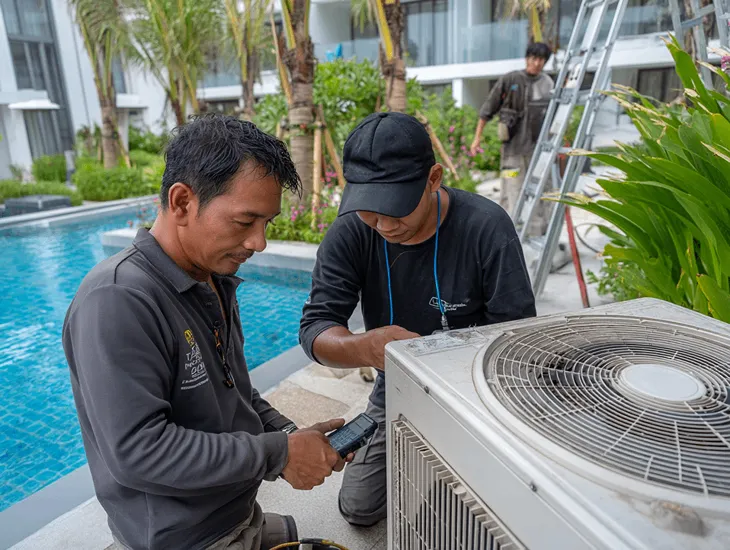
One of the most effective ways to cut villa maintenance costs is to fix problems before they happen. Preventive servicing of critical systems—such as air conditioning, pool pumps, and plumbing—drastically reduces the likelihood of catastrophic failures that require expensive emergency replacements.
A structured maintenance calendar is non-negotiable. For example, scheduling quarterly AC servicing ensures units run efficiently, consuming less power and cooling rooms faster. Similarly, regular pool filter cleaning prevents the pump from overworking, extending its lifespan. Neglecting these routine tasks often results in equipment burning out during a guest’s stay, leading to refunds and bad reviews.
Roof and gutter maintenance is equally critical, especially before the wet season. Clearing gutters and checking for tile damage can prevent water intrusion, which causes mold and structural damage. The cost of a routine roof inspection is a fraction of the cost required to remediate water damage and repaint a villa interior.
Optimizing Staffing Models for Efficiency
Labor is often one of the largest fixed expenses for villa owners in Bali. While having a full team of staff provides a high level of service, it may not be financially efficient for smaller properties or those with seasonal occupancy fluctuations. Analyzing your staffing model can reveal opportunities to reduce fixed overheads without lowering service standards.
Selectively outsourcing specific roles is a proven strategy. Instead of employing full-time staff for every task, consider outsourcing deep cleaning, pool maintenance, or specialized gardening. This converts fixed salaries into variable costs that align more closely with your occupancy levels. For check-out/check-in deep cleaning, professional services can often deliver “hotel-grade” results more consistently than a small in-house team.
Cross-training your existing staff is another powerful lever. Empowering your security guard to handle basic pool skimming or training housekeepers to spot and report minor maintenance issues can speed up response times. When staff can handle simple fixes, you reduce the need for external handymen, saving on call-out fees and keeping guests happy with swift resolutions.
Implementing Smart Energy Solutions
Electricity bills in Bali can be shockingly high, particularly for villas with multiple air conditioning units and private pools. Implementing smart energy management is a high-impact way to lower monthly outgoings. Simple upgrades, such as switching to LED lighting and installing inverter AC units, can reduce energy consumption by up to 20%.
Pool filtration is another area ripe for optimization. Many villa owners run their pumps 24/7 out of fear of the water turning green. However, professional guidance suggests that 6–8 hours of filtration per day is often sufficient for a regular-sized pool, provided the water chemistry is balanced. Adjusting timers to run during off-peak hours can further manage costs.
Behavioral changes also play a role. Clear Standard Operating Procedures (SOPs) for staff and polite notices for guests can encourage energy-saving habits. Reminding guests to close doors when the AC is on, or instructing staff to turn off unnecessary lights during the day, contributes to cumulative savings that directly improve your bottom line.
Real Story: Turning Around a High-Cost Villa in Umalas, Bali
Meet Elise, a 34-year-old interior designer from Galway, Ireland. In early 2025, her three-bedroom villa in Umalas was designed to be an open-air paradise, blurring the lines between the living room and the rice fields. Guests loved it. Elise’s bank account did not.
In July, Elise’s electricity bill hit IDR 8 million ($500)—nearly double her projection. The culprit? Guests were blasting the AC at 18°C while leaving the massive sliding glass doors wide open to “enjoy the breeze.” Her air conditioners were effectively trying to cool down the entire neighborhood of Umalas.
Elise almost banned the AC entirely, but she knew that would kill her reviews. Instead, she got smart. She invested in cutoff sensors for the sliding doors.
The logic was simple: If a door is left open for more than two minutes, the AC automatically cuts power. She also swapped her single-speed pool pump for a variable-speed unit that ran at lower power during the night.
The next month, her bill dropped to IDR 4.5 million. The sensors paid for themselves in six weeks. Elise didn’t have to be the “nagging host”; the villa managed itself. She now tells other owners: “You can’t control guest behavior, but you can control how your villa reacts to it.”
Strategic Procurement and Inventory Control

Smarter purchasing habits can yield immediate savings. Buying linens, toiletries, and cleaning supplies in bulk allows you to negotiate better rates with suppliers. Tracking consumption rates prevents over-ordering and helps you identify wastage or pilferage quickly.
Standardization is key to efficiency. By using the same brand of amenities and type of linen across all bedrooms (or multiple properties), you simplify inventory management. If a sheet is damaged, you have a matching replacement ready, rather than having to buy a whole new set because the design was discontinued.
While it is tempting to buy the cheapest options available, quality often costs less in the long run. Investing in durable, high-thread-count linens and commercial-grade outdoor furniture reduces the replacement cycle. In the humid Bali climate, cheap furniture deteriorates rapidly, leading to a “buy cheap, buy twice” cycle that inflates your long-term maintenance spend.
The Risks of Cutting Cleaning Standards
When looking to cut villa maintenance costs, cleanliness is the one area you cannot afford to compromise. Data from booking platforms consistently shows that cleanliness is the primary driver of guest satisfaction and negative reviews. A villa that smells musty or has stained linens will lose bookings faster than you can lower your prices.
Cutting back on cleaning frequency or depth is a high-risk strategy. Skipping deep cleans might save a few dollars today, but it allows grime and mold to build up, eventually requiring expensive professional remediation. Furthermore, guests are unforgiving of hygiene issues; a single review mentioning cockroaches or dirty bathrooms can tank your search ranking for months.
Hygiene is also a compliance issue. Villa licenses in Bali often mandate specific sanitary procedures. Failing to meet these standards can put your operation at risk of inspection failures. It is far more cost-effective to maintain high cleanliness standards than to attempt to recover a damaged reputation.
Navigating Legal and Safety Compliance
Cost-cutting must never extend to safety equipment or legal obligations. Skimping on fire extinguishers, emergency lighting, or pool safety signage may save a trivial amount, but it exposes you to massive liability in the event of an accident. Villa license guidelines require documented safety procedures, and ignorance is not a valid defense.
Hiring the cheapest contractors is another common pitfall. Unlicensed “handymen” often lack the skills to perform work to code, leading to poor workmanship that requires fixing later. Electrical faults caused by amateur repairs are a leading cause of fires in Bali. Always prioritize skilled, reputable contractors, even if their hourly rate is slightly higher.
Finally, ensure your waste-water management and pest control are up to standard. Neglecting these can lead to environmental issues and complaints from neighbors (the Banjar), which can escalate into operational shutdowns. Compliance is your insurance policy; maintaining it is a necessary cost of doing business.
FAQs about Villa Maintenance Cost Reduction
It is recommended to service AC units every 3 to 4 months. The humid, salty air in Bali accelerates dust buildup and corrosion, so quarterly cleaning keeps them energy-efficient and prevents breakdowns.
While possible, it is risky without chemical expertise. Poor water balance can damage the pump and cause health issues for guests. It is usually more cost-effective to hire a professional service to ensure water safety and equipment longevity.
For single villas, outsourcing deep cleaning and using a smaller in-house team for daily tasks is often more efficient. This reduces fixed overheads and ensures you have professional support during high-turnover periods.
Air conditioning and pool pumps are typically the largest consumers. Using inverter ACs, setting timers on pool pumps, and encouraging guests to conserve energy are the best ways to reduce these costs.
Villa licenses require adherence to safety and building standards. Neglecting maintenance, such as fire safety or structural integrity, can lead to non-compliance, fines, or even the revocation of your operating license.