



For many foreign investors in Indonesia, the dream of high rental yields is often dampened by the reality of distribution costs. While platforms like Airbnb and Booking.com provide essential visibility, their commissions—ranging from 15% to 25%—cut significantly into profit margins. When you factor in the 11% VAT often applied to these platform fees, a substantial portion of your gross revenue leaves your account before it even covers your operating expenses.
The most effective way to reclaim this lost margin is to grow Bali villa direct bookings. This does not mean abandoning Online Travel Agencies (OTAs) entirely, but rather building a robust “direct channel stack” that captures repeat guests and high-intent searchers. By shifting your booking mix, you can move from platform dependency to a diversified revenue stream where you control the guest relationship and the price point.
However, moving transactions off-platform requires more than just a website; it demands strict adherence to local regulations. As the Indonesian Directorate General of Taxes increases scrutiny on digital economy activities, operating a direct booking channel without the correct tax registration and licensing is a high-risk gamble. This guide outlines the infrastructure, compliance, and marketing tactics needed to build a profitable, legal direct booking engine in 2026.
Table of Contents
The High Cost of OTA Dependence
Relying exclusively on OTAs is the most common mistake new villa owners make. While these platforms deliver volume, the cost of acquisition is incredibly high. If your villa generates $50,000 in gross revenue but pays 20% in commissions, you are losing $10,000 annually—money that could otherwise cover your entire maintenance budget or significantly boost your net yield.
Furthermore, relying solely on third parties leaves you vulnerable to algorithm changes. A sudden shift in search ranking or a single unjustified bad review can tank your occupancy overnight. Owners who actively grow Bali villa direct bookings insulate themselves from these shocks, creating a stable customer base that returns because of the brand experience, not just platform availability.
Legal Prerequisites for Direct Sales

Before you launch a direct booking website, you must ensure your regulatory compliance is in order. You cannot legally run a short-term rental business in Bali without a tourism license (Pondok Wisata or Hotel classification). When you sell directly, you become the merchant of record, meaning strict compliance with the local hotel tax (PB1) is mandatory.
This tax, typically 10% of the room rate, must be collected from the guest and reported monthly to the local regency (e.g., Badung or Gianyar). Many foreigners mistakenly believe that direct bookings are “under the table” and tax-free. In reality, authorities are increasingly auditing independent websites. Ensuring your direct channel is fully compliant protects your assets from fines and closure.
Essential Digital Infrastructure
A professional website is the cornerstone of your direct strategy. In 2026, guests expect a seamless, mobile-first experience that rivals the OTAs. Your site must feature a secure, real-time booking engine that integrates with a channel manager to prevent double bookings. If a guest has to email you to ask for rates, you have likely already lost the sale.
Trust signals are critical. Your website should prominently display high-resolution photography, verified guest reviews, and clear cancellation policies. Integrating an SSL-secured payment gateway allows guests to pay instantly with credit cards, removing friction. The easier you make it to pay, the higher your conversion rate will be as you attempt to grow Bali villa direct bookings.
Leveraging Social Media for Bali Villas Sales
Social media in Bali is not just for branding; it is a sales funnel. Platforms like Instagram and TikTok are often the first place potential guests discover your villa. To convert this traffic, your bio must contain a direct booking link (not just an OTA link) and your content should feature clear Calls to Action (CTAs).
Creating “follower-exclusive” offers is a powerful tactic. Instead of discounting your public rates, offer value-adds like a free floating breakfast or late check-out for guests who book via your Instagram link. This maintains your rate integrity while giving users a compelling reason to bypass the OTA and book with you directly.
Real Story: Jakub’s 2025 Revenue Turnaround
Meet Jakub, a 39-year-old tech investor from Prague, Czech Republic, who owns a modern four-bedroom villa in Canggu. Throughout 2024, Jakub was pleased with his high occupancy rates, but when he reviewed his P&L statement in early 2025, the numbers were sobering. He realized he had paid over $14,000 in commissions to Airbnb and Booking.com—essentially giving away three months of pure profit.
“I realized I was paying a 20% ‘lazy tax’ just because I didn’t have my own infrastructure,” Jakub admitted. “My villa was full, but my wallet wasn’t.”
He decided to pivot. Jakub engaged an established villa management firm to professionalize his operations. They built him a direct booking engine, integrated a localized payment gateway, and launched a “Returning Guest VIP” email campaign.
The impact was immediate. In May 2025, a group of digital nomads who had stayed previously received his email and booked a one-month workcation directly. That single transaction saved Jakub $1,500 in platform fees. By the end of 2025, his direct channel accounted for 35% of his revenue, drastically improving his net yield without needing to raise his nightly rates.
Strategic OTA Management
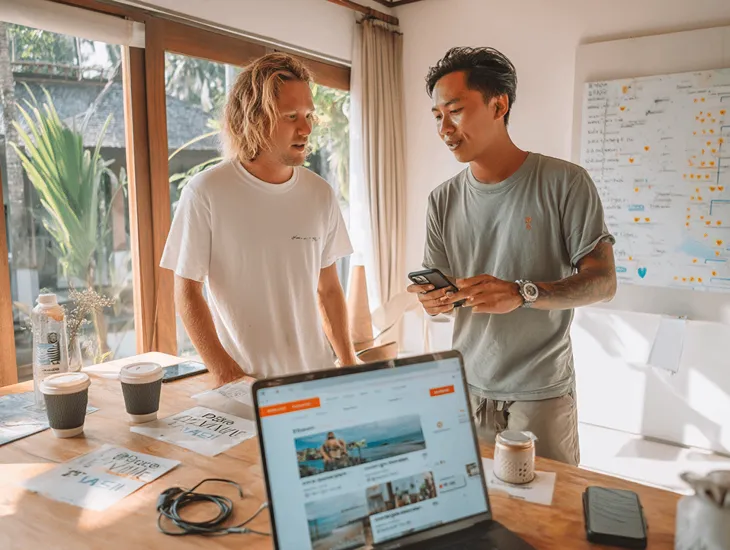
The goal is not to eliminate OTAs but to use them strategically. Think of Airbnb and Booking.com as your marketing billboards. Use them to attract first-time guests who have never heard of your brand. Once they are on your property, your goal shifts to converting them into direct customers for their next visit.
This is achieved through the “billboard effect.” Many users discover a villa on an OTA and then Google the name to find a better deal or more information. If your website appears with a “Best Rate Guarantee,” you capture that booking commission-free. Maintaining rate parity—ensuring your direct rate is never higher than your OTA rate—is essential if you want to grow Bali villa direct bookings successfully.
Data Capture and Guest Retention
Data is your most valuable asset. When a guest books via an OTA, the platform owns the data. When they book directly, you do. You must aggressively capture email addresses and phone numbers at every touchpoint, from the Wi-Fi login page to the digital guidebook.
With this data, you can segment your audience. Send an automated email to families three months before school holidays, or a special anniversary offer to couples who stayed previously. These targeted communications cost almost nothing but generate high-conversion bookings that help you grow Bali villa direct bookings year over year.
Paid Advertising for High Intent
Once your infrastructure is ready, you can accelerate growth with paid traffic. Google Hotel Ads and search campaigns targeting high-intent keywords like “book villa Seminyak direct” can intercept users who are ready to buy. Unlike broad social media ads, these target users specifically looking for accommodation in your area.
It is crucial to track your Return on Ad Spend (ROAS). If you spend $100 on ads to secure a $1,000 booking, your cost is 10%—still significantly cheaper than an OTA commission. Start with a small budget, test different keywords, and scale up the campaigns that deliver the best net return.
FAQs about Direct Booking Strategy
Yes, provided you have the correct accommodation license (e.g., Pondok Wisata) and are registered to pay the local PB1 hospitality tax. Operating without these exposes you to significant legal risk.
No. You must still pay the 10-12.5% local hospitality tax and applicable income tax on direct bookings. The saving comes from eliminating the 15-25% OTA commission.
Use a reputable Indonesian payment gateway like Xendit or Midtrans, or international options like Stripe (if supported), to process credit cards securely. Bank transfers are also common but have higher friction.
You must use a Channel Manager software. This tool syncs your calendar across Airbnb, Booking.com, and your website in real-time, instantly closing dates everywhere once a booking is made.
Generally, yes. Offering a rate that is 5-10% lower than your OTA rate (or matching the rate but adding free perks) is the standard incentive to encourage guests to book directly.