



Bali’s tropical allure has a dark side: relentless moisture. For villa owners, the humid climate isn’t just uncomfortable; it’s a silent destroyer of property value and guest satisfaction. Without proper intervention, the persistent dampness of the wet season can rapidly degrade finishes, rot timber, and foster fungal growth that is difficult to eradicate.
Ignored dampness leads to more than just aesthetic issues; it causes structural damage and severe health risks for occupants, including respiratory infections and allergies. Relying solely on standard air conditioning often fails to address the root cause, leaving walls damp, leather goods ruined, and online reviews filled with complaints about “musty smells.”
Effective management requires a multi-layered approach involving smart building design, mechanical systems, and rigorous daily protocols. Implementing robust Bali villa mold and humidity control strategies protects your asset’s longevity and ensures a 5-star guest experience. Partnering with an established villa management firm can provide the operational oversight needed to maintain these standards year-round.
Table of Contents
The Legal Backdrop: Health Standards and Vector Control
While many foreigners view pest control as a cosmetic preference, Indonesian law views it as a matter of public health. The regulatory framework, including Permenkes No. 50/2017, establishes standards for vector control in public and commercial spaces. Although private villas have different nuances than hotels, the overarching Pest Control Requirements for Villas in Bali imply that any accommodation provider must prevent their property from becoming a breeding ground for vectors like mosquitoes, flies, and rats.
Enforcement has tightened in 2026, with local Banjar and Satpol PP (Civil Service Police Unit) officials conducting more frequent audits on properties suspected of contributing to dengue fever outbreaks. Ignoring these standards can lead to complaints from neighbors and potential scrutiny from local authorities. Therefore, adherence to sanitation standards is not optional; it is a fundamental baseline for operating a legal and responsible tourism business.
Owner vs. Tenant: Defining Responsibilities in Contracts
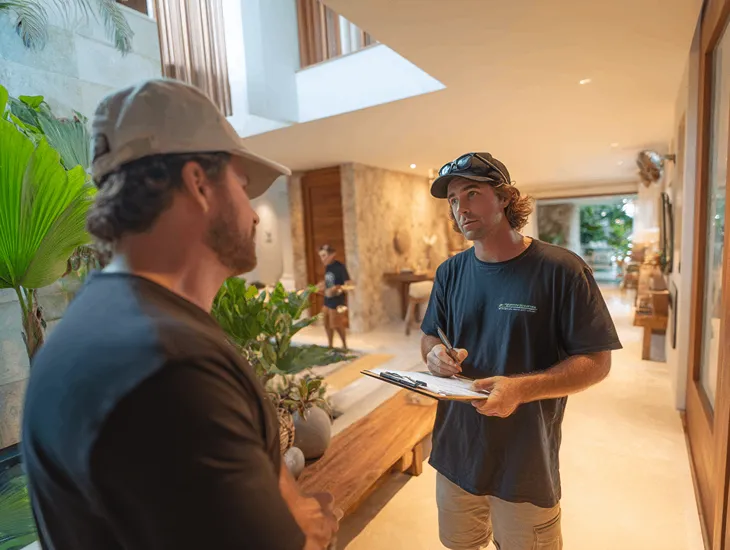
The most common source of friction in long-term rentals is the question: “Who pays when the ants invade?” In the absence of a specific clause, the unwritten rule in Bali usually assigns structural prevention to the owner and daily sanitation to the tenant. However, relying on unwritten rules is dangerous. To remain compliant with local health regulations, owners generally cover scheduled preventative treatments, such as annual termite injections and monthly fogging.
Tenants, on the other hand, are typically responsible for infestations caused by their lifestyle, such as leaving food out or failing to dispose of garbage. However, determining the root cause can be difficult. A lease agreement that clearly delineates these boundaries is essential. Without it, you may find yourself paying for extermination services caused by a tenant’s negligence, simply to preserve the property’s integrity.
Contract Clauses: What to Include for Liability Protection
To fully comply with Pest Control Requirements for Villas in Bali and protect your asset, your lease agreements must be explicit. A robust contract should state that the property is handed over in a pest-controlled condition and require the tenant to maintain that standard. Clauses should specify that the owner is responsible for the “building envelope”—fixing roof leaks and sealing gaps that allow pests to enter—while the tenant is liable for “hygiene-related” pest issues.
Furthermore, it is wise to include a mandatory access clause. This allows professional pest control teams to enter the property for scheduled treatments, ensuring that vector management protocols are met regardless of the tenant’s schedule. This prevents a tenant from neglecting the property for months, only for the owner to discover a massive infestation at the end of the lease term.
Operational SOPs for Effective Pest Management
For short-term rentals and managed villas, the approach must be proactive. Standard Operating Procedures (SOPs) should move beyond reactive spraying. Effective management involves a scheduled calendar of treatments: weekly larvicide for pools and ponds, monthly fumigation for mosquitoes, and quarterly intensive inspections for termites and rodents.
Your management team must also implement a “pre-check” routine before every guest arrival. This ensures that no ants have colonized the kitchen and no wasps have built nests on the balcony. Meeting the high expectations of international guests means that compliance with Pest Control Requirements for Villas in Bali is a daily operational habit, involving housekeeping staff who are trained to spot early signs of trouble, such as sawdust piles or droppings.
Real Story: The "Hollow Beam" Crisis in Pererenan
Liam, a 45-year-old tech investor from Australia, thought he had found the perfect deal: a 25-year lease on a stunning antique teak Joglo in Pererenan. The open-air design was breathtaking, and the landlord assured him the structure had been “recently maintained.” Liam signed the lease without a dedicated structural pest inspection, eager to move in before the peak season.
The nightmare began six months later, during the heavy November rains. Liam woke up to a faint, rhythmic crunching sound above his bed. At first, he ignored it, but then fine wood dust began coating his sheets every morning. When he called the landlord, the response was dismissive: “It’s just Bali nature. Maybe your organic garden is attracting them.” The landlord refused to send help, claiming the infestation was a result of Liam’s living habits.
Frustrated and worried the roof might actually collapse, Liam hired a professional property management firm to audit the villa. The moment of truth came when the inspector tapped the main master bedroom pillar. His screwdriver didn’t bounce off; it sank four inches deep into the wood. The heart of the home was hollow. The management team immediately countered the landlord’s refusal by citing the 2026 regulations regarding the SLF (Sertifikat Laik Fungsi). They argued that a termite-compromised structure would cause the building to lose its SLF, legally preventing the landlord from ever renting it again. Faced with this legal reality, the landlord capitulated and covered the $3,000 structural repair bill.
Service Provider Selection and Safety Standards

Selecting the right partner is critical. Many cheap operators use harsh, unregulated chemicals that can be hazardous to guests and pets. To align with proper Pest Control Requirements for Villas in Bali, you must hire licensed providers who use Ministry of Agriculture-approved pesticides. These professionals understand the delicate balance of killing pests without toxicity to humans.
According to industry insights from Solusi Pest, integrated pest management is the gold standard. This means the provider doesn’t just spray; they inspect, monitor, and report. When selecting a vendor, ensure their contract includes a service warranty—if the pests return within a week, they should return to re-treat at no extra cost.
Preventing Infestations: Structural vs. Behavior Issues
Prevention is always cheaper than the cure. Meeting Pest Control Requirements for Villas in Bali starts with the building itself. Owners must invest in sealing entry points: installing door sweeps, repairing torn fly screens, and grouting tiles correctly to deny ants a pathway. Wood treatment is non-negotiable; all timber should be treated with anti-termite coating before installation.
On the tenant side, behavior modification is key. Villa guidebooks should explicitly state that leaving food out in a tropical open-living environment is an invitation for pests. By educating guests, you reduce the chemical load needed to maintain compliance. A well-maintained structure combined with disciplined hygiene is the most effective pest barrier available.
The Financial Impact on ROI and Guest Reviews
Ignoring Pest Control Requirements for Villas in Bali has a direct hit on your bottom line. In the age of digital transparency, a single review mentioning “cockroaches in the bathroom” or “rats in the roof” can tank your occupancy rate on Airbnb or Booking.com. Recovering from a “dirty” reputation is far more expensive than paying for a monthly pest control contract.
Furthermore, structural pests like termites destroy the asset value itself. A leasehold property that requires a full roof replacement due to termite damage loses years of ROI. Therefore, viewing pest management as a mandatory investment protection strategy—rather than an optional expense—is the mindset of successful 2026 investors.
FAQs about Pest Control Requirements for Villas in Bali
Generally, the owner pays for structural prevention (termites) and scheduled maintenance, while tenants are responsible for hygiene-related issues, but the specific Pest Control Requirements for Villas in Bali should be defined in the contract.
To meet standard Pest Control Requirements for Villas in Bali, fogging is typically done monthly, but during the wet season (October–March), bi-weekly treatments may be necessary to control dengue vectors.
Usually, landlords are liable for the building structure only. Unless the lease states otherwise, tenants should insure their personal belongings, as Pest Control Requirements for Villas in Bali rarely extend to personal movable items.
Withholding rent is risky and can breach your lease. It is better to formally request repairs citing the owner's obligation to provide a habitable premise under Pest Control Requirements for Villas in Bali standards.
While eco-friendly options exist, the high pest pressure often requires integrated methods. Many Pest Control Requirements for Villas in Bali can be met with low-toxicity synthetic options that are safe once dry.
Yes. If you allow pets, your contract should include a specific clause requiring the tenant to pay for flea fumigation at the end of the lease to satisfy Pest Control Requirements for Villas in Bali.