



The rainy season in Indonesia is unforgiving, turning minor structural oversight into expensive disasters overnight. From October to March, heavy downpours can overwhelm drainage systems, while skyrocketing humidity creates a breeding ground for mold and termites. For foreign investors, neglecting property maintenance during these critical months often leads to flooded living rooms and rapidly deteriorating assets.
The financial impact of water damage goes far beyond the immediate repair costs; it destroys rental yield and lowers property value. A leaking roof or a damp wall can force emergency cancellations, leading to bad reviews and lost revenue during the peak holiday season. To protect your investment, you need a proactive strategy that addresses the unique challenges of the tropical climate, rather than reacting frantically when the ceiling starts to drip.
This guide outlines a repeatable, expert-approved framework to harden your villa against the monsoon. By following these steps, from pre-season audits to weekly in-season checks, you can ensure your building remains dry and secure. We leverage local data from the Badung Meteorology, Climatology, and Geophysics Agency (BMKG) to help you time your interventions perfectly. Here is your blueprint for surviving and thriving through the wet season with professional Property Maintenance in Bali.
Table of Contents
Understanding the Bali Climate Impact
The tropical climate of the archipelago presents a dual threat: intensity of rainfall and persistence of humidity. Unlike the gentle showers found in Europe or North America, Bali experiences torrential downpours that can dump inches of water in a single hour. This volume tests the structural integrity of your home, specifically stressing gutter capacities and soak pits. If your infrastructure is not designed or maintained to handle this load, water will inevitably find its way into the building envelope.
Beyond the rain itself, the ambient humidity during the wet season often exceeds 85%. This invisible moisture attacks porous materials, causing wood to swell, paint to bubble, and fabrics to sour. Consistent Property Maintenance in Bali requires a shift in mindset—you are not just maintaining a building; you are actively fighting an environment that wants to consume organic materials. Understanding this constant pressure is the first step toward effective preservation.
Phase 1: Pre-Season Audit Strategy
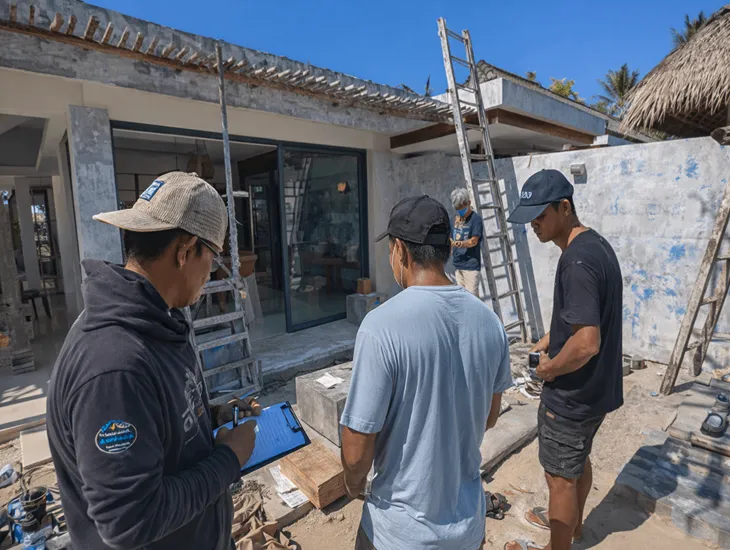
The most effective maintenance happens when the sun is still shining. Ideally scheduled between August and September, the pre-season audit is a comprehensive health check of your villa. This is the time to identify loose roof tiles, cracked ridge capping, and blocked downpipes. A thorough inspection now prevents emergency call-outs in the middle of a December storm, where finding a contractor is nearly impossible.
During this phase, special attention must be paid to the site drainage. Debris from the dry season often clogs external drains and soak pits, rendering them useless when the first rains arrive. According to local experts, clearing these channels 60 days before the wet season is a non-negotiable step for protecting foundations. Documenting every defect creates a punch list that prioritizes critical repairs over cosmetic fixes, ensuring your budget is spent on keeping water out.
Phase 2: Structural Hardening Protocols
Once the audit identifies the weak points, the “hardening” phase begins. This involves sealing the building envelope against water ingress. Flat roofs and balconies are notorious leak sources in Bali due to UV degradation of sealants. Re-applying high-quality, UV-resistant waterproofing membranes is a core component of tropical villa upkeep. Additionally, check the sealants around air conditioning penetrations and window frames, as wind-driven rain can penetrate even microscopic gaps.
Walls also require defense. Exterior render often develops hairline cracks during the dry season’s thermal expansion. Painting these surfaces with elastomeric, moisture-resistant paint creates a flexible barrier that bridges small cracks and repels water. This step not only protects the structural integrity of the masonry but also prevents internal damp patches. Professional Property Maintenance in Bali focuses on these defensive layers to reduce the frequency of major renovations.
Phase 3: In-Season Weekly Routines
When the rains start, the focus shifts from prevention to active monitoring. A “set and forget” approach is dangerous; active upkeep requires weekly vigilance. Your operations team or villa staff should perform visual checks after every major storm. They need to look for displaced roof tiles, overflowing gutters, and signs of soil erosion near the foundation. Clearing leaves from drains immediately after a storm prevents blockages during the next downpour.
Interiors require equal attention. Staff should check ceilings and corners for fresh discoloration, which indicates a new leak. Managing the indoor environment is also crucial; running exhaust fans in bathrooms and kitchens helps expel moisture-laden air. For closed rooms or owner storage areas, regular airing or the use of dehumidifiers is essential to prevent the stagnant air that feeds mold growth. These small, frequent interventions catch problems while they are cheap to fix.
Managing Humidity and Mold Risks
Mold is the silent destroyer of Bali villas. It thrives in the humid, stagnant air of the rainy season, attacking wardrobes, curtains, and even mattresses. Effective Property Maintenance in Bali must include a rigorous ventilation protocol. Ensure that furniture is pulled slightly away from walls to allow airflow, and install moisture absorbers in all closets. If a room smells musty, it is an immediate red flag that ventilation is insufficient.
In high-end properties, humidity control often involves mechanical assistance. Servicing air conditioning units to ensure they are draining correctly and dehumidifying efficiently is vital. Filters should be cleaned monthly to prevent mold spores from circulating. If mold does appear, treat it immediately with vinegar or specialized anti-fungal solutions. Painting over mold without killing it first is a mistake that results in the problem returning within weeks.
Real Story: The Umalas Drainage Disaster
Sarah, a 42-year-old consultant from Melbourne, fell in love with the “sunken” aesthetic of her new Umalas villa. She didn’t realize she had bought a swimming pool. During the first monsoon, she watched in horror as her beautifully landscaped garden turned into a funnel, dumping three inches of muddy water directly onto her custom teak furniture in a single night.
The smell of damp began to permeate the villa, and Sarah realized the previous owner had prioritized design over drainage engineering. She decided to [verify her site drainage] by consulting a professional team to assess the property. They identified that the garden grade was sloping toward the house and that the soak pits were severely undersized.
The team implemented a correction plan: re-grading the lawn, installing deeper French drains, and adding a heavy-duty submersible pump. The following rainy season, while the street outside flooded, Sarah’s living room remained perfectly dry. She learned that in Bali, investing in invisible infrastructure is just as important as the visible decor.
Termite and Pest Defense Strategies
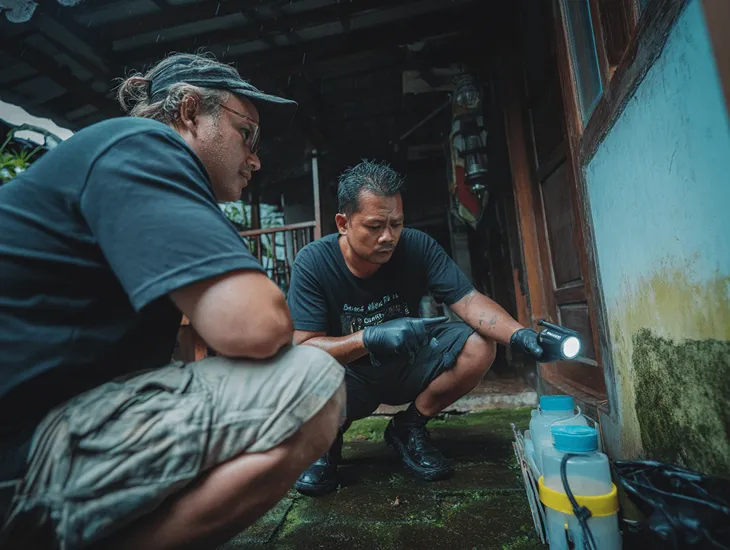
Rain drives pests indoors. As the water table rises, ants, cockroaches, and rodents seek dry shelter—often inside your kitchen or roof space. More dangerously, the moist soil provides the perfect highway for subterranean termites. A comprehensive maintenance plan must include intensified pest control during these months. Regular spraying is insufficient; you need to inspect the perimeter for mud tubes, which are the tell-tale sign of a termite invasion.
Wooden structures, such as door frames and roof trusses, are particularly vulnerable when damp. Termites can hollow out a beam from the inside, leaving the exterior paint intact until the structure fails. Professional inspections should be increased to monthly frequencies during the wet season. Re-establishing chemical barriers or baiting stations before the rains peak ensures that your villa remains a fortress against these destructive invaders.
Post-Season Review and CAPEX Planning
As March ends and the rains subside, the cycle of Property Maintenance in Bali concludes with a review. This is the time to assess how the building performed. Did the roof hold? Were there areas of persistent damp? Documenting these issues while they are fresh in your memory allows you to plan Capital Expenditure (CAPEX) for the upcoming dry season. It is cheaper to budget for a roof overhaul now than to patch the same leaks again next year.
This review phase should also evaluate the performance of your materials. If a timber deck rotted despite maintenance, consider upgrading to stone or composite materials that are impervious to water. Reviewing the effectiveness of your pest control and cleaning teams is also vital. Continuous improvement based on seasonal data ensures that your property appreciates in value despite the harsh climate.
FAQs about Rainy Season Maintenance
You should inspect and clean gutters at least once a week, especially if you have large trees overhanging the roof. Blocked gutters are the number one cause of preventable leaks in Property Maintenance in Bali.
Airflow is key. Run air conditioners on "dry" mode for a few hours daily, use chemical moisture absorbers in wardrobes, and open windows on sunny days to cross-ventilate the space.
Yes, absolutely. The tropical environment accelerates termite activity. A professional can detect activity using thermal cameras and acoustic tools that the naked eye will miss.
While minor sealant patches can be DIY, roof waterproofing requires professional application. Incorrectly applied membranes can trap moisture underneath, causing structural decay.
Exterior painting should strictly be done in the dry season (May to September). Painting during the rainy season traps moisture in the walls, leading to bubbling and peeling.