



For villa owners in Bali, the demand for exclusive in-villa experiences is exploding. Guests no longer just want a place to sleep; they demand curated moments, from sunset BBQs and floating breakfasts to intimate weddings. These Special Occasion Services represent a massive revenue opportunity, allowing owners to charge premium rates. However, transforming a residential property into a venue for commercial-grade events carries significant risks that many foreign investors overlook until the police arrive.
In 2026, the Bali regulatory environment tightened significantly regarding “hidden” commercial activities in private zones. A noise complaint from a neighbor during a birthday party can trigger an immediate visit from the Pecalang (local security) or Satpol PP, resulting in on-the-spot fines or operational shutdowns.
Furthermore, serving food or offering spa treatments through unlicensed freelancers exposes the villa to severe liability in the event of food poisoning or injury, potentially invalidating your insurance coverage.
To capitalize on this trend without jeopardizing your business, you must professionalize your approach. Hosting bespoke in-villa celebrations requires a blend of hospitality flair and strict compliance, ensuring that every vendor is licensed and every event is sanctioned by the local Banjar. By partnering with an established villa management firm, you can confidently deliver high-end experiences that delight guests while remaining fully compliant with Indonesian tourism and public order laws.
Table of Contents
Defining the Service Menu and Compliance
The first step in monetizing Special Occasion Services is curating a menu that fits your infrastructure while maintaining regulatory compliance. The most popular category is “Private Dining,” which includes romantic candlelight dinners and seafood BBQs. These are low-impact but high-value, often sold as “Honeymoon Packages.”
Moving up the scale, “Decor and Entertainment” add-ons such as floral arrangements and acoustic musicians allow guests to customize their stay without requiring a full event organizer.
However, owners must distinguish clearly between “in-house experiences” and “events” to ensure compliance. A private yoga session is an experience; a wedding reception with 50 guests is an event. The latter requires a completely different operational tier and Banjar coordination. Successful villas typically bundle these into “Occasion Tiers,” offering pre-approved vendors for smaller add-ons while requiring strict contracts for larger gatherings. Clarity here prevents a small dinner from spiraling into a raucous party that breaches your zoning and compliance conditions.
Legal Licensing for Chefs and Wellness
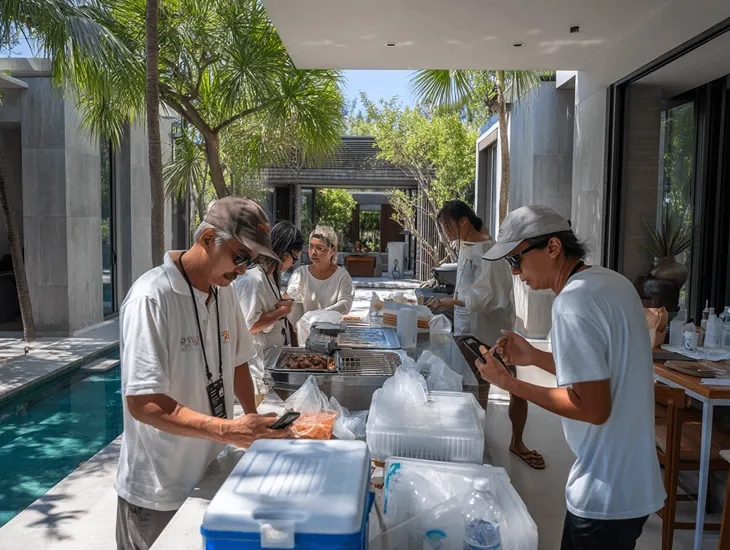
In the Bali “gig economy,” it is tempting to hire freelance chefs who offer cheap rates. In 2026, this is a dangerous gamble that ignores compliance. Legitimate private hospitality events must be delivered by registered businesses. A private chef or catering company should hold an NIB (Business Identification Number) and relevant food handling certificates. If a guest suffers from salmonella after a villa BBQ prepared by an unregistered cook, the owner can be held jointly liable for negligence.
Similarly, in-villa spa services are highly regulated. A therapist cannot legally operate commercially without being attached to a licensed business holding a Tourism Business License (TDUP). While it is Not confirmed that police check every therapist, the risk of a “sting” operation is real. Professionalize your Special Occasion Services by signing vendor agreements only with companies that provide proof of their legal standing, insulating your property from operational and compliance risks.
Navigating Banjar Approvals and Noise Rules
The Banjar (local village council) holds supreme authority over neighborhood harmony in Bali. There is no such thing as an “island-wide” right to host parties; permission is granted locally by the Banjar. For any curated guest experiences involving amplified music, extra guests, or late hours, you must secure Banjar approval. Without this “izin keramaian” (crowd permit), your event is technically unauthorized. In areas like Canggu, noise curfews are strictly enforced, often requiring music to be turned off by 10:00 PM.
Ignorance of these local unwritten laws is the fastest way to get shut down. A professional approach involves paying a “Banjar donation” or fee for specific events, which ensures the local security is aware and supportive. While specific fee schedules are Not confirmed as standard across Bali, the practice of coordination is mandatory for compliance. Your event contracts must explicitly state that the Banjar has the final say; if they demand the music stops due to a religious ceremony or complaint, the guest must comply immediately without refund.
Operational Steps for Safe Service Delivery
Delivering flawless Special Occasion Services requires a rigorous operational workflow focused on compliance. Start by categorizing your offerings: “Standard” (available to book instantly) vs. “Request Only” (requires approval). For the latter, implement a vetting process. Before accepting a booking for a 30-person birthday, gather full details: vendor names, equipment lists, and run-sheets. This prevents “surprise” sound systems that overpower your villa electrical capacity.
Next, formalize your vendor relationships. Do not rely on informal WhatsApp agreements. Have signed contracts with your preferred caterers and decorators that outline conduct rules: load-in times, trash removal, and staff behavior.
Ensure your on-site staff are trained to supervise these third parties. A manager should be present during the setup of any major private hospitality event to check that fire exits aren’t blocked and that noise levels remain within agreed limits to satisfy Banjar expectations.
Structuring Packages, Pricing, and Deposits
Profitability comes from smart packaging. Instead of allowing guests to book their own vendors, offer curated Special Occasion Services bundles. For example, a “Sunset Proposal Package” could include the chef and flowers for a single price.
This gives you control over the quality and legality of the vendors used, ensuring full compliance. Markups on these services are standard industry practice for the coordination effort involved.
Protect your revenue with strict deposit terms. Events require logistics; if a guest cancels a chef 24 hours prior, ingredients have already been bought. Your terms should require a 50% non-refundable deposit for third-party services.
Additionally, include a clause stating that if the Banjar or police shut down the event due to guest misconduct, no refund will be issued for the curtailed gathering.
Real Story: A Wedding Disaster in Ungasan
Jennie, a South Korean entrepreneur managing her Ungasan cliffside villa remotely, saw event hosting as a goldmine. When a guest requested a “private engagement dinner” for 30, she agreed instantly, skipping the formal Banjar permits to save time.
However, the dinner was a front; watching her CCTV feed from Seoul, Jennie froze as crews wheeled in industrial subwoofers and strobe lights. As the bass began vibrating her villa’s walls, the guests ignored her frantic calls.
At 10:30 PM, the Pecalang (local security) arrived in their iconic checkered sarongs. Finding no community permits or paid fees, they didn’t argue—they simply cut the villa’s power from the street. On Jennie’s screen, the chaotic flashing lights vanished into pitch blackness. The thumping bass was replaced by an eerie silence, broken only by the sound of the Indian Ocean and the angry shouts of guests plunged into the dark.
The aftermath was a nightmare of heavy Banjar fines, threats to her business license, and refund demands. Shaken, Jennie realized that in Bali, owning land does not grant absolute rights to host events. She immediately hired a professional management firm to handle her logistics, ensuring every future celebration is fully permitted and community-sanctioned before the first guest arrives.
Managing Risks: Insurance and Compliance

When you facilitate private gatherings, you step into a liability minefield. If a decoration arch collapses on a guest, who pays? Standard villa insurance often excludes “commercial events.” You must verify that your policy covers incidental activities or require guests to purchase their own event insurance for larger gatherings to ensure compliance with liability standards.
Your Terms & Conditions must include a comprehensive indemnity clause. This should state that the villa is merely the venue provider and is not liable for the actions of third-party vendors. While total waivers are Not confirmed to be 100% enforceable in criminal negligence cases, they are essential for civil disputes. Make it clear: the guest assumes full responsibility for their vendors. This documentation is your primary defense when Special Occasion Services go wrong.
Creating Bali Villa-Specific Event Policies
Transparency is the antidote to conflict and key to compliance. Your villa needs a specific “Event Policy” document separate from your rental agreement. This document should detail practical limitations: “Max occupancy 20 pax,” “No music after 11 PM,” and “No glass around the pool.” Guests must sign this before any bookings are confirmed.
Communication is key. Include these rules in your pre-arrival email. If a guest mentions a “celebration,” send them the policy immediately. It is better to lose a booking from a guest who wants a rave than to accept it and deal with the Banjar. By setting boundaries early, you attract sophisticated clientele, ensuring your Special Occasion Services enhance your brand rather than destroy it.
FAQ's about Villa Event Services
Generally, no, if it is for in-house guests. However, the chef providing the service must be a licensed business to ensure food safety compliance.
Yes. It is standard to charge a "function fee" (often one night's rental rate) to cover the extra wear and tear of hosting an event.
There is no single island-wide time, but 10:00 PM or 11:00 PM is the standard "quiet time" in residential zones. Always confirm with your local Banjar.
If the villa provided the chef, the villa can be liable. This is why you must only partner with licensed catering companies.
You should allow this only if the DJ signs a "Sound Conduct" agreement adhering to your decibel limits.
For a small family dinner, usually no. For anything involving outside guests, decorations, or loud music, yes—you must inform the Banjar to avoid Special Occasion Services shutdowns.