


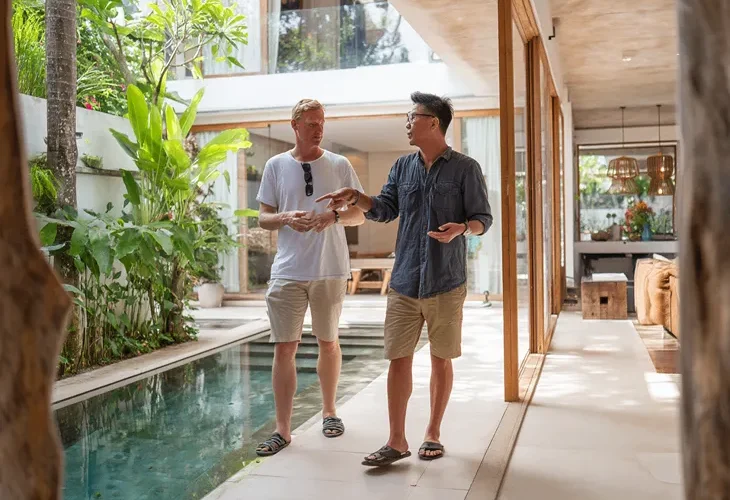
First impressions in a luxury rental are often formed the moment a guest steps onto the property, and the tactile experience of the floor beneath their feet plays a silent yet powerful role. In the tropical heat of Indonesia, flooring must achieve a difficult balance: it needs to stay cool underfoot, withstand high-intensity suitcase traffic, and look spectacular in wide-angle photography for Online Travel Agencies (OTAs). Selecting the wrong materials can lead to safety hazards, poor reviews, and astronomical maintenance costs.
The stakes are particularly high when considering the local environment. High humidity, salt air, and frequent transitions between wet pool areas and dry living spaces mean that standard indoor materials often fail within a single season. Many owners struggle with slippery surfaces that create liability risks or porous stones that stain permanently from a single spill of sunscreen or red wine. Agitated guests and declining occupancy rates are often the result of prioritizing aesthetic “looks” over functional, tropical-grade durability.
The solution lies in a strategic, zoned approach to material selection that aligns with modern Balinese design languages. By integrating high-performance materials like polished concrete, treated teak, and non-slip natural stones, you can create a seamless indoor-outdoor flow that wows guests while remaining operationally efficient. This guide, supported by data from the Ministry of Investment (BKPM), explores the most effective local options to ensure your investment remains safe for every visitor with professional Villa Flooring in Bali.
Table of Contents
Core Principles of Guest-Centric Flooring
When guests book a villa, they are buying a dream of tropical luxury. Every material choice should reinforce that dream. In the context of Villa Flooring in Bali, this means selecting surfaces that feel solid and premium. Guests notice the small details—the coolness of stone on a hot afternoon or the warmth of wood in a cozy bedroom. Barefoot comfort is a primary metric for guest satisfaction, so avoiding materials that become uncomfortably hot in direct sunlight is essential for those open-plan architectural designs.
Practicality is the second pillar of success. Your floors must handle the “sandy feet” reality of island life. Materials that are difficult to clean or show every smudge will frustrate your housekeeping team and lead to visible wear in your marketing photos. Professional managers emphasize that a floor’s ability to resist scratches from heavy suitcase wheels and furniture moves is just as important as its color. Strategic zoning ensures that high-traffic areas are built to last, while private zones focus on sensory appeal.
Natural Stone: The Luxury Resort Aesthetic
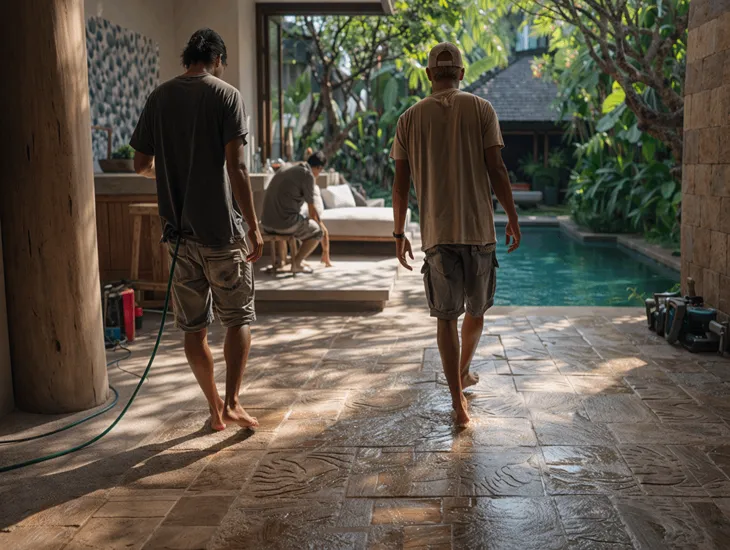
Natural stone is the gold standard for creating a high-end resort character. Options like granite, slate, and limestone are ideal for the tropical climate because they possess high thermal mass, staying naturally cool even when the humidity rises. In Bali’s most prestigious resorts, textured stones such as Brown Java Flagstone are frequently used for pool terraces. This provides a non-slip surface that handles the coastal climate and adds a rugged, organic charm that looks incredible in OTA galleries.
Using a consistent stone type across indoor and outdoor spaces creates a “seamless” transition that makes small villas feel significantly larger. However, natural stone is porous. To protect your investment, all stone surfaces must be professionally sealed to prevent staining from pool chemicals and oils. When properly maintained, stone flooring offers a timeless appeal that ages gracefully, unlike synthetic alternatives that may peel or fade under the intense Indonesian sun.
Polished Concrete and Terrazzo Trends
Polished concrete and terrazzo have become synonymous with the “Canggu Minimalist” aesthetic that currently dominates social media. These materials offer a sleek, industrial-chic base that allows furniture and rugs to pop. From an operational standpoint, polished concrete is a dream; it is incredibly durable, supports underfloor cooling if required, and can be mopped hundreds of times without losing its luster. It provides a monolithic look that removes the need for grout lines, which are often the first place dirt accumulates.
Terrazzo, which incorporates chips of marble or glass into a cement base, adds a layer of artisanal texture. It is particularly popular for kitchen islands and living room floors where owners want a “wow factor” that remains easy to clean. For an effective Villa Flooring in Bali strategy, these materials should be finished with the correct slip-rating, especially in open-plan areas where rain might blow in during a sudden tropical downpour. Their smooth surface reflects light beautifully, making interiors appear bright and airy.
High-Splash Zone Tile Selection
Bathrooms and kitchens require a more specialized approach to moisture management. Ceramic and porcelain tiles are the standard choices here due to their near-zero water absorption rates. Porcelain is particularly recommended for its extreme durability and resistance to the harsh cleaning chemicals often used in high-turnover rentals. In a bathroom setting, the choice of tile can make or break a review; guests loathe grimy grout and slippery shower floors.
To maximize guest appeal, consider using patterned or hand-crafted tiles for specific “moments”—such as a vibrant backsplash or a featured shower wall. These provide a splash of personality without the cost of flooring the entire villa in expensive materials. When selecting tiles, always check the R-rating (slip resistance). A minimum of R10 is typically advised for bathrooms to ensure that a damp guest exiting the shower doesn’t experience a dangerous fall, which would lead to a liability nightmare and negative feedback.
Wood and Bamboo for Sanctuary Spaces
While stone and concrete dominate public areas, tropical hardwoods like teak, ironwood, and bamboo are the preferred choices for bedrooms and upper floors. These materials introduce a sense of warmth and “Balinese soul” that synthetic materials cannot replicate. Walking onto a smooth, warm teak floor in the morning feels significantly more luxurious than cold tile. Bamboo is also gaining traction as a sustainable, eco-friendly alternative that aligns with the growing “green tourism” trend in Indonesia.
However, wood requires intensive maintenance to succeed as a choice for Villa Flooring in Bali. It must be properly treated against the island’s subterranean termites and sealed against the 90% humidity levels. Without professional installation and kiln-dried timber, wood floors can warp, cup, or develop unsightly gaps. When executed correctly, the contrast between a cool stone living area and a warm hardwood bedroom creates a visual hierarchy that signals a high-quality property.
Pool Deck Safety and Slip Resistance
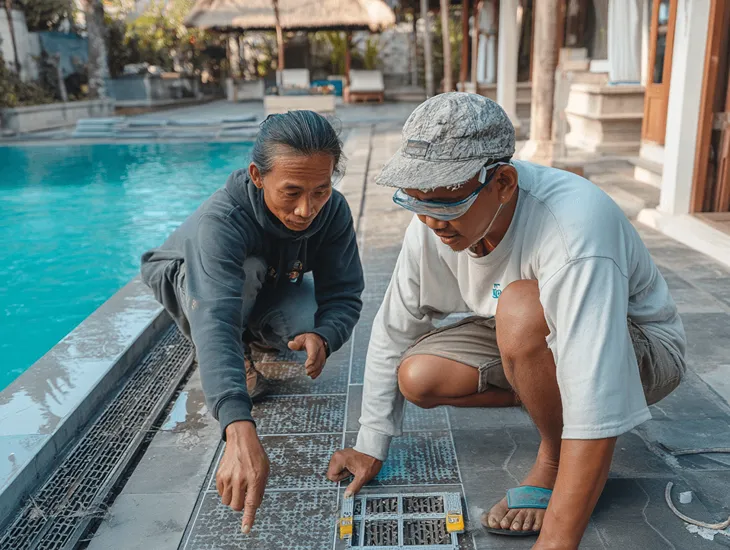
The pool deck is perhaps the most high-risk area of any villa. It is where guests spend the majority of their leisure time, usually with wet feet. Glossy tiles or smooth stones are strictly discouraged here; the liability risk is simply too high. Solutions include textured flagstones, slip-rated outdoor porcelain, or specialized non-slip coatings. These surfaces must maintain their grip even when covered in chlorinated water or suntan oil, while also remaining cool enough for bare feet in the midday heat.
Beyond the material itself, the “invisible” engineering of the deck is critical. Proper drainage and a correct slope are essential to prevent standing water, which can become a slip hazard and a breeding ground for mosquitoes. A well-designed pool deck reduces incident risk and signals to guests that the villa is run by a professional management team that prioritizes their safety. High-quality natural textures here significantly enhance the resort vibe of the outdoor space.
Strategic Zoning for Maximum Appeal
To balance budget and beauty, professional developers often use a zoning strategy. This involves placing high-impact, premium materials in the areas where guests spend the most time or where the first impression is formed. For instance, using large-format natural stone in the entrance and main dining hall provides an immediate sense of luxury. Meanwhile, more cost-effective porcelain tiles can be used in secondary areas like staff quarters or storage rooms without sacrificing the overall aesthetic.
In the bedrooms, shifting to wood or high-quality hybrid flooring creates a psychological “transition” to a private sanctuary. This zoning not only helps control initial construction costs but also simplifies long-term maintenance. Each zone is treated according to its specific use case—durability for the living room, safety for the deck, and comfort for the bedroom. This level of intentionality is what separates a standard rental from a high-performing luxury villa.
Real Story: The Berawa Floor Transformation
David, a 45-year-old investor from Sydney, couldn’t figure out why his Berawa villa was sitting empty. The furniture was new and the location was perfect, but his booking rate had hit a ceiling. It wasn’t until he stepped onto the dark, yellowed ceramic tiles of his living room that he realized the problem: his floors looked “cheap” and felt dated in an increasingly competitive 2026 market.
The challenge was to modernize the aesthetic without a full structural overhaul. David consulted with the revenue experts at Bukit Vista to understand what finishes were trending with high-spending European tourists. He decided to replace the living area with a custom white-base terrazzo featuring local grey stone chips. During the renovation, he could feel the volcanic dust and humidity, but he knew the moisture-resistant finish would be worth the effort.
The result was a total transformation. The new terrazzo reflected the morning sun, making the living room glow with a bright, airy energy. He paired this with reclaimed teak in the bedrooms for a balanced mix of cool and warm textures. Within a month of updating his OTA photos, David saw a 25% increase in inquiries. Guests specifically mentioned the “stunning floors” in their reviews, and David realized that the floor isn’t just something to walk on—it’s a foundational part of his brand.
FAQs about Villa Flooring in Bali
Polished concrete or high-quality porcelain tiles are best. They are nearly indestructible, easy to sanitize, and offer excellent resistance to scratches from toys and suitcases, making them ideal for Villa Flooring in Bali.
Ensure the wood is kiln-dried to the correct moisture content before installation. Use a professional contractor who understands expansion gaps and applies a high-grade tropical sealant on all six sides of the boards.
Marble looks stunning but is very high-maintenance. It is soft and highly porous, meaning it stains and scratches easily. If you choose this material, it must be honed for slip resistance and sealed frequently.
Large-format terrazzo and seamless polished concrete are the current favorites. They provide the clean, minimalist backdrop that allows colorful tropical furniture and greenery to stand out in photos.
No. Indoor tiles lack the necessary slip-resistance and UV stability. Using them outdoors is a major safety risk and will likely lead to negative reviews and potential legal liability.