


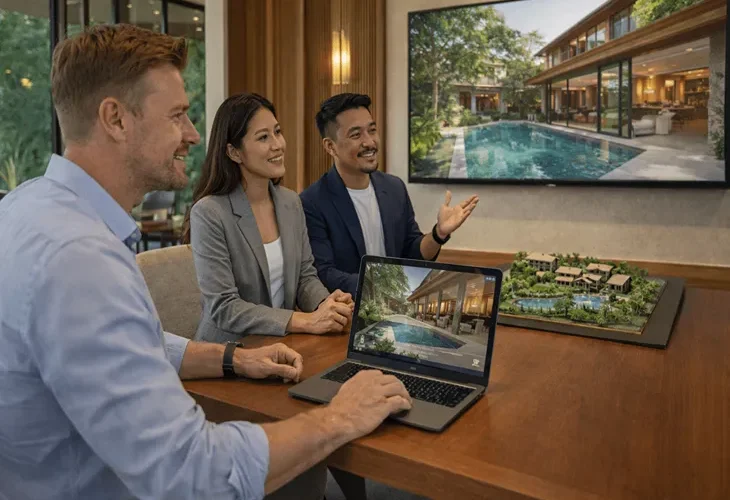
The global travel market is evolving. Many property owners still rely on static images to sell their island properties. International guests often hesitate to book high-end stays based on flat photos that may not reflect the current property state.
This lack of transparency creates a trust gap. Guests worry about privacy, bedroom views, and neighborhood noise. For an investor, this uncertainty increases website bounce rates and booking cancellations.
Using outdated marketing methods in 2026 results in lower engagement. Competitors now adopt immersive tools. The emotional connection required for long-stay bookings is difficult to build through a standard 2D gallery.
Virtual reality and 3D modeling offer solutions to these marketing challenges. The rise of VR and Metaverse Villas in Bali allows guests to inspect the space from Sydney or New York. This technology builds immediate confidence and excitement in prospective travelers.
Professional management teams facilitate this digital transition. We don’t just commission the 3D scans. We ensure the physical villa matches the virtual promise through strict maintenance standards and guest service in Indonesia.
Immersive previews lead to higher conversions and more serious investor leads. Your property becomes an experience rather than a basic listing. Use the official Indonesian tourism board resources to understand current traveler expectations for digital transparency.
Table of Contents
The Current Reality of Virtual Tours in Bali
Immersive technology is a live marketing tool used by top-tier operators in Indonesia. Professional 360-degree tours are common for high-end real estate in Bali. These allow users to navigate through every room with a click.
Matterport has become the industry standard for creating digital twins of luxury estates. Data indicates that villas using professional virtual tours saw a 40% increase in bookings. This provides the specific visual data that modern travelers demand before confirming a stay.
The precision of these scans allows for accurate measurement of every corner. Guests can verify if a specific furniture piece fits or if the workspace is suitable for their equipment. This level of detail is a core requirement for the premium rental market in 2026.
Try Before You Book: Increasing Guest Trust

The “try before you book” trend is growing among digital nomads. By offering VR and Metaverse Villas in Bali, management teams allow guests to inspect amenities remotely. This transparency reduces guest anxiety and encourages longer commitments.
Research suggests that 60% of travelers are more likely to book after a virtual tour. It eliminates the surprise factor that leads to negative reviews. Guests arrive with realistic expectations, which simplifies the check-in process and improves satisfaction scores.
Building this trust is essential for villas located in developing areas. Guests want to see the immediate surroundings and the proximity of neighbors. Virtual tours provide an honest 360-degree view that traditional cropped photos cannot hide.
Accelerating Real Estate Sales with 3D Scans
3D home tours have changed the sales cycle for investors. Listing a property with a spatial scan allows buyers to pre-qualify themselves remotely. This reduces unnecessary site visits and focuses time on leads interested in the specific design.
Developers use 3D renderings to sell units before construction. Refining layouts in a virtual environment catches design flaws that are costly to fix later. This approach ensures the final physical product is optimized for aesthetics and operational efficiency.
For off-plan sales, 3D modeling allows buyers to customize finishes virtually. They can choose between different stone or timber types and see the result in a rendered environment. This level of personalization increases buyer engagement and speeds up the closing process.
Metaverse Branding vs. Physical Reality
Metaverse branding serves as a marketing layer for a younger demographic. Some projects in Indonesia position themselves as metaverse-ready by creating virtual outposts for digital events. This builds brand awareness through avatar interaction.
The metaverse is a complement to physical hospitality. The value lies in using virtual space as a high-fidelity preview. A professional management partner ensures the virtual villa is a data-driven tool integrated into a revenue strategy.
Virtual events can act as a teaser for the physical stay. Hosting a virtual housewarming or property tour in a metaverse environment generates interest across global markets. This digital layer acts as a 24/7 showroom that requires no physical maintenance.
Real Story: Bridging the Distance in Pererenan
Thomas booked a Pererenan villa after navigating the property layout via VR goggles in Berlin. He previously struggled with listings that misrepresented room dimensions and noise levels. The virtual tour provided the spatial accuracy needed to commit to a high-value, long-term lease.
Thomas navigated the virtual property layout from Berlin. He verified the desk height and power outlet locations before booking. He confirmed the workspace was suitable for his architecture software requirements.
When he arrived in Pererenan, the layout matched the data he memorized in his VR goggles. Our management team handled the local rental license regulations and paperwork at the village office. Thomas’s experience proves that VR and Metaverse Villas in Bali create virtual trust that captures long-term guests.
Operational Efficiency through 3D Spatial Assets
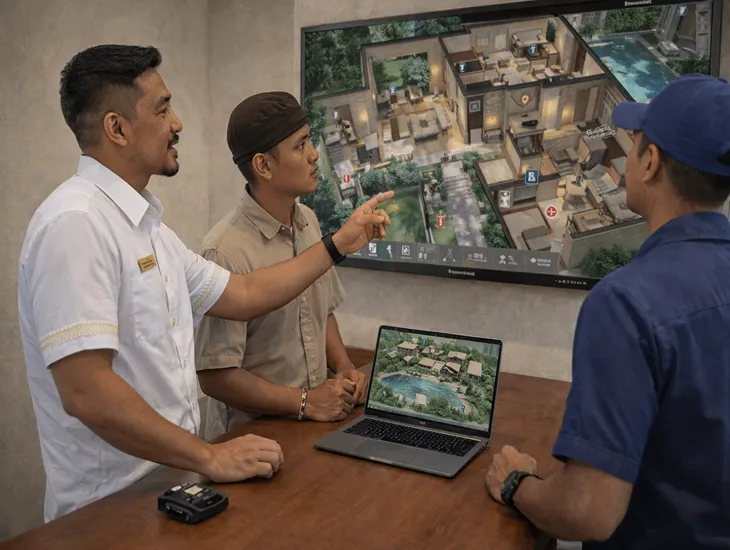
Virtual modeling changes day-to-day operations. Management teams use 3D scans to onboard new staff remotely. Housekeeping and security teams navigate SOP routes virtually to learn safety equipment locations before their first day on-site.
This spatial context is invaluable for maintenance. When an issue arises, we brief vendors using the 3D scan. This reduces time spent on assessment visits and ensures the right tools are brought on the first trip.
It also serves as an inventory management tool. Managers can perform virtual audits of furniture and amenities without traveling to the site. This digital record protects the asset and ensures that all property items are accounted for during guest turnovers.
Costs, ROI, and Reducing Cancellation Rates
Professional virtual tours reduce cancellations. One cliffside property reported a 60% drop in canceled bookings after implementing a virtual walk-through. Guests who see the actual terrain are less likely to cancel.
The ROI is measurable through higher engagement and longer time-on-page metrics. These signals improve property SEO on major booking platforms. Immersive content is an essential competitive requirement for serious investors in 2026.
Beyond direct bookings, these assets reduce the cost of customer support. When guests can answer their own questions by exploring the tour, the volume of pre-booking inquiries drops. This efficiency allows the management team to focus on high-touch guest services instead of routine questions.
Future-Proofing Your Property with Management
The tech landscape moves fast. Owners do not need to be tech experts to stay competitive. A professional villa-management partner identifies which tools deliver revenue. We integrate the virtual funnel into your website and social media.
Our role is to protect brand integrity. We ensure the real-world villa matches the high-resolution virtual scan. From maintaining gardens to fresh paint, we manage the physical reality. This ensures your virtual marketing remains an honest sales tool.
As virtual platforms evolve, we monitor new opportunities for monetization. Whether through virtual tourism or digital art exhibitions within the property twin, we keep your asset at the forefront of the market. This proactive approach ensures your investment remains relevant for the next generation of travelers.
FAQs about VR and Metaverse Villas in Bali
Costs depend on square footage. The investment for VR and Metaverse Villas in Bali is typically recovered through higher conversion and lower cancellation rates.
Yes. Booking platforms favor high engagement. Users spend more time on interactive listings, which signals to algorithms that your property is a top-tier result.
Yes. Modern virtual tours are optimized for mobile browsers. Guests can navigate the property using touchscreens without needing a VR headset.
Management teams use 3D scans as a spatial reference. We show contractors the exact location of components remotely to speed up repairs.
Currently, the metaverse is a marketing and awareness tool. ROI comes from using digital twins to drive physical occupancy.
No. VR provides spatial context, but professional photos are still required for social media marketing and high-impact hero shots.