


Managing a holiday home feels rewarding until a security breach occurs. Owners worry about unauthorized access, theft, or pool accidents. These incidents cause significant stress and liability for property owners in Indonesia.
A lack of oversight means basic barriers are the only protection. Guests who feel unsafe leave damaging reviews. These reviews lower occupancy rates and lead to financial loss for a villa in Indonesia.
Implementing Villa Security Protocols in Bali is the best way to safeguard investments. Professional teams use layered security to ensure every stay is secure. This approach protects insurance and maintains compliance with local laws.
Utilizing a specialized management service ensures your property adheres to Official Indonesia Tourism standards. Proper protocols demonstrate that you prioritize guest well-being as much as luxury. This professional commitment separates your villa from unmanaged, high-risk properties.
Standardizing your safety measures reduces the daily workload for owners. When security is handled by experts, your property runs more efficiently. This allows you to focus on your long-term rental growth and portfolio expansion.
Table of Contents
Core Physical Security Standards for Villas in Bali
The foundation of a secure rental is the physical perimeter. A gated property with robust gates is essential to control access. Perimeter walls must be high enough to deter intrusions while maintaining aesthetic appeal.
Every bedroom should have a high-quality safe for passports and electronics. Clear instructions in the guest manual ensure these are used correctly. High-security locks on all doors and windows provide the next layer of defense.
Professional managers conduct regular audits of all hardware. They ensure nothing is weathered or easy to bypass. These physical Villa Security Protocols in Bali establish a feeling of professional care and safety for every guest.
CCTV Monitoring and Technical Surveillance

Technical surveillance now involves integrated monitoring systems. CCTV coverage must focus on main entrances and driveways. Professional management ensures that footage monitoring is compliant with local privacy expectations and guest data protection.
Motion-detect lighting is a critical technical layer. A well-lit driveway prevents accidents and deters suspicious activity. Systems must be tested weekly to ensure sensors are correctly calibrated and bulbs are functional.
Professional teams replace failed cameras immediately to maintain a safety record. Many owners opt for smart alarms that alert a manager’s phone. This data is invaluable for insurance claims and resolving guest disputes.
Staff Training and Human Security Layers
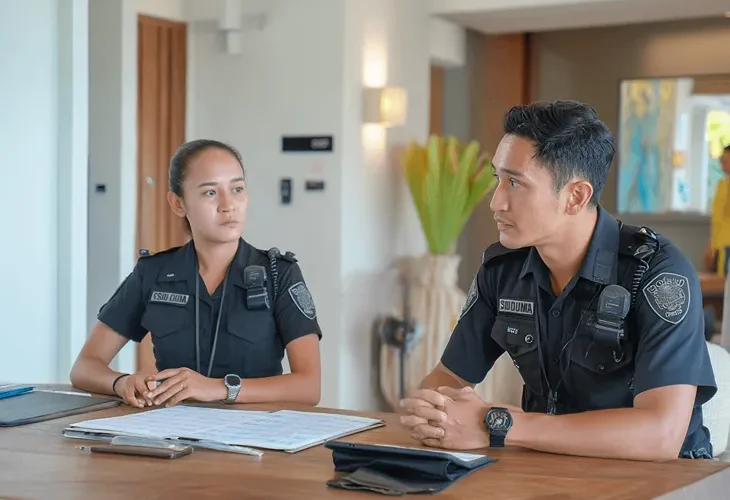
Human presence remains the most effective deterrent to threats. High-end villas employ 24-hour guards or security patrols. Staff members monitor entry points and manage visitor logs for every person entering the building.
Staff must be trained in basic safety and emergency response. This includes using fire extinguishers and providing first aid. Professional management ensures skills are refreshed through regular drills to keep the security layer reliable.
Guards must have a clear escalation path to the villa manager. Integrating human elements creates a responsive environment. Guests find comfort in knowing a trained professional is nearby for medical concerns or nighttime issues.
Legal Compliance and Building Safety Laws
Security in Indonesia is connected to legal compliance. Regulations require rentals to have a Business Identification Number. These are validated through safety checks that include fire-safety certifications and approved architectural designs.
Properties must also hold a Sertifikat Laik Fungsi. This certificate covers electrical safety and pool safety standards. Failing to meet these criteria leads to fines or property sealing by local authorities in Indonesia.
Professional managers handle the administrative burden of these checks. They ensure Villa Security Protocols in Bali satisfy platform requirements and Indonesian law. Staying compliant prevents the sudden cancellation of guest stays and protects your reputation.
Real Story: A Security Turnaround in Uluwatu, Bali
Kenji stared at his phone as a guest’s frantic message flashed in the middle of a meeting in Tokyo. A thief had entered the Uluwatu property through a low garden wall while the family slept. He realized a simple gate was not enough to protect his asset.
He used a professional management service to overhaul his safety standards. The team implemented layered security, starting with a raised perimeter wall and a 24-hour security guard. They installed a monitored CCTV system and moved to digital access codes for every stay.
The turnaround was immediate. By standardizing the staff briefing, the sense of safety returned to the property. Kenji no longer received late-night calls about missing items. His reviews began to highlight the secure and private sanctuary his villa had become.
By delegating these complex tasks to experts, Kenji protected his occupancy rates. He successfully turned a high-risk property into a top-performing luxury rental. Today, his Uluwatu villa maintains a high occupancy rate with zero incidents.
Mitigating Common Guest Safety Risks
Theft is a common issue resulting from poor key control. Implementing strict key management and staff gate passes removes the opportunity for theft. Every visitor must be logged and staff keys reconciled weekly.
Pool accidents are a high-risk area for families. Protocols require self-latching gates and removable pool fences. Written pool rules must be visible to emphasize that adult supervision is always required.
Fire and electrical hazards are often hidden behind walls. Regular electrical audits and visible fire extinguishers are essential. These small steps prevent minor issues from turning into major property disasters.
Establishing these Villa Security Protocols in Bali reduces the risk of accidental injury. Owners benefit from a structured maintenance schedule that identifies faulty wiring before it creates a hazard for the guests.
Step-by-Step Emergency Response Procedures
Having equipment is useless if the team lacks training. Professional management creates clear procedures for theft, medical emergencies, and fire. These procedures specify who to call and how to assist the guest during a crisis.
Staff must confirm that all locks and alarms are functional before every check-in. They test CCTV coverage and ensure motion lighting is active. This ensures the villa is in its most secure state upon arrival.
The manager should share all safety instructions during the guest briefing. This includes how to use safes and where to find first-aid kits. Providing a 24/7 emergency contact number gives guests a direct line to help.
Financial Benefits of Proactive Security
Strong security is a marketing tool that impacts the bottom line. Guests who feel safe leave positive feedback. These reviews improve your search ranking and lead to higher occupancy for a villa in Indonesia.
Poor security leads to reviews that are impossible to hide. A report of a break-in can stay on your profile for years. Investing in Villa Security Protocols in Bali is essentially buying insurance for your reputation.
Documented compliance helps maintain insurance coverage. Most policies in Indonesia void claims if the property is poorly secured. Professional management ensures documentation is ready to protect you from personal liability and financial loss.
FAQs about Villa Security Protocols in Bali
They are not legally required but are a standard expectation for luxury guests and a deterrent to crime.
Cameras are prohibited in private areas. They should only cover entry points and common zones.
It is a license for rentals. It proves you meet basic safety and tax requirements in Indonesia.
Protocols recommend one in the kitchen and at least one in every bedroom wing.
The manager should have a list of 24-hour clinics and ambulance services ready to respond.
Yes. Safety features lead to better reviews and fewer cancellations, which are key signals for the algorithm.